Genomic Insights into Tachycardia-Mediated Cardiomyopathy: The Impact of TTN Truncating Variants
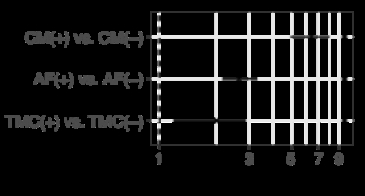
Abstract Body (Do not enter title and authors here): Background: Truncating variants in the TTN gene (TTNtv) are the most common genetic cause of non-ischemic (dilated) cardiomyopathy (CM) and are implicated in atrial fibrillation (AF). Frequently, AF is a sequela of CM; however, tachycardia-mediated cardiomyopathy (TMC) is an increasingly recognized clinical entity in which systolic dysfunction follows AF, with worse comorbidity and mortality than standalone AF. Restoration of normal sinus rhythm frequently restores systolic function. However, risk factors for the development of TMC have yet to be identified, and the contribution of TTNtv is unknown. Objective: Quantify the association of TTNtv with TMC in a large, healthcare-seeking general population. Methods: Individuals in the MyCode Community Health Initiative with exome sequencing were retrospectively assessed for the presence of AF (ICD-9/10 codes or EKG finding) and/or a TTNtv in highly expressed exons (>90% spliced in; hiPSI). TMC was defined as the presence of ICD-9/10 codes for new diagnosis of non-ischemic CM 1 day to 6 months after diagnosis of paroxysmal or persistent AF. Firth’s bias-reduced logistic regression with 1000 bootstrap iterations was performed to assess association of AF, CM, and TMC with TTNtv presence, with adjustment for age, sex, and the first four principal components of ancestry. Results: Of 171k individuals in MyCode, 21,570 (12.6%; median age 77 [IQR 69—84]; 43% female) had documented AF and 857 individuals (0.5%) had a qualifying TTNtv, including 198 (0.9%) in the AF group (OR 2.2 [1.8—2.6]; p<0.001). Of these AF+TTNtv individuals, 16 (8.1%) had TMC, whereas of 21,372 with AF and no TTNtv, 1,212 (5.7%) had TMC. AF+TTNtv individuals had significantly higher odds of having TMC compared to non-carriers (2.0 [1.2—2.9]; p=0.014; Figure). Phenotype analysis as currently defined demonstrated a PPV of 0.25, NPV of 0.90 w/ observed accuracy of 0.57, sensitivity of 0.73 and specificity of 0.54. Conclusion: In a healthcare-seeking population with exome sequencing, among those with AF, TTNtv presence was associated with 2-fold higher odds of developing ICD code-based TMC, suggesting that for individuals with TTNtv and AF, prompt treatment may be of particular importance. TMC is a complex phenotype that is difficult to define in electronic health records, thus future work will include refinement of the defined phenotype to improve specificity.
Avery, Tyler
(
Geisinger
, Wilkes Barre , Pennsylvania , United States )
Kelly, Melissa
(
Geisinger
, Danville , Pennsylvania , United States )
Van Syoc, Emily
(
Geisinger
, Wilkes Barre , Pennsylvania , United States )
Nevius, Christopher
(
Geisinger
, Danville , Pennsylvania , United States )
Morales, Ana
(
Geisinger
, Danville , Pennsylvania , United States )
Vijayaraman, Pugazhendhi
(
GEISINGER WYOMING VALLEY MED CTR
, Wilkes Barre , Pennsylvania , United States )
Matsumura, Martin
(
Geisinger Health System
, Danville , Pennsylvania , United States )
Carruth, Eric
(
Geisinger
, Danville , Pennsylvania , United States )
Author Disclosures:
Tyler Avery:DO NOT have relevant financial relationships
| Melissa Kelly:DO NOT have relevant financial relationships
| Emily Van Syoc:No Answer
| Christopher Nevius:No Answer
| Ana Morales:No Answer
| Pugazhendhi Vijayaraman:DO have relevant financial relationships
;
Research Funding (PI or named investigator):Medtronic:Active (exists now)
; Royalties/Patent Beneficiary:Self:Active (exists now)
; Consultant:Biotronik:Active (exists now)
; Consultant:Boston Scientific:Active (exists now)
; Consultant:Abbott:Active (exists now)
; Consultant:Medtronic:Active (exists now)
| Martin Matsumura:DO NOT have relevant financial relationships
| Eric Carruth:DO NOT have relevant financial relationships