Logo

American Heart Association

  35
  0


Final ID: MP2098

Cognitive Impairment in Heart Failure: A Systematic Review and Meta-Analysis of Prevalence and Predictors

Abstract Body (Do not enter title and authors here): Background: Cognitive impairment (CI) is increasingly recognized as a critical comorbidity in patients with heart failure (HF), contributing to medication nonadherence, readmissions, and mortality. However, its true prevalence and determinants remain unclear. We conducted a systematic review and meta-analysis to quantify the prevalence of CI in HF and identify key clinical predictors.

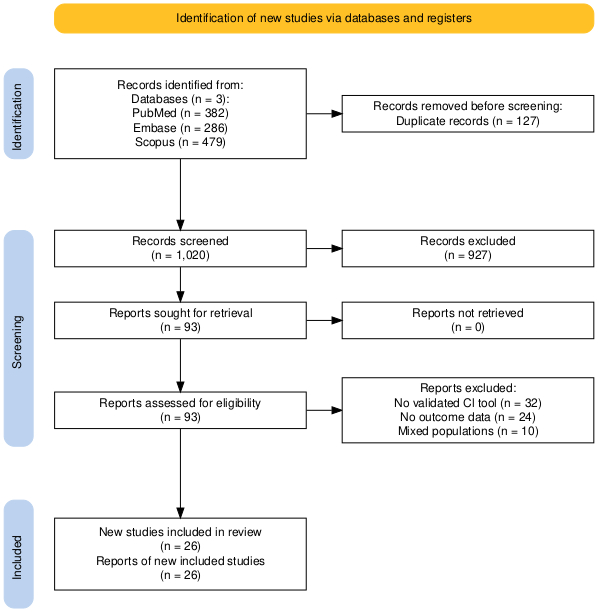
Methods: We followed PRISMA guidelines and searched PubMed, EMBASE, Scopus, and Cochrane databases through April 2024 using terms: (“cognitive dysfunction” OR “cognitive impairment”) AND (“heart failure” OR “cardiac dysfunction”). Studies were included if they: (1) enrolled adult HF patients; (2) assessed CI using validated tools (e.g., MoCA, MMSE); and (3) reported prevalence or correlations with clinical variables. Two reviewers independently extracted data and assessed risk of bias. Pooled prevalence estimates and odds ratios (ORs) were calculated using a random-effects model (DerSimonian–Laird method).

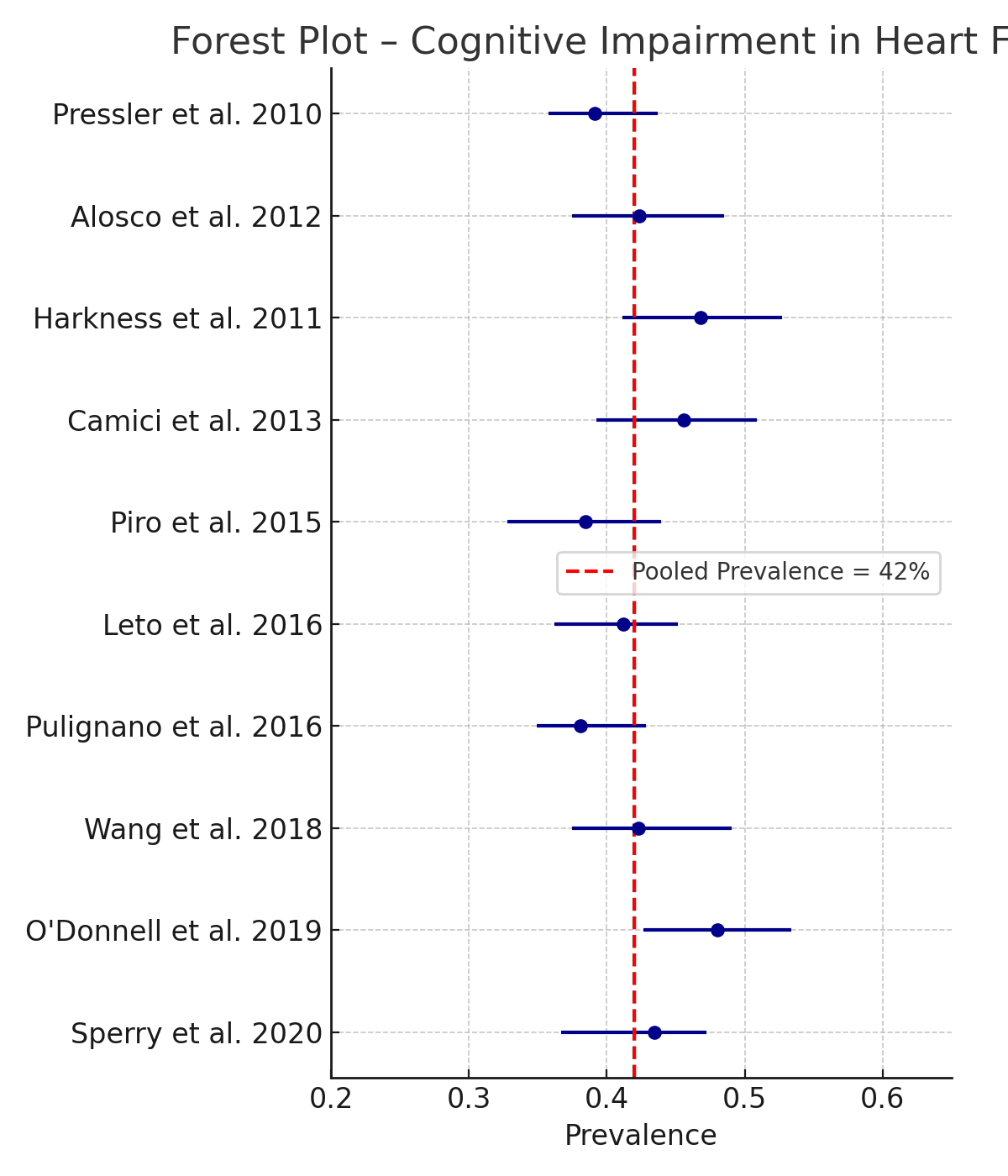
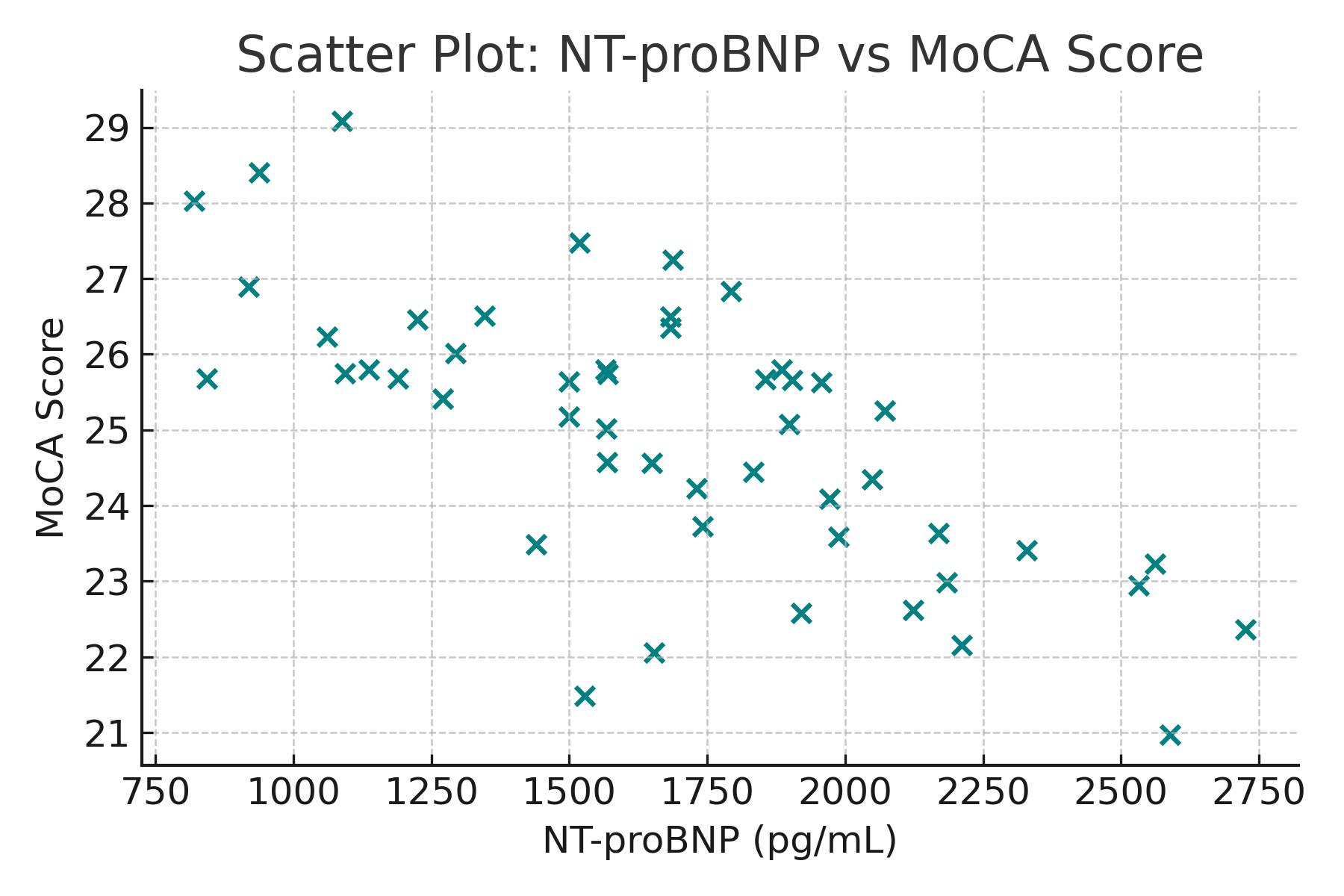
Results: Of 1,147 screened articles, 26 met inclusion criteria (n=6,328 HF patients; mean age 69±9 years). The pooled prevalence of CI in HF was 42% (95% CI: 36–48%, I = 72%). Subgroup analysis revealed higher prevalence in HF with reduced EF (HFrEF) (48%) compared to preserved EF (HFpEF) (35%, p<0.01). Severe LV dysfunction (LVEF <30%) was associated with increased risk of CI (OR 1.92; 95% CI: 1.43–2.59), as were elevated NT-proBNP (OR 1.71) and age >75 (OR 2.14). Cognitive domains most affected included executive function and visuospatial processing. Funnel plot asymmetry was minimal (Egger’s p = 0.11).

Conclusion: CI affects over 40% of HF patients, with greater burden in HFrEF and elderly subgroups. Clinical predictors such as reduced LVEF, age, and NT-proBNP may aid early identification. These findings highlight the need for routine cognitive screening and integration of cognitive assessment into HF care models to improve adherence and outcomes.
  • Chintharala, Karthik  ( NRI Academy of Medical Sciences , Vijayawada , India )
  • Sekharamahanti, Hadassa Evangeline  ( Mercy Catholic Medical Center , Darby , Pennsylvania , United States )
  • Miriyala, Varsha  ( University of Miami Miller school of Medicine , Miami , Florida , United States )
  • Madam, Sai Tapasvi  ( G.S.L Medical College , Rajahmundry , Andhra Pradesh , India )
  • Author Disclosures:
    Karthik Chintharala: DO NOT have relevant financial relationships | Hadassa Evangeline Sekharamahanti: DO NOT have relevant financial relationships | Varsha Miriyala: DO NOT have relevant financial relationships | SAI TAPASVI MADAM: DO NOT have relevant financial relationships
Meeting Info:

Scientific Sessions 2025

2025

New Orleans, Louisiana

Session Info:

Cardio-Cognitive Connections: Heart, Brain, Aging, and At-Risk Populations

Monday, 11/10/2025 , 10:45AM - 11:50AM

Moderated Digital Poster Session

More abstracts on this topic:
Atrial Cardiopathy Biomarkers and Brain Infarction in Multiple Territories in ARCADIA

Gologorsky Rachel, Karunamuni Nilushi, Longstreth W, Tirschwell David, Elkind Mitchell, Kamel Hooman

4D Flow MRI Evaluation of Cardiovascular Risk-Related Alterations in Heart-Brain Hemodynamics in Cognitively Healthy Aging Adults

Najafi Anahita, Rogalski Emily, Jarvis Kelly, Richter Adam, Lytchakov Anna, Benson Theresa, Jin Ning, Davids Rachel, Schnell Susanne, Ragin Ann, Weintraub Sandra

More abstracts from these authors:
AI-Powered Handheld Ultrasound for Rapid Left Ventricular Assessment: A Systematic Review and Meta-Analysis

Chintharala Karthik, Sekharamahanti Hadassa Evangeline, Madam Sai Tapasvi, Munnangi Pragathi

Impact of Maternal Gestational Diabetes on Offspring Cardiac Function: A Systematic Review and Meta-Analysis

Chintharala Karthik, Sekharamahanti Hadassa Evangeline, Madam Sai Tapasvi, Miriyala Varsha

You have to be authorized to contact abstract author. Please, Login
Not Available