Preoperative Intra-Aortic Balloon Pump Use and Surgical Outcomes in Acute Mitral
Regurgitation
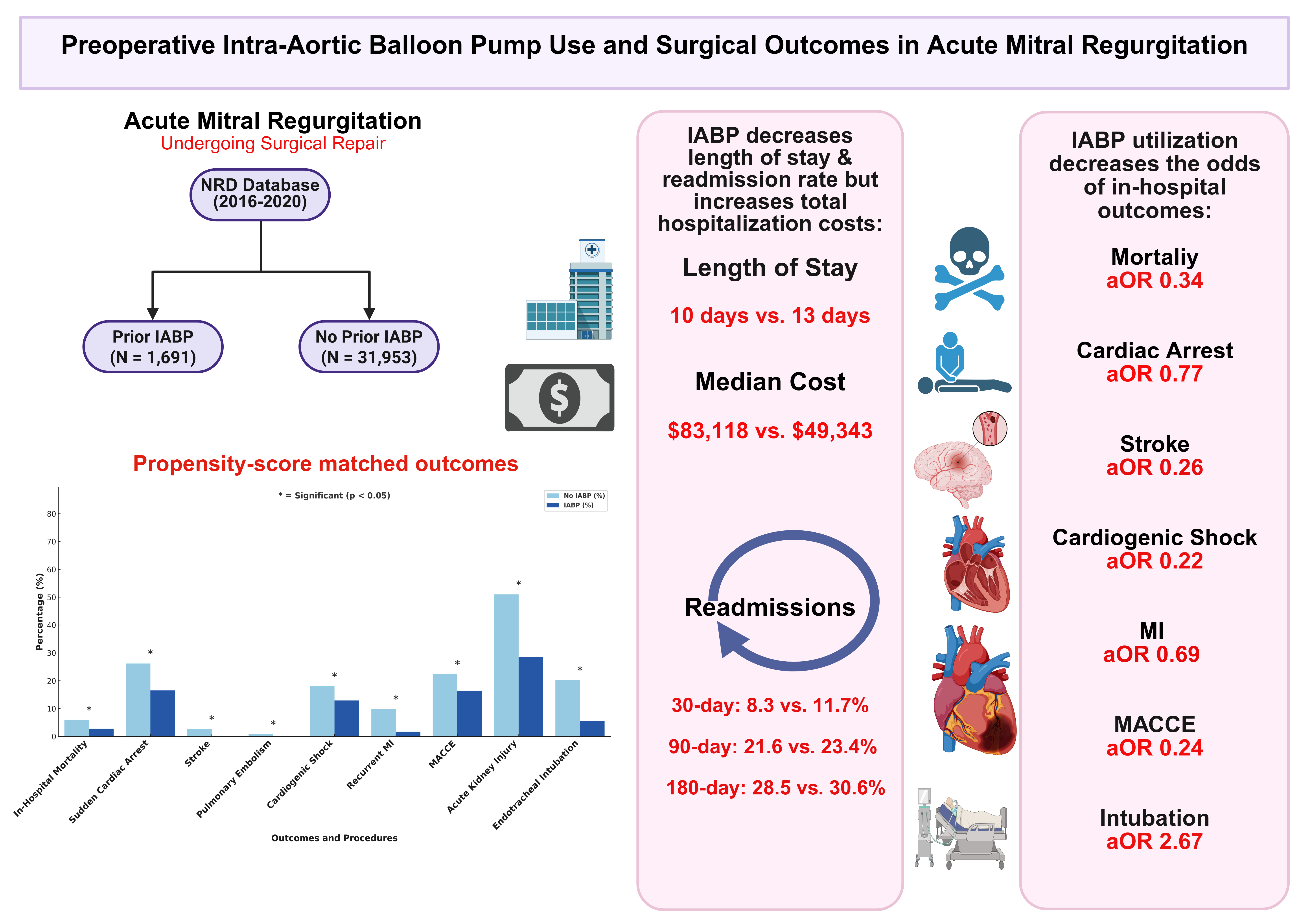
Abstract Body (Do not enter title and authors here): Background: Acute mitral regurgitation (MR) is a critical condition that often necessitates urgent surgical intervention. While intra-aortic balloon pump (IABP) therapy is recommended as a bridge to surgery in select cases, evidence supporting its clinical utility in this setting remains limited. Methods: We conducted a retrospective cohort study using the Nationwide Readmissions Database (NRD) from 2016 to 2020. Adult patients undergoing surgical correction for acute MR were identified using ICD-10-CM/PCS codes. Propensity score matching was performed to compare outcomes between patients who received preoperative IABP and those who did not. The primary outcome was in-hospital mortality. Secondary outcomes included in-hospital complications, 30- , 90-, and 180-day readmissions, and resource utilization. Results: Of 33,644 hospitalizations for surgical repair of acute MR, 1,691 (5.0%) received preoperative IABP. After 1:1 matching, 918 patient pairs were analyzed. IABP use was associated with significantly lower in-hospital mortality (2.8% vs. 6.0%, p < 0.001), cardiogenic shock (12.9% vs. 18%, p < 0.001), myocardial infarction (1.7% vs. 9.9%, p < 0.001), MACCE (16.4% vs. 22.4%, p < 0.001), acute kidney injury (28.5% vs. 51.0%, p < 0.001), stroke (0.2% vs. 2.6%, p < 0.001), and need for endotracheal intubation (5.5% vs. 20.2%, p < 0.001). The IABP group had a shorter median hospital stay (10 vs. 13 days, p < 0.001), but higher hospitalization costs ($83,118 vs. $49,343, p < 0.001). Thirty-day readmission was significantly lower in the IABP group (8.3% vs. 11.7%, p = 0.02), with no differences at 90 or 180 days. Conclusion: In patients undergoing surgery for acute MR, preoperative IABP use was associated with improved in-hospital outcomes and lower 30-day readmission rates, despite higher resource utilization. These findings support a potential therapeutic role for IABP as a bridging strategy in this high-risk population and warrant validation through prospective studies.
Bahar, Abdul Rasheed
(
Wayne State University
, Detroit , Michigan , United States )
Bahar, Yasemin
(
Wayne State University
, Dearborn , Michigan , United States )
Sirekulam, Vaishnavi
(
Wayne State University
, Dearborn , Michigan , United States )
Elhussain, Mohamed
(
Wayne State University
, Dearborn , Michigan , United States )
Jawadi, Mohamad Hasan
(
Wayne State University
, Dearborn , Michigan , United States )
Alraies, M Chadi
(
Detroit Medical Center
, Detroit , Michigan , United States )
Author Disclosures:
Abdul Rasheed Bahar:DO NOT have relevant financial relationships
| Yasemin Bahar:DO NOT have relevant financial relationships
| Vaishnavi Sirekulam:No Answer
| Mohamed Elhussain:No Answer
| Mohamad Hasan Jawadi:No Answer
| M Chadi Alraies:DO NOT have relevant financial relationships