
Logo

American Heart Association

  20
  0


Final ID: MP242

Progressive Structured Simulation-based Surgical Training Program (PROCESS) - Open Vascular Surgery: Pilot Study For A Cross-over, Randomized, Double-blinded Clinical Trial.

Abstract Body (Do not enter title and authors here): Introduction
Vascular surgery increasingly favors endovascular procedures, yet they're not always suitable. Open vascular surgery remains crucial, but training in this area has declined, leading to a lack of standardized preparation for residents. While isolated simulations exist, a clear need for structured, progressive programs in open vascular surgery remains.
Research Question
This study aims to determine the effectiveness of a structured and progressive simulation-based training program in developing technical competencies for open vascular surgery.
Methods
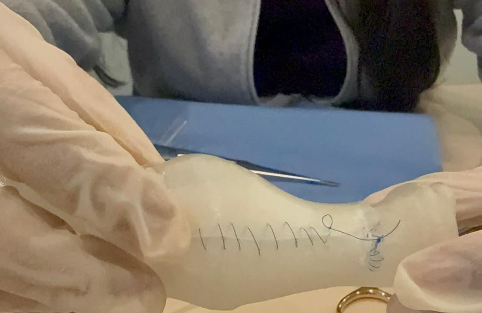
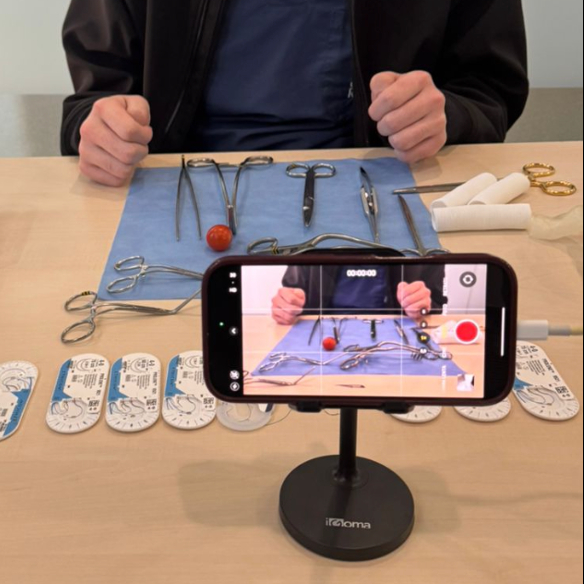
A sequential, randomized, single-blind, three-arm clinical trial will be conducted to evaluate the Open Vascular Surgery (OVS) simulation program, which comprises three progressive modules: basic surgical skills, isolated vascular anastomosis (VA), and a complex open procedure (abdominal aortic open repair – AAOR). Participants will be randomly assigned to one of three groups based on their module exposure: Group I will complete only the AAOR module; Group II will complete the VA and AAOR modules; and Group III will complete all three modules. Learning outcomes and skill acquisition will be assessed through a multiple-choice questionnaire for theoretical knowledge and two validated tools for practical skills: Objective Structured Assessment of Technical Skills (OSATS) and OPEn Aortic Aneurysm Repair Assessment of Technical Expertise tool. The trial was double-blinded, with participants and external evaluators.
Results
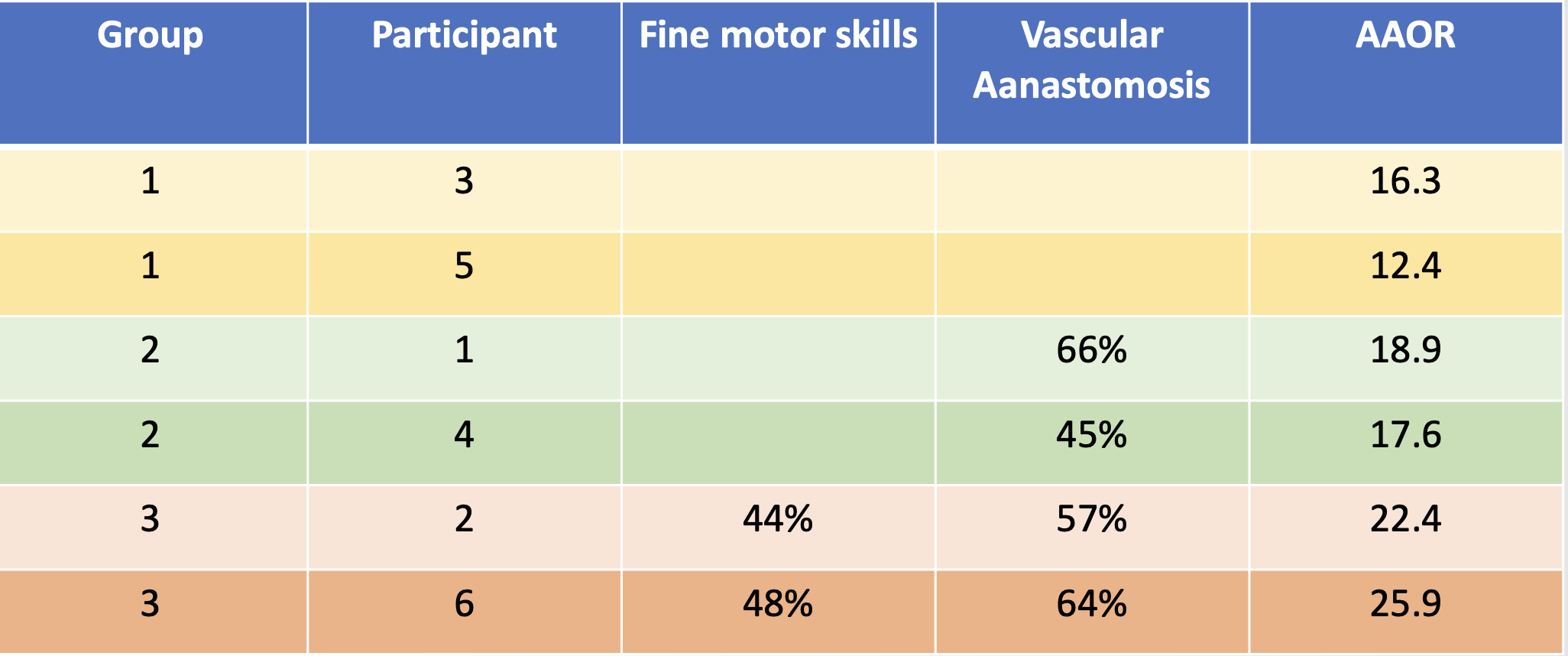
A pilot study involving six medical students successfully implemented the randomization, training, and assessment protocols. All participants completed both theoretical and practical components. The study demonstrated that participants of the full progressive simulation-based training (Group III) achieved superior technical performance in fine motor skills, vascular anastomosis, and AAOR scores compared to those with limited module exposure. These findings support the feasibility and effectiveness of structured, stepwise training in open vascular surgery.
Conclusions
The pilot study proved the feasibility of using simulation-based training and structured assessment tools in undergraduate medical education. Also demostrates the preliminary efficay of proggresive structure simulation based training in psicomotor skills adquisiton for open vascular surgery.
  • Velandia, Alejandro  ( Universidad del Rosario , Bogota , Colombia )
  • Briceno, Juan Carlos  ( Universidad de los Andes , Bogota , Colombia )
  • Gomez, Juan  ( Universidad del Rosario , Bogota , Colombia )
  • Gomez Galan, Sebastian  ( Fundacion Cardioinfantil , Bogota , Cundinamarca , Colombia )
  • Reijnen, Michel M  ( Rijnstate , Arnhem , Gelderland , Netherlands )
  • Camacho, Jaime  ( Fundacion Cardioinfantil , Bogota , Cundinamarca , Colombia )
  • Mendivil, Carlos  ( Universidad de los Andes , Bogota , Colombia )
  • Barrera, Juan  ( Fundacion Cardioinfantil , Bogota , Cundinamarca , Colombia )
  • Avila, Juan  ( Universidad de los Andes , Bogota , Colombia )
  • Camacho Guzman, Valentina  ( Universidad de los Andes , Bogota , Colombia )
  • Uribe, Santiago  ( Universidad del Rosario , Bogota , Colombia )
  • Polania-sandoval, Camilo Andrés  ( Universidad del Rosario , Bogota , Colombia )
  • Alvarez, Jose  ( Universidad del Rosario , Bogota , Colombia )
  • Tello-pirateque, Juliana  ( Universidad del Rosario , Bogota , Colombia )
  • Perez-rivera, Carlos J  ( Universidad El Bosque , Bogota , Cundinamarca , Colombia )
  • Cruz-reyes, Danna  ( Universidad Nacional , Bogota , Cundinamarca , Colombia )
  • Author Disclosures:
    Alejandro Velandia: No Answer | Juan Carlos Briceno: No Answer | Juan Gomez: DO NOT have relevant financial relationships | Sebastian Gomez Galan: No Answer | Michel M Reijnen: No Answer | Jaime Camacho: No Answer | Carlos Mendivil: No Answer | Juan Barrera: No Answer | Juan Avila: DO NOT have relevant financial relationships | Valentina Camacho Guzman: No Answer | Santiago Uribe: No Answer | Camilo Andrés Polania-Sandoval: No Answer | Jose Alvarez: No Answer | Juliana Tello-Pirateque: No Answer | Carlos J Perez-Rivera: No Answer | Danna Cruz-Reyes: No Answer
Meeting Info:

Scientific Sessions 2025

2025

New Orleans, Louisiana

More abstracts on this topic:
A Multimodality Education Model Improves Healthcare Professionals' Competency in Managing Cardiovascular Risk Factors in Type 2 Diabetes: A Mixed-Methods Study

Madhusudhan Divya, Pressley Alyssa, El Sayed Nuha, Okeke Oge, Bradley Sarah, Blanco Caroline, Perla Esteban, Jennings Ruby, Picou Kylie, Mcweeny Patrick, Crabill Carrianne

Dual Pathway Inhibition prescription after percutaneous vascular intervention is low, and dependent on physician and treating facility practice patterns

Jarosinski Marissa, Lowenkamp Mikayla, Madigan Michael, Reitz Katherine, Chaer Rabih, Sridharan Natalie

More abstracts from these authors:
"Simple Arithmetic Representation to Classify of Right Ventricular Outflow Tract in Tetralogy of Fallot Patients "

Casallas Isabella, Perez Cualtan Camilo Eduardo, Navarro Javier, Acosta-izquierdo Laura, Forero Julian Francisco, Perez Juan Manuel, Briceno Juan Carlos, Guerrero Carlos

You have to be authorized to contact abstract author. Please, Login
Not Available