Intergenerational and Individual Cardiometabolic Risk Among Black Adults in the All of US Research Program: The Role of Nativity Status
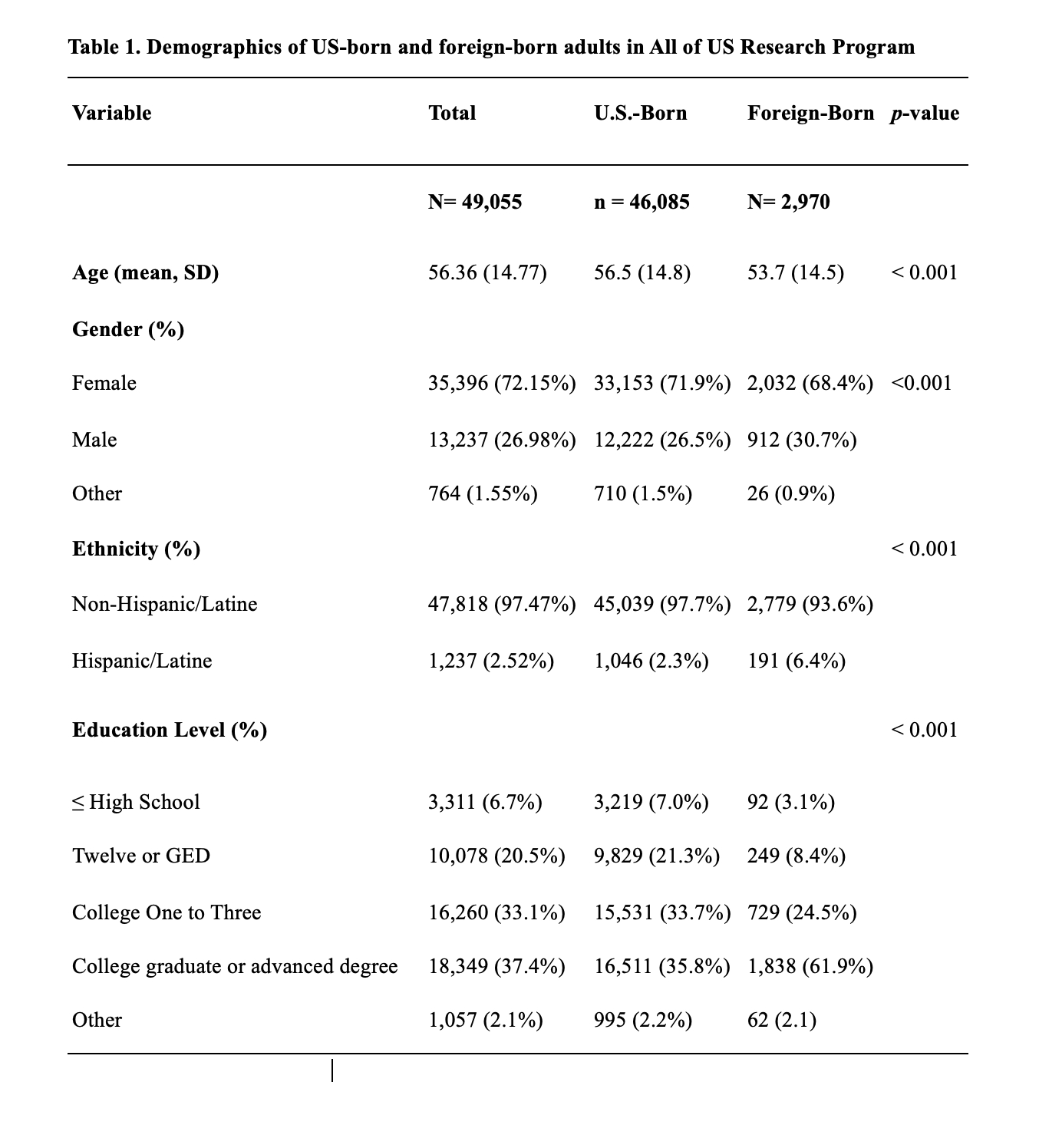
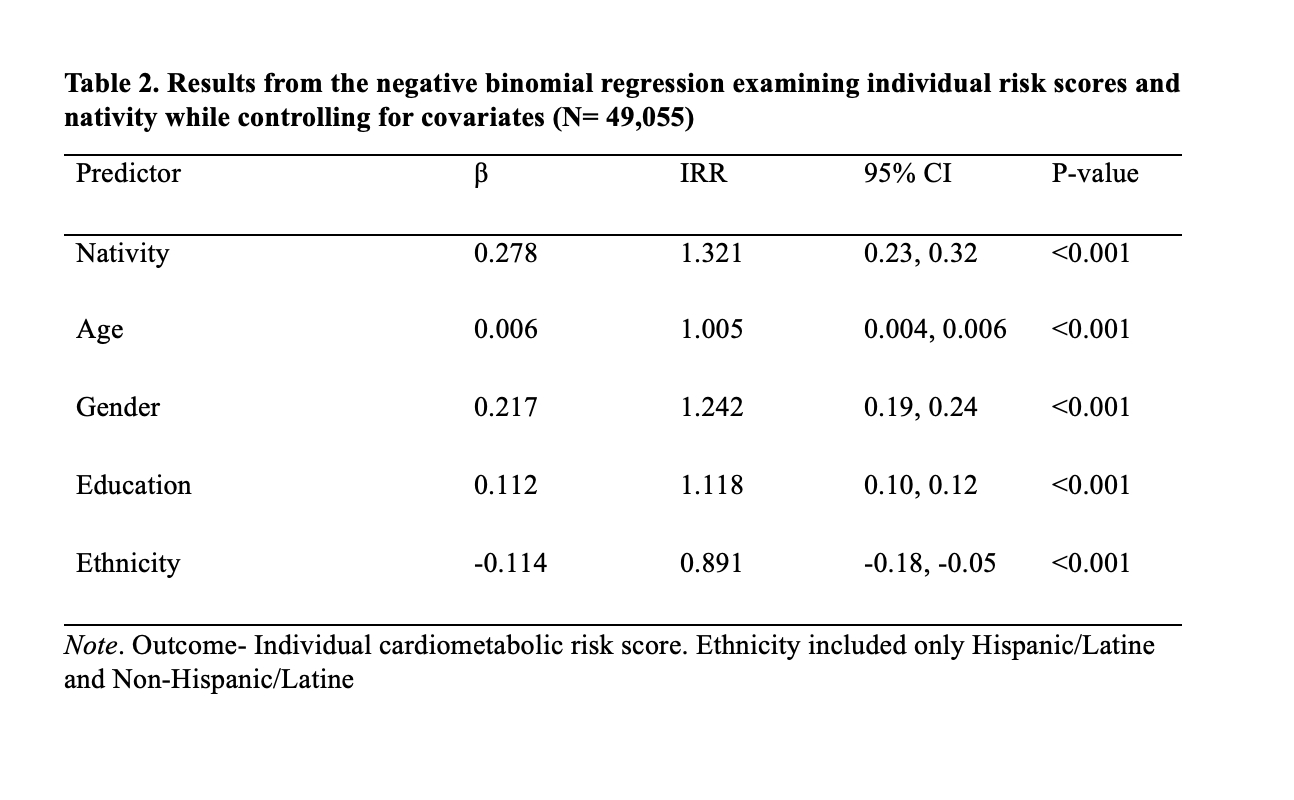
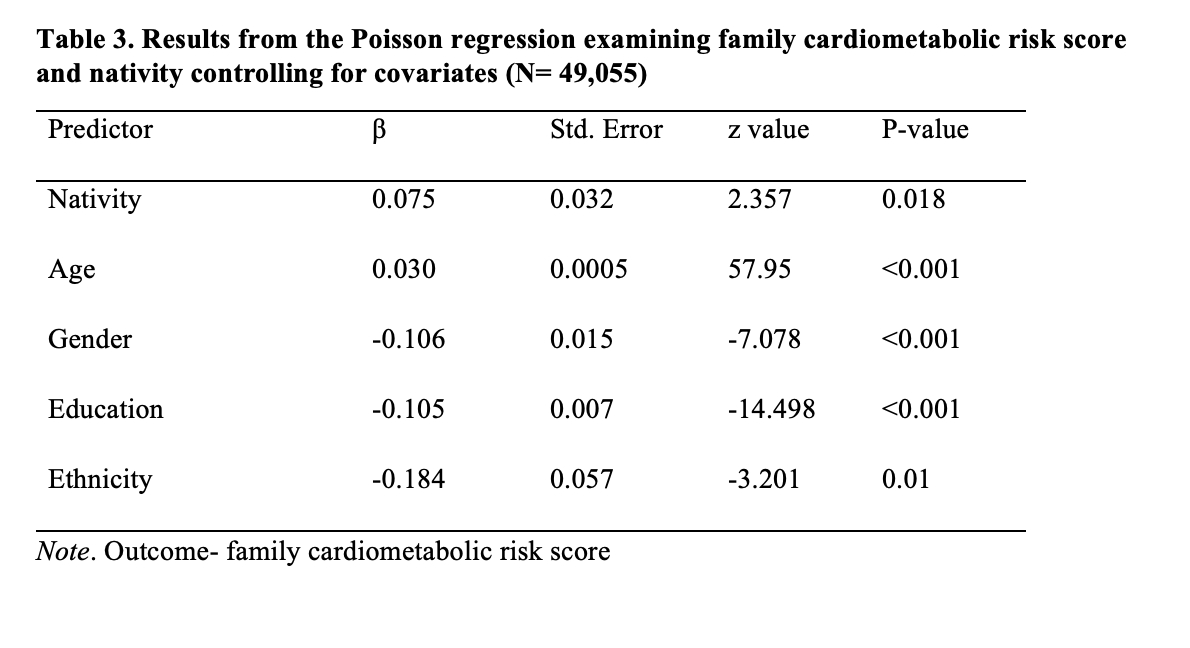
Abstract Body (Do not enter title and authors here): Family history of cardiovascular disease is a known risk factor for cardiometabolic conditions, yet few studies have examined how nativity shapes intergenerational cardiometabolic risk patterns among Black adults, despite the rising number of foreign-born Black people in the U.S. This study examined the associations between nativity status and both family history and individual cardiometabolic risk among Black adults. Method: Self-reported data from the All of Us Research Program was used with nativity status as the main predictor and family cardiometabolic risk scores (sum of binary indicators for relatives with documented history of hypertension, diabetes, high cholesterol, heart attack, heart failure, valve disease, coronary heart disease, and other heart conditions) and individual cardiometabolic risk scores (sum of participants' self-reported diagnoses of the same conditions) as the outcomes. Negative binomial regression was used to examine the association between nativity status and family risk, whereas Poisson regression was fitted to examine the relations between nativity and individual risk, both adjusting for age, gender, education, and ethnicity as covariates. Results: We included 49,055 Black adults (Mage, ±14.7 years, 72% female, and 6% foreign-born). Foreign-born participants were younger, more likely to be male, more educated, and more likely to identify as Hispanic compared to U.S.-born participants. Family risk scores ranged from 0-12 (M=1.46). In the unadjusted analysis, U.S.-born individuals reported significantly higher family cardiometabolic risk scores (M=1.49) compared to their foreign-born counterparts (M=1.14); a 31% higher risk (p <0.001). In the multivariable negative binomial regression, after adjusting for covariates U.S.-born status remained significantly associated with higher family cardiometabolic risk (Incidence Rate Ratio (IRR) =1.32, 95% CI: 0.23-0.32). For individual cardiometabolic risk, U.S.-born participants had higher risk scores in the adjusted Poisson regression (β = 0.11, p < 0.001). Increased reporting among U.S.-born participants may reflect greater awareness or access to family health history compared to foreign-born individuals. Conclusion: These findings highlight the importance of disaggregating health data within the Black population in the U.S. and underscore the critical role of family health history knowledge in understanding risk profiles and informing culturally appropriate preventive care strategies.
Goncalves, Carolina
(
Vanderbilt University
, Nashville , Tennessee , United States )
Mcbride Murry, Velma
(
Vanderbilt University
, Nashville , Tennessee , United States )
Commodore-mensah, Yvonne
(
Johns Hopkins
, Baltimore , Maryland , United States )
Ogungbe, Bunmi
(
Johns Hopkins University
, Baltimore , Maryland , United States )
Nyanamba, Juliet
(
University of Minnesota
, Minneapolis , Minnesota , United States )
Author Disclosures:
Carolina Goncalves:DO NOT have relevant financial relationships
| Velma Murry:DO NOT have relevant financial relationships
| Yvonne Commodore-Mensah:No Answer
| Bunmi Ogungbe:DO NOT have relevant financial relationships
| Juliet M. Nyanamba:DO NOT have relevant financial relationships