Logo

American Heart Association

  20
  0


Final ID: MP864

Sydenham Chorea as the Presenting sign of Rheumatic Heart Disease in a 12 Year old

Abstract Body (Do not enter title and authors here): Introduction
Sydenham chorea (SC) is a form of acquired chorea of childhood and is linked to Acute Rheumatic Fever (ARF), which is an autoimmune response to infection with Group A Streptococcus (GAS). Historically called St Vitus Dance, SC is reported in some patients with ARF and forms part of the major criteria for ARF in the Jones Criteria.
Case Presentation
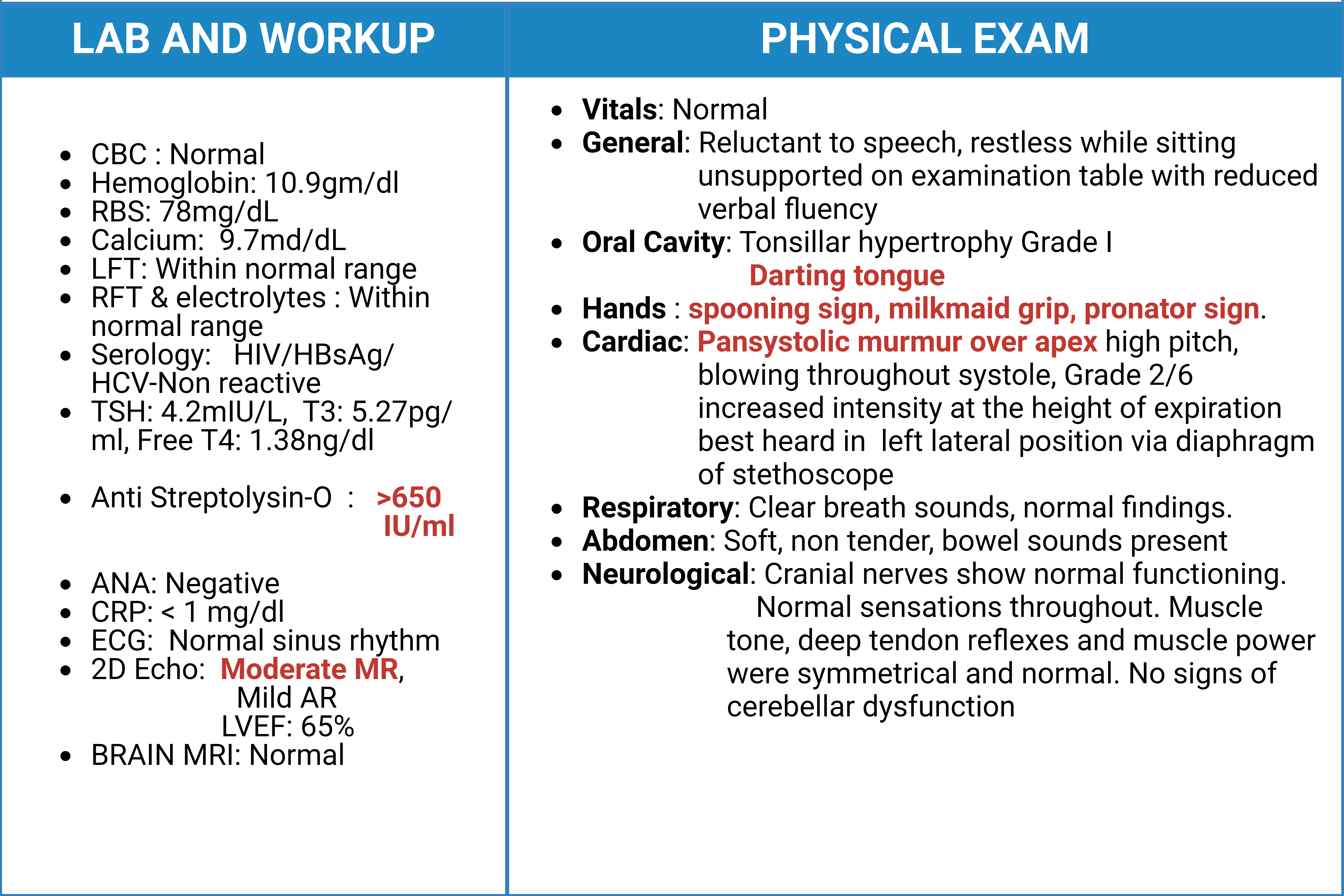
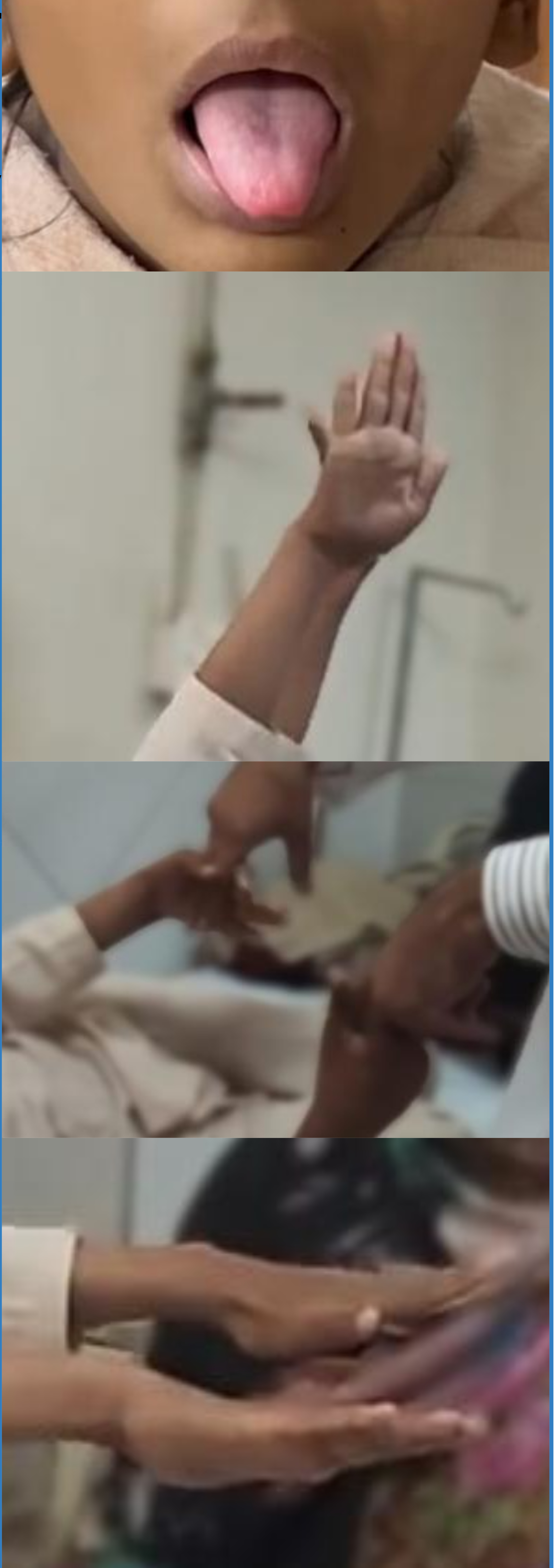
A 12 years old female presented with 10-day history involuntary movements. She suffered sudden, involuntary, irregular twitching of the right upper, lower limbs and facial mouthing or grimacing. She developed irritability, restlessness, easy crying, anger over minor events, deteriorating handwriting and slurring of speech. A thorough history was taken from patient and family, it was discovered that she had recurrent episodes of sore throat in the last one year, last episode being 1.5 months before the onset of chorea. Her throat infections were never treated by a qualified doctor. Physical examination revealed spooning sign of the hands, milkmaid grip sign, pronator sign of the arms and darting tongue sign. Tonsillar hypertrophy grade I was also noted. Pansystolic murmur was present over apex, 2D Echo was performed which showed moderate MR and mild AR, LVEF was 65%. Blood work showed highly elevated Anti Streptolysin O levels of >650 IU/ml. MRI of the brain didn’t detect any abnormality. Based on the history and findings, a diagnosis of Acute Rheumatic Fever with Sydenham chorea and valvular heart disease was made. The patient was started on Phenoxymethyl Penicillin, Carbamazepine and Pantoprazole after which her choreiform movements started to ameliorate significantly.
Discussion
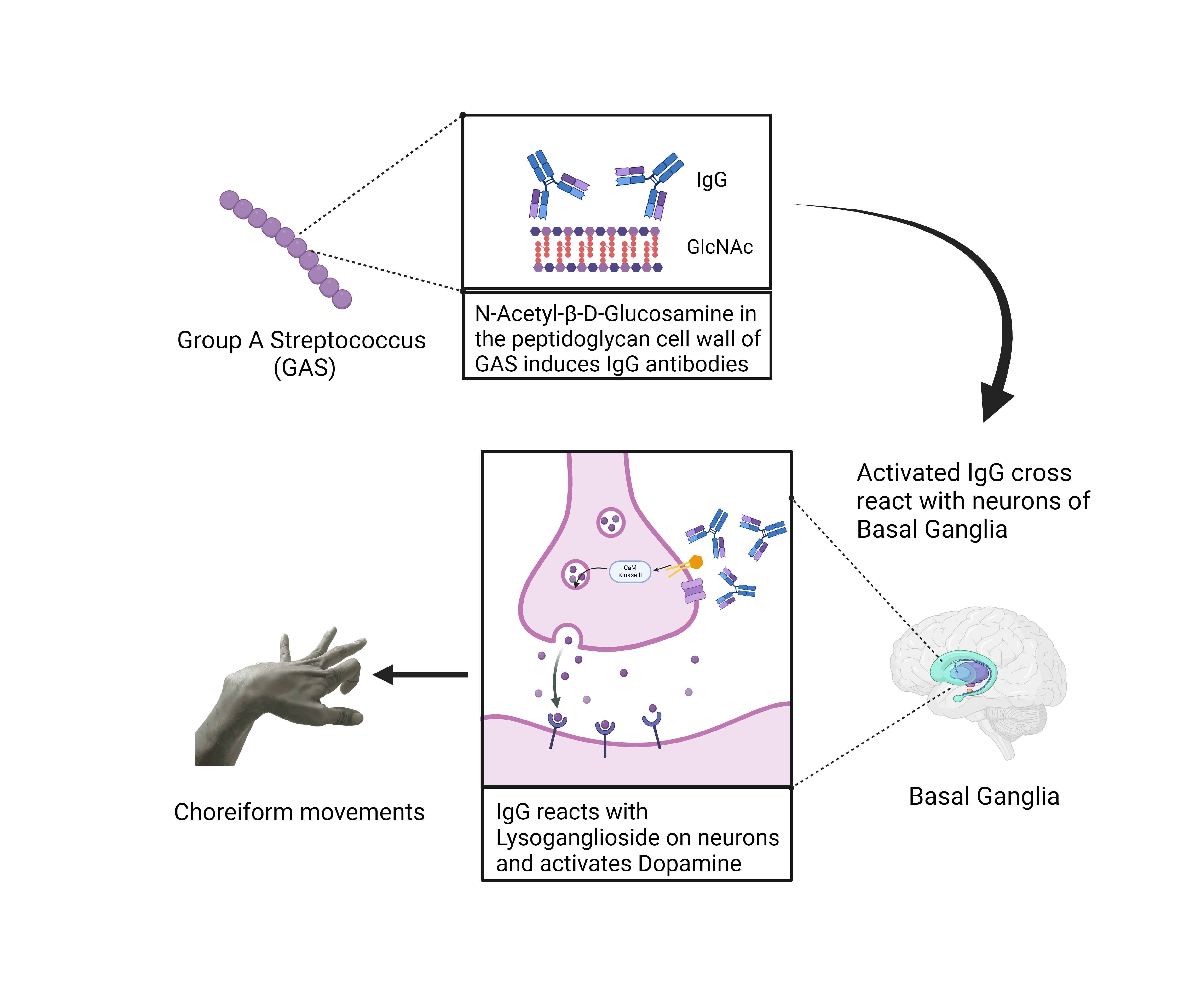
Despite progress in earlier diagnosis and treatment of streptococcal infection, Sydenham Chorea is still an essential feature of acute rheumatic fever in developing nations. The exact pathophysiology of SC hasn’t been understood, various theories have been suggested for the same. Most accepted theory of SC is an autoimmune one, which occurs in response to the group A streptococcal infection. These antibodies are created against streptococcal antigens and react with neuronal protein tissues particularly in the basal ganglia that account for choreiform movements made by SC patients. Carditis is another severe manifestation of ARF. The cardiac lesion frequently encountered in ARF is mitral regurgitation, aortic regurgitation is the other frequently observed valvular disease.
  • Paudyal, Sushil  ( National Academy of Medical Sciences , Kathmandu , Nepal )
  • Baral, Subash  ( National Academy of Medical Sciences , Kathmandu , Nepal )
  • Anwar, Abdus Sameey  ( College of Medical Sciences , Bharatpur , Nepal )
  • Paudyal, Shraddha  ( Bhim Hospital , Bhairahawa , Nepal )
  • Author Disclosures:
    Sushil Paudyal: No Answer | Subash Baral: No Answer | Abdus Sameey Anwar: DO NOT have relevant financial relationships | Shraddha Paudyal: No Answer
Meeting Info:

Scientific Sessions 2025

2025

New Orleans, Louisiana

Session Info:

Complex Aortic Pathology Clinical Case Series

Saturday, 11/08/2025 , 01:45PM - 03:00PM

Moderated Digital Poster Session

More abstracts on this topic:
Prevalence of Latent Rheumatic Heart Disease in Brazilian Public Schools: Results 10 Years After Implementation of a Screening Program

Nascimento Bruno, Souza Isadora, Bozzi Soares Santiago Maria Luiza, Freitas Bruna, Angelo Gabriel, Jardim Pereira Klicia, Spaziani Alison, Ribeiro Antonio Luiz, Sable Craig, Nunes Maria, Tacuri Chavez Luz, Oliveira Kaciane, Amaral Ingred Beatriz, Lemos Larissa, Coelho Cecilia, Santos Brenno, De Paula Luiza

India as the Epicenter of Global Rheumatic Heart Disease: A Subnational and Temporal Analysis from 1990 to 2021

Patel Tirth, Sharma Kamal, Sethi Angad Singh, Gopi Gokul, Sharma Disha, Kotnani Sandeep, Upadhyay Devangi, Dudhat Kushal, Desai Hardik, Amin Vishrant

More abstracts from these authors:
You have to be authorized to contact abstract author. Please, Login
Not Available