
Geographic and Demographic Disparities in NAFLD and Cardiovascular Mortality in the United States: Insights from the CDC WONDER Database
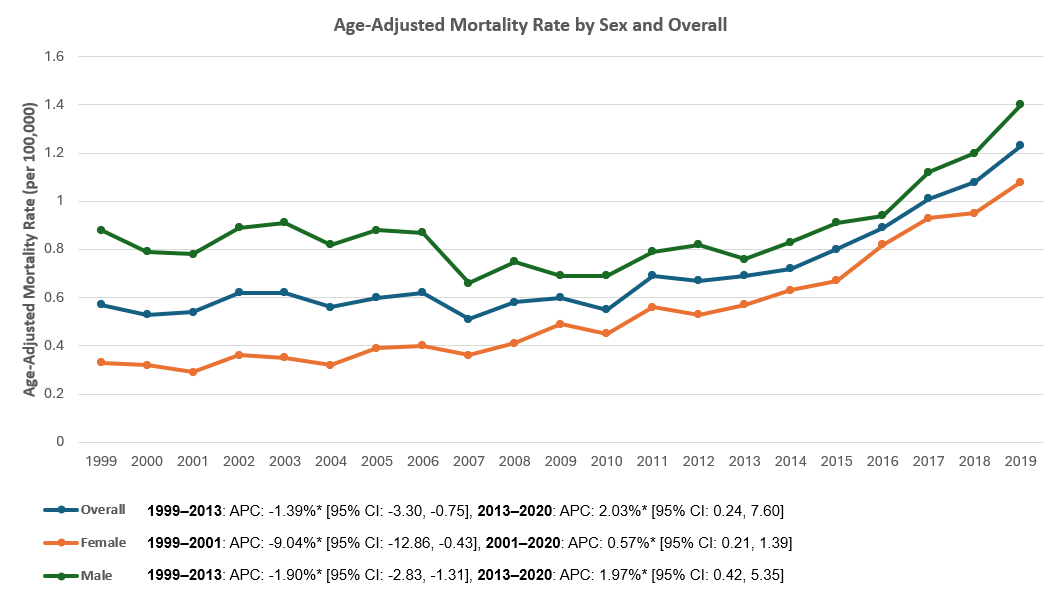
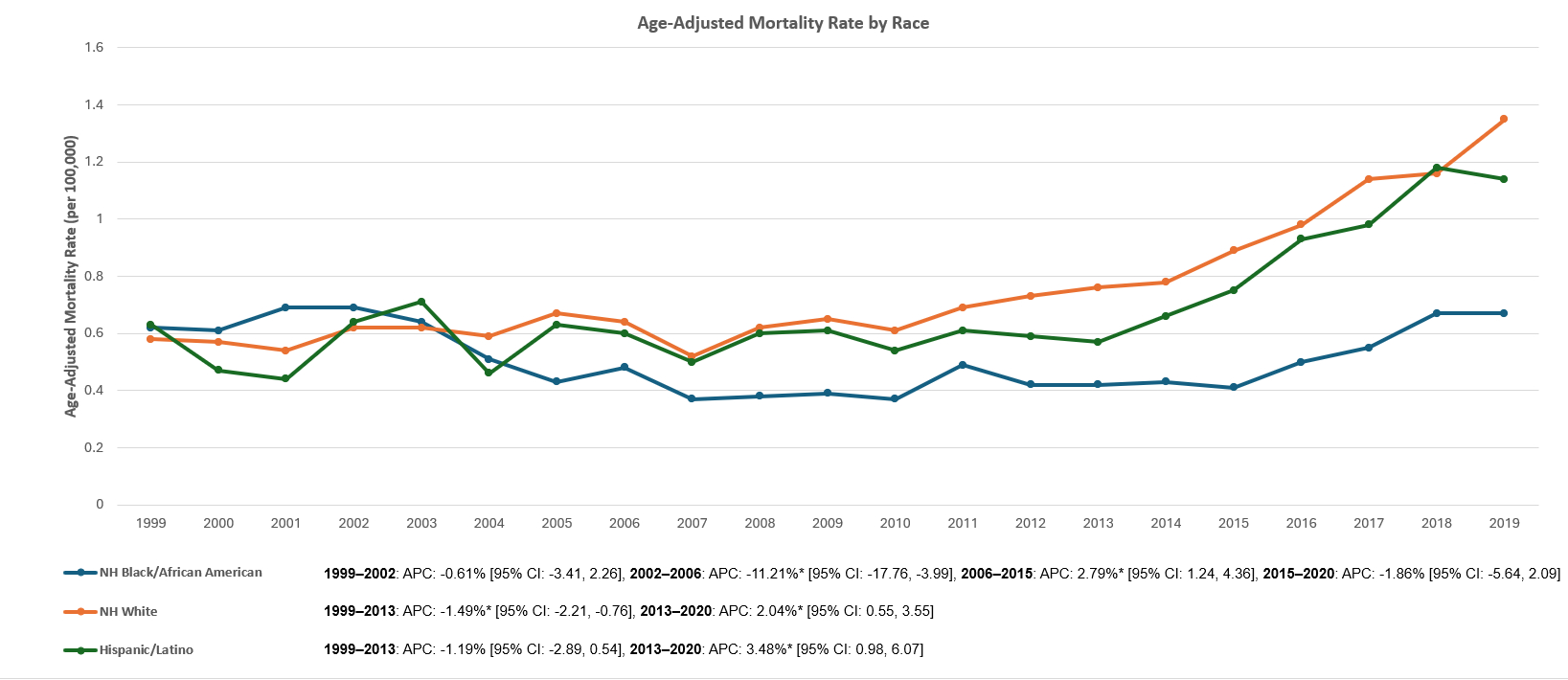
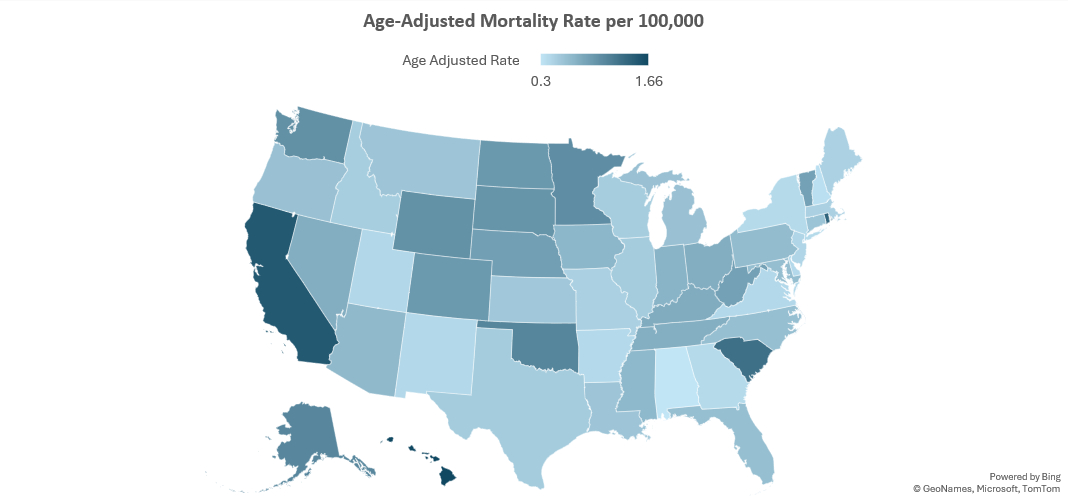
Abstract Body (Do not enter title and authors here): Background: Non-alcoholic fatty liver disease (NAFLD) is the most common chronic liver condition globally. Cardiovascular disease (CVD) is the leading cause of death in this population, yet population-level mortality trends remain underexplored. Hypothesis: We examined trends in CVD-related mortality among individuals with NAFLD using CDC data. Methods: We analyzed CDC WONDER mortality data (1999–2019) where NAFLD (ICD-10: K75.8, K76.0) and CVD (I00–I99) were listed as contributing or underlying causes of death among adults aged ≥25. Age-adjusted mortality rates (AAMRs) were calculated using the 2000 U.S. population. Joinpoint regression assessed trends. Analyses were stratified by sex, race, region, and urbanization. Results: From 1999 to 2019, 31,926 deaths were attributed to NAFLD with CVD. AAMR rose from 0.57 to 1.23. Joinpoint analysis showed a modest increase from 1999–2013 (APC: 1.25%; 95% CI: 0.05–2.25) and a sharper rise from 2013–2019 (APC: 10.96%; 95% CI: 8.81–14.51). Men had higher AAMRs than women (0.89 vs. 0.55). Male mortality declined from 1999–2013 (APC:−1.13%; 95% CI: −2.92 to −0.09), then rose from 2013–2019 (APC: 10.49%; 95% CI:6.83–18.63). Female mortality rose from 1999–2013 (APC: 4.80%; 95% CI: 0.50–6.33), followed by a sharper increase from 2013–2019 (APC: 11.76%; 95% CI: 8.28–23.06). AAPC for women was 6.84% (95% CI: 5.88–7.89); for men, 2.22% (95% CI: 1.45–3.04). Non-Hispanic (NH) Whites had the highest AAMR (0.77), followed by Hispanics (0.73), and NH Blacks (0.53). Rural and urban areas had similar AAMRs (0.72). Rates were highest in the West (1.16) and Midwest (0.67). States in the top 90th percentile had nearly twice the AAMRs of those in the bottom 10th. Conclusion: CVD-related mortality in individuals with NAFLD more than doubled from 1999 to 2019, with disparities by sex, race, and geography. These findings highlight the need for targeted strategies to reduce cardiovascular risk in this growing population.
Siddiqui, Hibah
( Dow University of Health Sciences
, Karachi
, Pakistan
)
Khan, Taimor Mohammed
( Dow University of Health Sciences
, Karachi
, Pakistan
)
Ansari, Ifrah
( Dow University of Health Sciences
, Karachi
, Pakistan
)
Ali, Dua
( Dow University of Health Sciences
, Karachi
, Pakistan
)
Afridi, Muhammad Khalid
( Dow Medical Collge
, Karachi
, Pakistan
)
Makda, Fatima Aman
( Dow University of Health Sciences
, Karachi
, Pakistan
)
Aamir, Jazza
( Dow University of Health Sciences
, Karachi
, Pakistan
)
Akram, Hassan
( University of Minnesota
, Woodbury
, Minnesota
, United States
)
Shabbir, Aisha
( University of Minnesota
, Woodbury
, Minnesota
, United States
)
Author Disclosures:
Hibah Siddiqui:DO NOT have relevant financial relationships
| Taimor Mohammed Khan:DO NOT have relevant financial relationships
| Ifrah Ansari:No Answer
| Dua Ali:DO NOT have relevant financial relationships
| Muhammad Khalid Afridi:DO NOT have relevant financial relationships
| Fatima Aman Makda:DO NOT have relevant financial relationships
| Jazza Aamir:DO NOT have relevant financial relationships
| Hassan Akram:DO NOT have relevant financial relationships
| Aisha Shabbir:DO NOT have relevant financial relationships