Sex and Racial Disparities in Atherosclerotic Heart Disease Mortality Among Older Adults in the United States: A CDC WONDER Database Analysis (1999–2020)
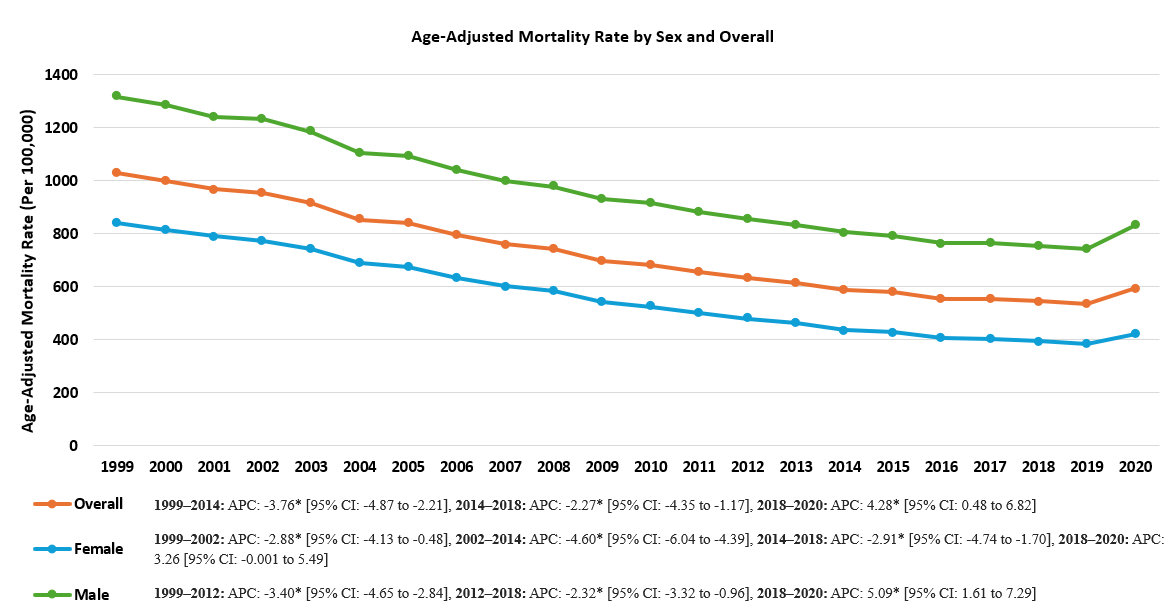
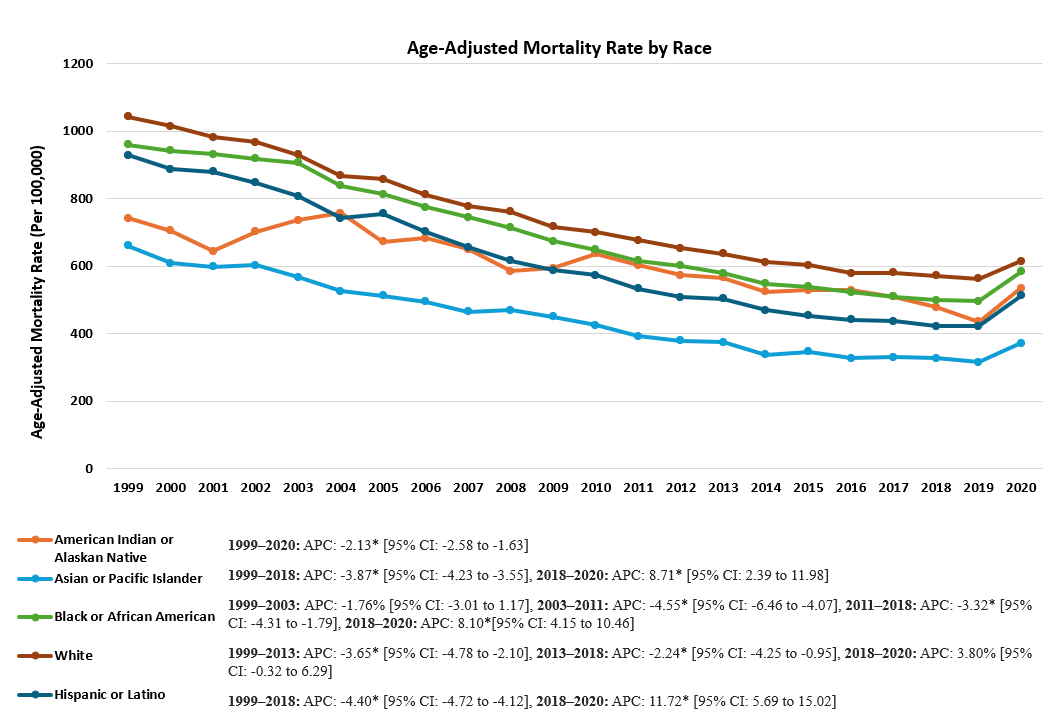
Abstract Body (Do not enter title and authors here): Background: Atherosclerotic heart disease (ASHD) remains a leading cause of death among older adults in the United States. However, disparities in ASHD-related mortality by sex and race remain underexplored. Research Question: This study evaluates temporal trends and demographic disparities in ASHD mortality among individuals aged 65 years and older using national death certificate data from CDC Wonder. Methods: Mortality data from CDC WONDER database was analyzed, identifying ASHD-related deaths using ICD-10 code I25.1. ASHD was listed as a contributing or underlying cause of death. Age-adjusted mortality rates (AAMRs) per 100,000 were calculated and stratified by sex and race. Joinpoint regression was used to estimate Annual Percent Change (APC) and Average Annual Percent Change (AAPC), identifying significant shifts in trend over the study period. Results: From 1999 to 2020, ASHD accounted for 6,571,263 deaths in the study population. Overall, AAMRs declined significantly from 1999 to 2014 (APC: −3.7695% CI: -4.87 to -2.21), with a continued but slower decline from 2014 to 2018 (APC: −2.27%, 95% CI: -4.35 to -1.17), followed by a significant increase from 2018 to 2020 (APC: +4.28%, 95% CI: 0.48 to 6.82). Males consistently exhibited higher AAMRs than females (942.51 vs 555.21, respectively). Among males, mortality declined through 2018 (APCs: −3.40%, 95% CI: -4.65 to -2.84, and −2.31%, 95% CI: -3.32 to -0.96), then rose from 2018 to 2020 (APC: 5.09%, 95% CI: 1.61 to 7.29), with an overall AAPC of -2.31(95% CI: -2.56 to -2.15). Females showed a steady decline with a potential upward shift beginning in 2018 (APC: 3.26%, 95% CI: -0.001 to 5.49), and an overall AAPC of -3.31 (95% CI: -3.54 to -3.12). Racial disparities persisted throughout. Whites had the highest AAMRs (737.03), while Non-Hispanic Asians had the lowest (409.90). All racial groups experienced declining mortality trends through 2018, followed by increases through 2020—except American Indians, whose AAMRs continued to decline (APC: −2.13%, 95% CI: -2.58 to -1.63). Conclusion: While ASHD mortality declined among older adults for nearly two decades, the recent upward trend—particularly among males and most racial groups—signals a concerning reversal. Persisting racial disparities and sex-based differences highlight the urgent need for equity-driven cardiovascular prevention and intervention strategies tailored to the aging U.S. population.
Makda, Fatima Aman
(
Dow University of Health Sciences
, Karachi , Pakistan )
Ansari, Ifrah
(
Dow University of Health Sciences
, Karachi , Pakistan )
Aamir, Jazza
(
Dow University of Health Sciences
, Karachi , Pakistan )
Afridi, Muhammad Khalid
(
Dow University of Health Sciences
, Karachi , Pakistan )
Mahmoud Srour, Hassan Jalal
(
Dow University of Health Sciences
, Karachi , Pakistan )
Othman Salman, Othman Talal
(
Dow Medical College
, Karachi , Pakistan )
Azhar, Aima
(
Wayne State University
, Detroit , Michigan , United States )
Muhammad, Anza
(
King Edward Medical University
, Lahore , Pakistan )
Akram, Hassan
(
University of Minnesota
, Woodbury , Minnesota , United States )
Shabbir, Aisha
(
University of Minnesota
, Woodbury , Minnesota , United States )
Author Disclosures:
Fatima Aman Makda:DO NOT have relevant financial relationships
| Aisha Shabbir:DO NOT have relevant financial relationships
| Ifrah Ansari:No Answer
| Jazza Aamir:DO NOT have relevant financial relationships
| Muhammad Khalid Afridi:No Answer
| Hassan Jalal Mahmoud Srour:DO NOT have relevant financial relationships
| Othman Talal Othman Salman:DO NOT have relevant financial relationships
| Aima Azhar:DO NOT have relevant financial relationships
| Anza Muhammad:DO NOT have relevant financial relationships
| Hassan Akram:DO NOT have relevant financial relationships