Evaluating Real-World Use of Artificial Intelligence-Augmented Pre-Procedure Phone Calls for Cardiac Catheterization
Abstract Body (Do not enter title and authors here): Background: Burnout and staffing shortages remain a critical concern, particularly among registered nurses (RNs) involved in repetitive administrative workflows. Pre-procedure calling, while essential to patient safety, places additional strain on already busy clinical teams.
Hypothesis: AI-augmented automation can enhance patient-facing clinical telephonic encounters.
Aims: To evaluate the effectiveness, safety, and patient perception of “Sofiya,” an agentic AI-powered virtual assistant developed to perform pre-procedural intake calls for patients undergoing cardiac catheterization, while maintaining high standards of accuracy, communication, and empathy.
Methods: A 90-day pilot was conducted in a high-volume cardiac catheterization laboratory. English-speaking patients scheduled for procedures were eligible if they were the primary contact. Sofiya made scripted calls addressing procedure logistics, key medications, allergies, and other pre-operative considerations. All calls were reviewed for clinical accuracy and signed by RNs. Performance metrics included call completion rates, patient-reported satisfaction, escalation rates, and system reliability. An IRB-reviewed patient survey was conducted post-call.
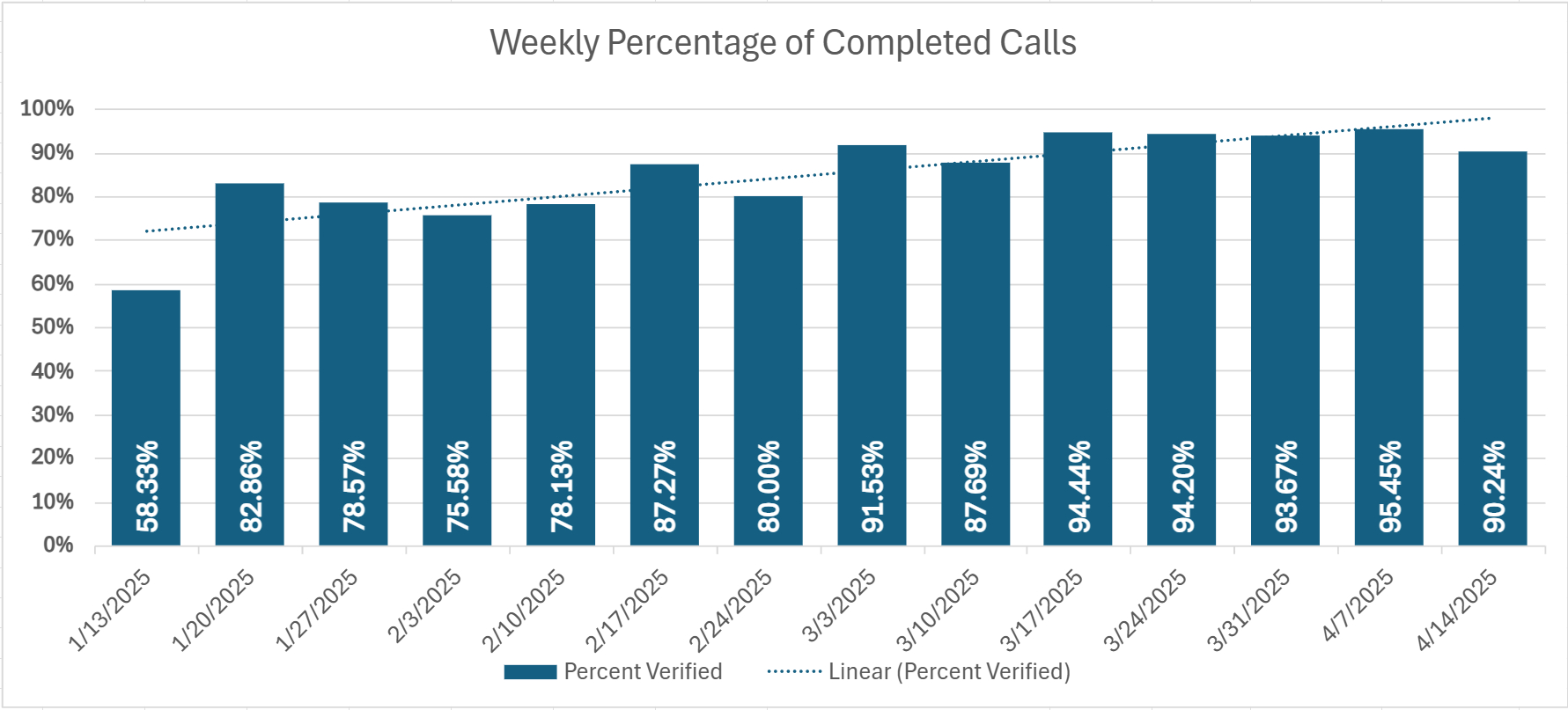
Results: Sofiya completed 696 out of 806 calls (86.4%). 110 calls (13.6%) were non-completions, largely due to patient hang-ups or repeated inability to make contact. Patient self-service resolution was 36.6% of calls where no RN call was made. In 37.6% of calls, a protocol-driven callback was made reasons such as determining the last dose of anticoagulant or to provide medical advice, something Sofiya is prohibited from doing. 12.2% of calls were escalated to manual calls for reasons such as cancellations. Technical issues combined made up 6.0% of calls. A survey of 588 patients showed a composite customer satisfaction score of 94.88% covering clarity, level of detail, and overall effectiveness. Feedback highlighted Sofiya’s empathy, patience, and ability to handle complex queries. Issues of speech recognition, particularly with noisy environments and strong accents, were noted but infrequent.
Conclusion: Sofiya demonstrated strong performance in pre-procedural patient interactions, reducing clinical workload while preserving patient trust and satisfaction. Nurses finished their calling task earlier and were able to return to direct patient care. Sofiya and similar systems may offer a scalable solution for administrative burden and staff burnout.
Kini, Annapoorna
(
Icahn School of Medicine at Mount Sinai
, New York , New York , United States )
Vengrenyuk, Andriy
(
The Mount Sinai Hospital
, New York , New York , United States )
Pineda, Derek
(
The Mount Sinai Hospital
, New York , New York , United States )
Vengrenyuk, Yuliya
(
Icahn School of Medicine at Mount Sinai
, New York , New York , United States )
Bander, Jeffrey
(
Icahn School of Medicine at Mount Sinai
, New York , New York , United States )
Rhee, Amanda
(
Icahn School of Medicine at Mount Sinai
, New York , New York , United States )
Darrow, Bruce
(
Icahn School of Medicine at Mount Sinai
, New York , New York , United States )
Gavin, Nicholas
(
Icahn School of Medicine at Mount Sinai
, New York , New York , United States )
Author Disclosures:
Annapoorna Kini:DO NOT have relevant financial relationships
| Andriy Vengrenyuk:DO NOT have relevant financial relationships
| Derek Pineda:DO have relevant financial relationships
;
Speaker:AstraZenexca:Active (exists now)
; Consultant:CathWorks:Active (exists now)
; Speaker:Shockwave Medical:Active (exists now)
| Yuliya Vengrenyuk:No Answer
| Jeffrey Bander:DO NOT have relevant financial relationships
| Amanda Rhee:DO NOT have relevant financial relationships
| Bruce Darrow:No Answer
| Nicholas Gavin:No Answer