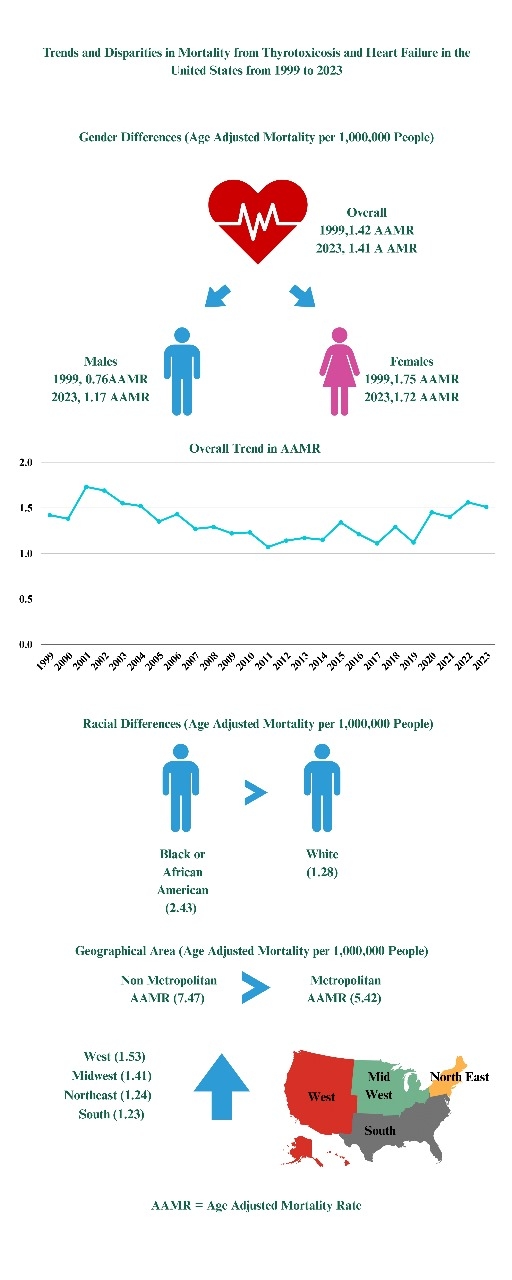
Trends and Disparities in Mortality from Thyrotoxicosis and Heart Failure in the United States from 1999 to 2023.
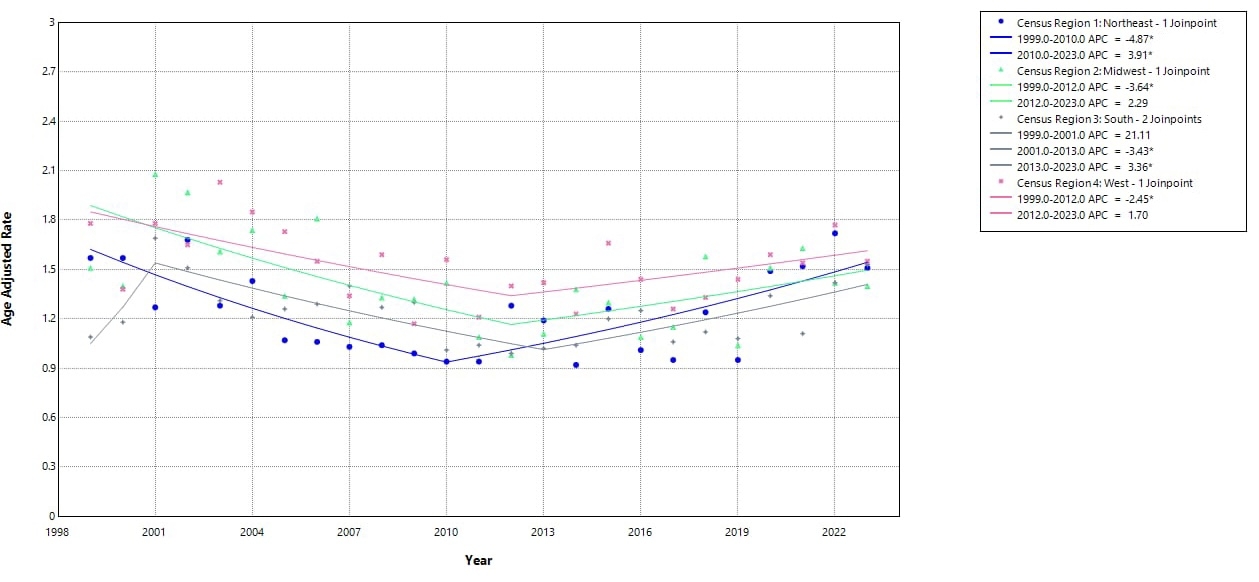
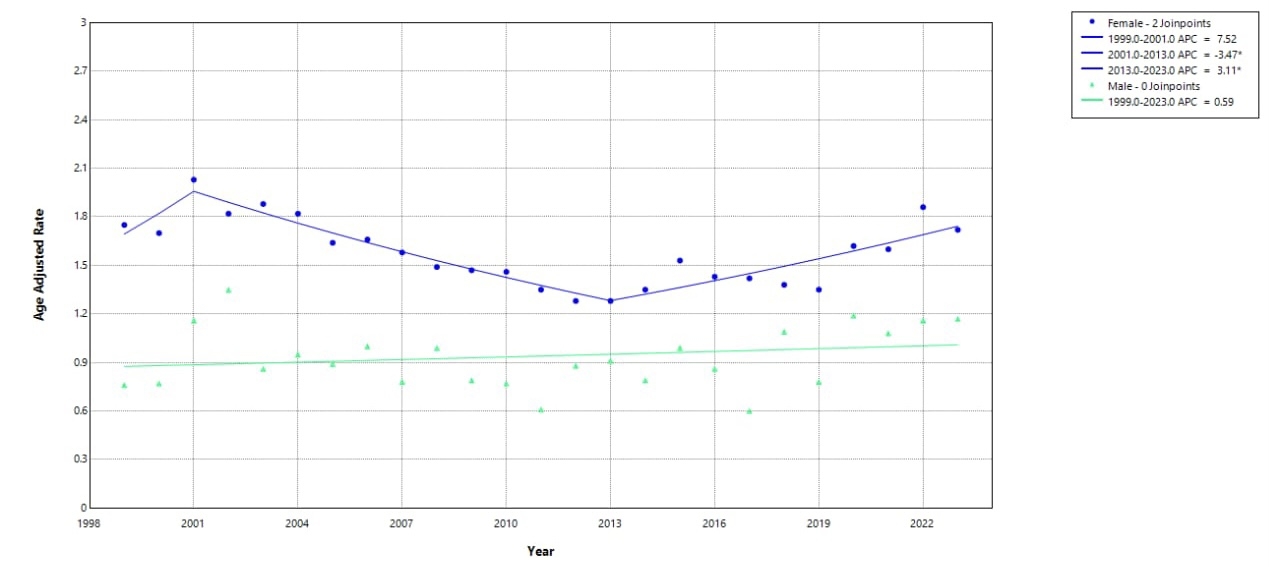
Abstract Body (Do not enter title and authors here): Abstract: Background: Thyrotoxicosis, a reversible endocrine disorder, significantly affects cardiovascular outcomes, particularly by worsening heart failure (HF). Cardiac problems include arrhythmias, cardiomyopathy, and heart failure that are linked to hyperthyroidism, greatly raising morbidity and mortality. But there is still little national data on mortalities from co-occurring heart failure (HF) and thyrotoxicosis. Objective: To assess long-term mortality trends associated with co-occurring thyrotoxicosis and heart failure across age, sex, race/ethnicity, geographic regions, and urbanization levels in the United States from 1999 to 2023. Methods: We extracted data from the Centers for Disease Control and Prevention Wide-ranging Online Data for Epidemiologic Research (CDC WONDER) Multiple Cause of Death database for U.S. adults aged ≥65 years where both thyrotoxicosis (ICD-10: E05) and heart failure (ICD-10: I50) were recorded as underlying or contributing causes of death. Age-adjusted mortality rates (AAMRs) were calculated using the U.S. 2000 standard population. Joinpoint regression modeling was used to evaluate temporal trends. Subgroup analyses were conducted by sex, race/ethnicity, census region, and urban-rural classification. Results: From 1999 to 2023, age-adjusted mortality related to heart failure with coexisting thyrotoxicosis declined in the early 2000s, plateaued after 2012, and began rising again in the late 2010s. Thyrotoxicosis-specific mortality increased sharply by 11.7% annually between 2018 and 2020. The highest mortality rates were observed among Black men, rural residents, and individuals residing in the Southern and Midwestern United States. Women accounted for the majority of deaths related to thyrotoxicosis, with a marked increase in rates after 2018. Overall, racial, geographic, and socioeconomic disparities in mortality persisted, with widening gaps observed in several subgroups. Conclusions: Despite being clinically reversible, thyrotoxicosis continues to contribute to HF-related mortality, particularly in structurally vulnerable populations. The reversal of earlier mortality declines highlights a growing public health gap. These findings underscore the importance of enhancing clinical awareness, facilitating earlier diagnosis, and implementing equitable health policies to reduce the number of preventable deaths.
Nawaz, Inshrah
(
Lahore Medical and Dental College
, Lahore , Pakistan )
Usman, Muhammad
(
King Edward Medical University
, Lahore , Punjab , Pakistan )
Qureshi, Ahmar Jan
(
CMH Institute of Medical Sci Multan
, Multan , Pakistan )
Hamid, Maira
(
King Edward Medical University
, Lahore , Punjab , Pakistan )
Kunwar, Romaisa
(
King Edward Medical University
, Lahore , Punjab , Pakistan )
Sanan, Ahmad
(
Khyber Medical College Peshawar
, Peshawar , Ky , Pakistan )
Tariq Tagga, Muhammad Riyyan
(
CMH multan institute of medical sci
, Multan , Pakistan )
Bilal, Muhammad
(
Sargodha Medical College
, Sargodha , Punjab , Pakistan )
Author Disclosures:
Inshrah Nawaz:DO NOT have relevant financial relationships
| MUHAMMAD USMAN:DO NOT have relevant financial relationships
| Ahmar Jan Qureshi:DO NOT have relevant financial relationships
| Maira Hamid:No Answer
| Romaisa Kunwar:No Answer
| iffat Ambreen magsi:DO NOT have relevant financial relationships
| Ahmad Sanan:DO NOT have relevant financial relationships
| Muhammad Riyyan Tariq Tagga:DO NOT have relevant financial relationships
| MUHAMMAD BILAL:DO NOT have relevant financial relationships
Kumar Laksh, Ullah Irfan, Hafeez Ali Shan, Ali Talha, Ashraf Saad, Sakarwala Aasiya Shahbaz, Zaman Asad, Tagga Muhammad Riyyan, Qureshi Ahmar Jan, Khan Abdul Wali