
Logo

American Heart Association

  55
  0


Final ID: MP1521

Use of AI in young cases of sudden cardiac arrest: Implications for treatments and neuropsychiatric pathologies.

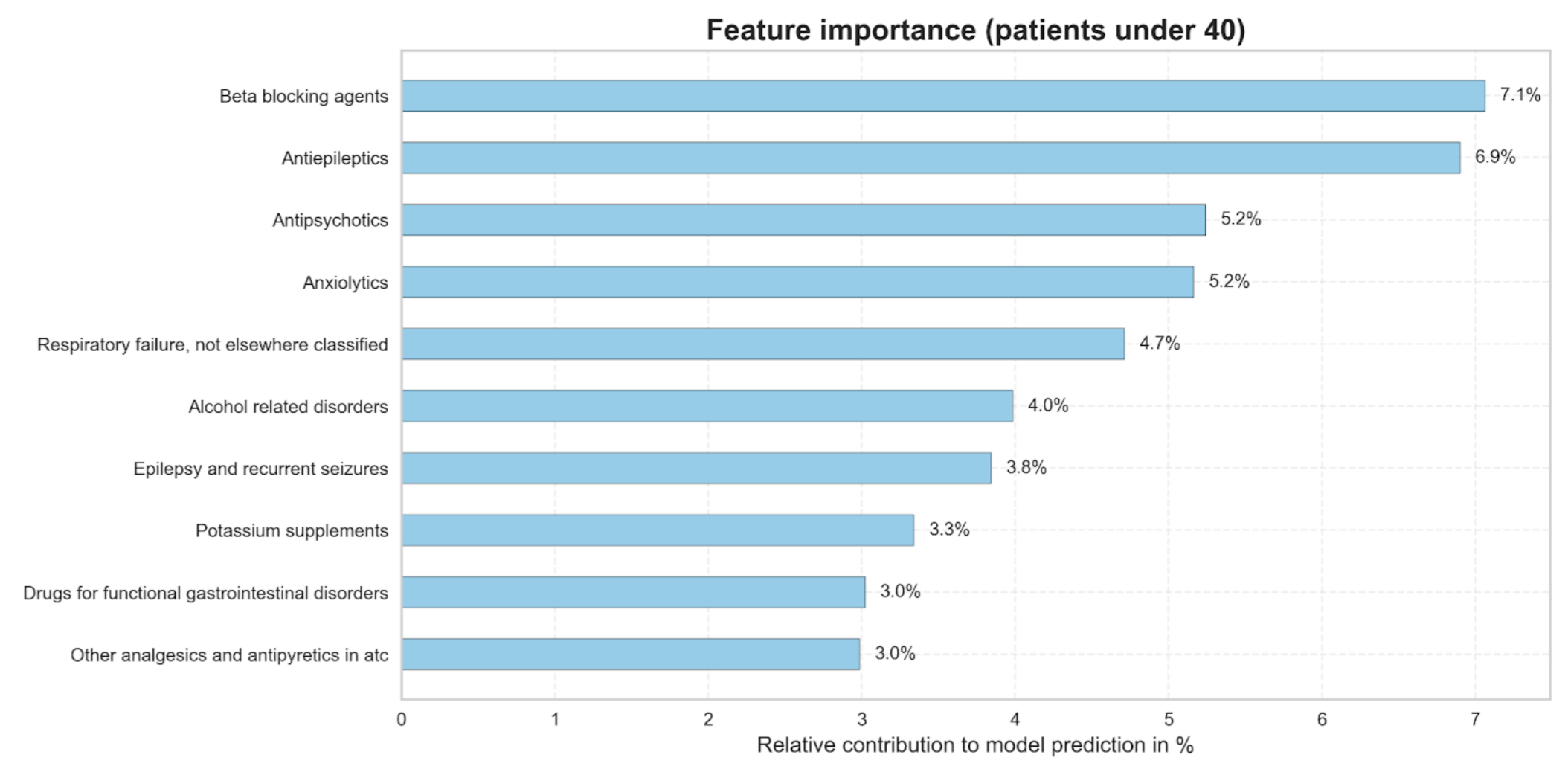
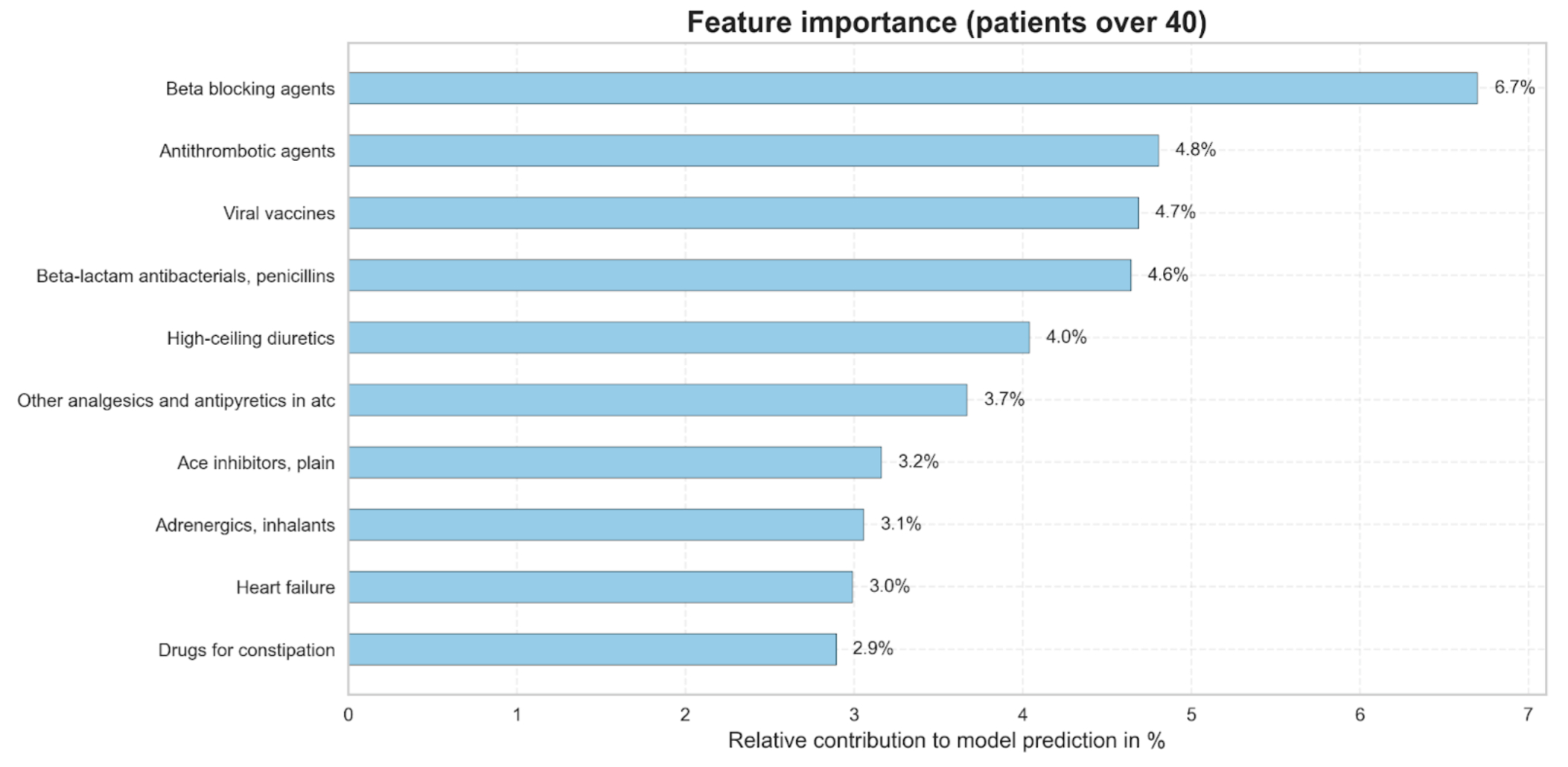
Abstract Body (Do not enter title and authors here): Background : Sudden Cardiac Arrest (SCA) in young adults is a significant public health issue, with survival rates often less than 15%. In young adults, most SCA arise from patients for whom there are no well-identified risk factors. Strengthening our understanding of SCA in young adults is therefore essential for identifying those at risk and developing interventions to reduce its incidence. Methods: We conducted a case-control study using electronic health records (EHRs) from 89,040 individuals in one city and its suburbs (2011–2020). We included 4,244 prospectively collected patients aged ≤ 40 years and 84,796 aged > 40 years, with a 1:3 case-controls matching on age, sex, and residence. We trained Explainable Boosting Machine (EBM) models on medical diagnoses and prescriptions from the five years preceding SCA. Model performance was assessed using AUC, sensitivity, specificity, and feature importance, stratified by age groups. Results: For patients aged ≤40 years, neuropsychiatric factors, including antipsychotics, anxiolytics, and epilepsy emerged as key predictors of SCA, whereas cardiovascular factors were the primary predictors in the older group. The younger cohort’s model achieved an AUC of 0.74 (95% CI: 0.70–0.78). The older cohort’s model had an AUC of 0.80 (95% CI: 0.79–0.81). Both models demonstrated robust calibration, and sensitivity analyses confirmed consistent findings across various feature subsets and hyperparameter settings. Conclusion: These findings underscore the crucial role of neuropsychiatric factors in risk stratification among younger individuals. By highlighting risk markers such as epilepsy and the use of antipsychotics or anxiolytics, our results call for greater interdisciplinary collaboration to expand current SCA conception beyond the strict cardiac domain. Future research should investigate non-cardiac markers to refine SCA risk stratification and explore non-cardiac contributors to better understand young and undiagnosed cases.
  • Laurenceau, Thomas  ( Paris Cardiac Arrest Center , Paris , France )
  • Chocron, Richard  ( Paris Cardiac Arrest Center , Paris , France )
  • Meli, Ugo  ( Paris Cardiac Arrest Center , Paris , France )
  • Cezard, Pierre  ( Paris Cardiac Arrest Center , Paris , France )
  • Jouven, Xavier  ( Jouven , Clamart , France )
  • Author Disclosures:
    Thomas Laurenceau: No Answer | Richard Chocron: DO NOT have relevant financial relationships | Ugo Meli: No Answer | Pierre Cezard: DO NOT have relevant financial relationships | Xavier Jouven: DO NOT have relevant financial relationships
Meeting Info:

Scientific Sessions 2025

2025

New Orleans, Louisiana

Session Info:

Integrating AI with ECG and Physiologic Signals for Multimodal Precision Health

Sunday, 11/09/2025 , 09:15AM - 10:30AM

Moderated Digital Poster Session

More abstracts on this topic:
A Deep Learning Topic Analysis Approach for Enhancing Risk Assessment in Heart Failure Using Unstructured Clinical Notes

Adejumo Philip, Pedroso Aline, Khera Rohan

Disrupted Circadian Rhythms Alter Exosomal Biophysical Signalling Impacting Cardiovascular Health

Thakur Abhimanyu, Chinmaya Chinmaya, Rai Amit, Wittmann Christopher, Mcmullan Elena, Cheng Zhongjian, Benedict Cindy, Garikipati Venkata, Kishore Raj, Kubo Hajime, Joladarashi Darukeshwara, Gurrala Charan, Mallaredy Vandana, Natarajaseenivasan Suriya Muthukumaran, Cimini Maria, Truongcao May, Cohen Maddy

More abstracts from these authors:
Following the implementation of a prevention policy : Improved survival after sudden cardiac arrest in train stations.

Chocron Richard, Laurenceau Thomas, Meli Ugo, Cezard Pierre, Jouven Xavier

Beyond the heart: neuropsychiatric factors as leading risk markers for sudden cardiac arrest in the young

Laurenceau Thomas, Chocron Richard, Cezard Pierre, Meli Ugo, Empana Jean-philippe, Jouven Xavier

You have to be authorized to contact abstract author. Please, Login
Not Available