Dual Therapy with Semaglutide and Physical Training Lowers Cardiorenal Burden in Experimental DKD and renal cells
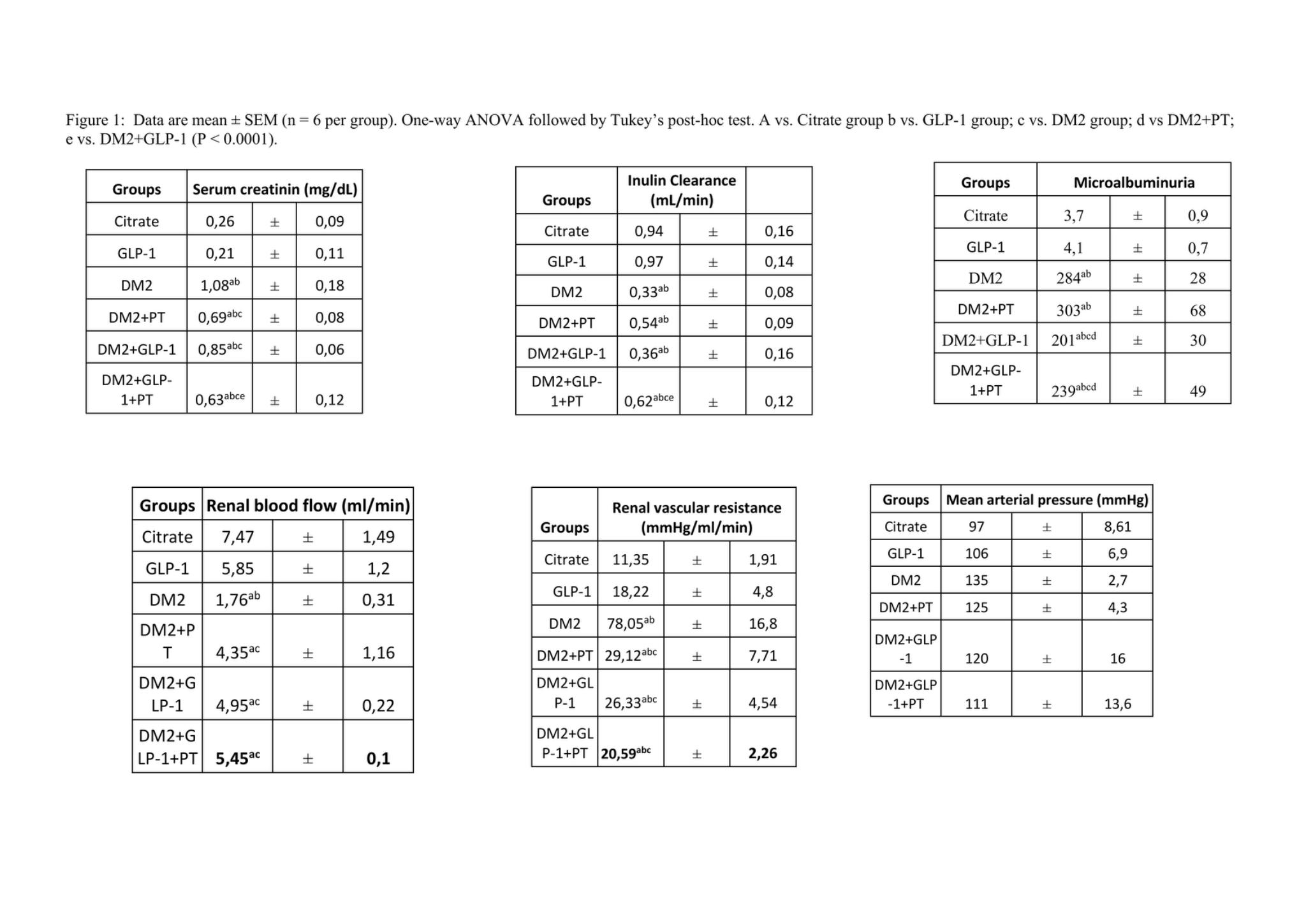
Abstract Body (Do not enter title and authors here): Introduction: Diabetic kidney disease (DKD) is one of the most common complication of type 2 diabetes mellitus (T2DM) and confers increased risk of myocardial infarction, stroke, and heart failure. Glucagon-like peptide-1 receptor agonists (GLP-1RAs) and guideline-directed moderate physical training (PT) reduce major adverse cardiovascular events. This study investigated whether this combination provides cardiorenal benefit through improved vascular compliance, renal perfusion, and redox balance. Methods: Male wistar rats were allocated into six groups: controls, GLP-1RA, T2DM, T2DM+PT, T2DM+GLP-1RA and T2DM+PT+GLP-1RA. Interventions lasted 28 days. Renal function (inulin clearance, serum creatinine), microalbuminuria, renal hemodynamics, oxidative biomarkers (urinary peroxides, lipid peroxidation, nitrates, tissue thiols, catalase), and mitochondrial enzyme activity (citrate synthase) were evaluated. In parallel, HK-2 cells were cultured under normoglycemic (5.5 mM) or hyperglycemic (30 mM) conditions and treated with semaglutide (400 nM) for up to 4 days. Cell viability was assessed using MTT assay. Results: The combination of semaglutide and PT in type 2 diabetic rats significantly improved glomerular filtration rate, reduced serum creatinine, microalbuminuria, renal oxidative stress, and vascular resistance, while enhancing renal blood flow and citrate synthase activity. In vitro, semaglutide attenuated high-glucose-induced cytotoxicity in HK-2 cells, preserving cellular viability. Conclusion: Combined treatment with semaglutide and moderate physical training attenuated the progression of DKD induced by T2DM. These findings reinforce the superior renoprotective effects of the combined therapy compared to isolated interventions, particularly through improved renal hemodynamics and reduced oxidative stress. Overall, the data highlights the therapeutic potential of this strategy in mitigating DKD progression and cardiovascular disease.
Vattimo, Maria De Fatima
(
University of Sao Paulo
, Sao Paulo , Brazil )
Oliveira Silva, Eloiza
(
University os Sao Paulo
, Sao Paulo , Brazil )
Garcia Villalba, Jessica
(
universidade de sao paulo
, Rio de janeiro , Brazil )
Goncalves, Maikol Lucas
(
University of Sao Paulo
, Cotia , Brazil )
Veloso Gusmao Silva, Juliana
(
University of Sao Paulo
, Sao Paulo , Brazil )
Gomes Alves, Mykelly
(
University of Sao Paulo
, Sao Paulo , Brazil )
Victoria, Carla
(
University of Sao Paulo
, Sao Paulo , Brazil )
Gonzaga, Maria JosÉ Dias
(
University of Sao Paulo
, Sao Paulo , Brazil )
Polastri, Thatiane
(
University of Sao Paulo
, Sao Paulo , Brazil )
Author Disclosures:
Maria de Fatima Vattimo:DO NOT have relevant financial relationships
| Eloiza Oliveira Silva:DO NOT have relevant financial relationships
| Jessica Garcia Villalba:DO NOT have relevant financial relationships
| Maikol Lucas Goncalves:DO NOT have relevant financial relationships
| Juliana veloso gusmao silva:DO NOT have relevant financial relationships
| Mykelly Gomes Alves:No Answer
| Carla Victoria:No Answer
| MARIA JOSÉ DIAS GONZAGA:No Answer
| Thatiane Polastri:DO NOT have relevant financial relationships