
Logo

American Heart Association

  22
  0


Final ID: MP1780

Prescription Stimulants Can Increase Risk of Arrhythmias: Systematic Review and Meta-Analysis

Abstract Body (Do not enter title and authors here): Background:
Centrally acting stimulants are widely prescribed for attention-deficit/hyperactivity disorder (ADHD), narcolepsy, and related neuropsychiatric conditions, but concerns persist regarding their cardiovascular safety. These agents, including amphetamines, methylphenidate, modafinil, and lisdexamfetamine, elevate sympathetic tone and may precipitate cardiac arrhythmias, including atrial fibrillation (AF) and ventricular tachyarrhythmias. Yet, published data remain inconsistent and fragmented across varying designs. We conducted a comprehensive systematic review and meta-analysis to clarify the arrhythmic risk associated with commonly prescribed stimulants.
Hypothesis:
We hypothesized that prescription stimulants are associated with increased risk of incident or recurrent cardiac arrhythmias, with variable risk based on stimulant class.
Methods:
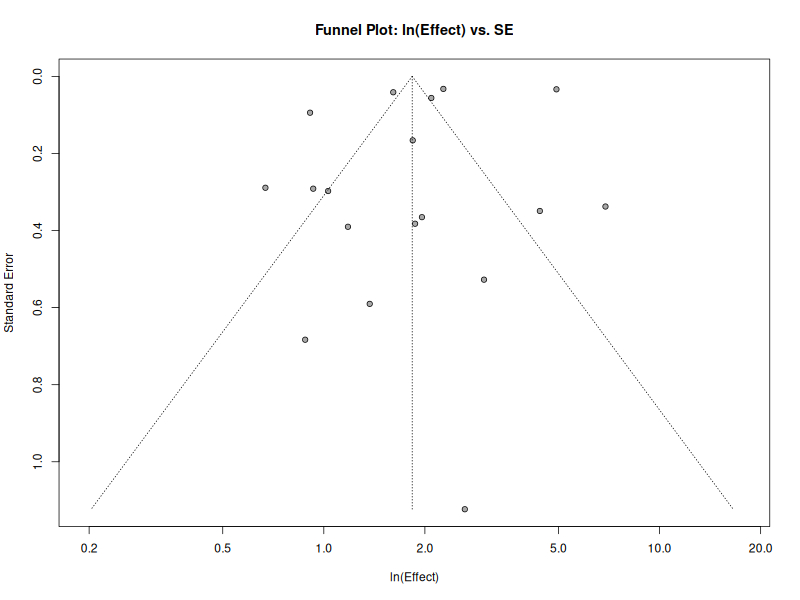
PubMed, MEDLINE (Ovid), APA PsycINFO (Ovid), Cochrane Library, and Web of Science were searched through May, 2025. Eligible studies included randomized trials, cohort studies, and case-control designs comparing stimulant use to either no stimulant or an alternative, reporting adjusted effect estimates for arrhythmia. Two reviewers screened all records (κ = 0.78), extracted data, and assessed the risk of bias using the ROBINS-I tool. Adjusted odds, rates, and hazard ratios were converted to log-HRs and pooled using random-effects models. Between-study heterogeneity was quantified using I^2 and τ^2 ; publication bias was assessed by funnel plot.
Results:
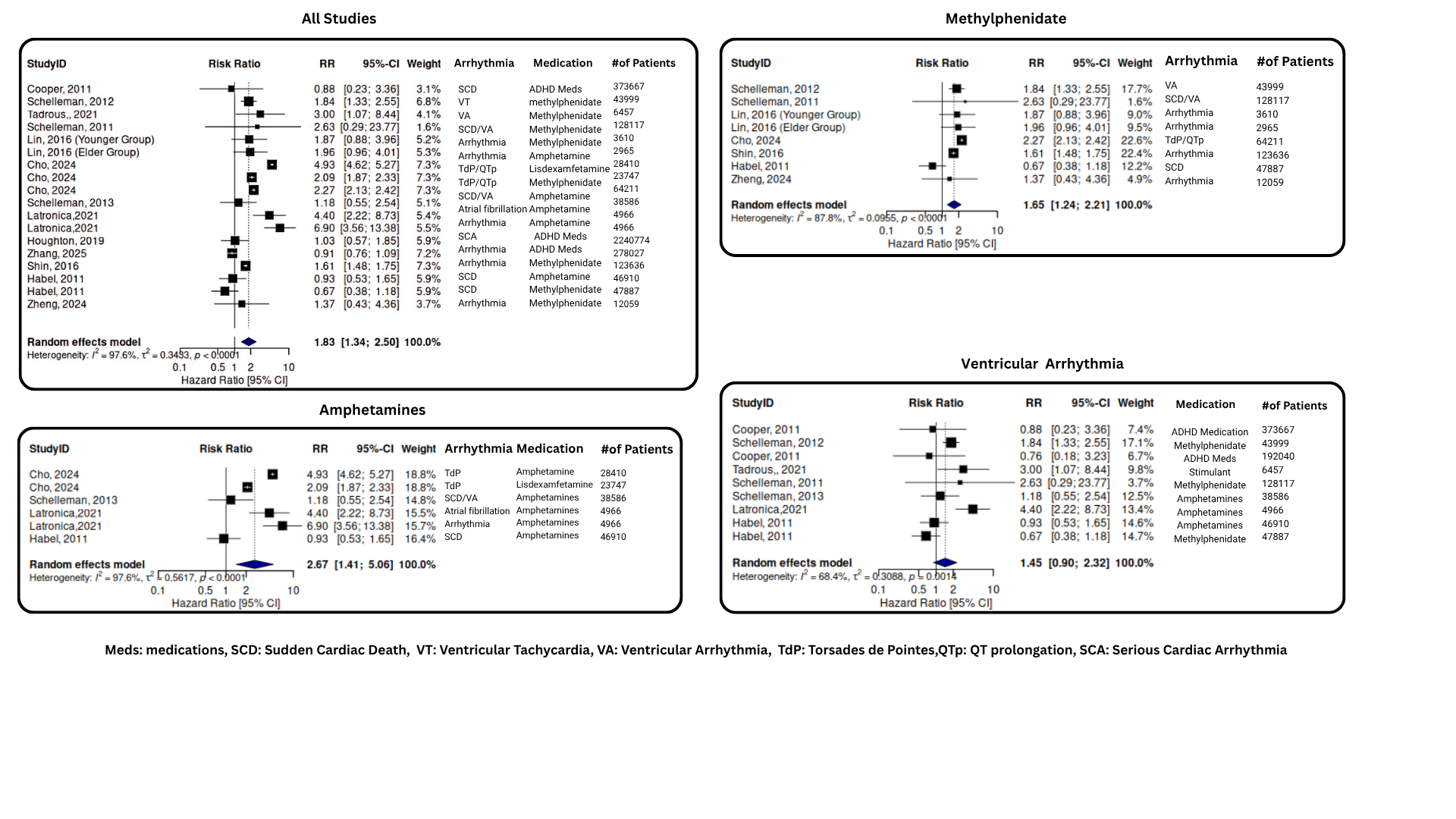
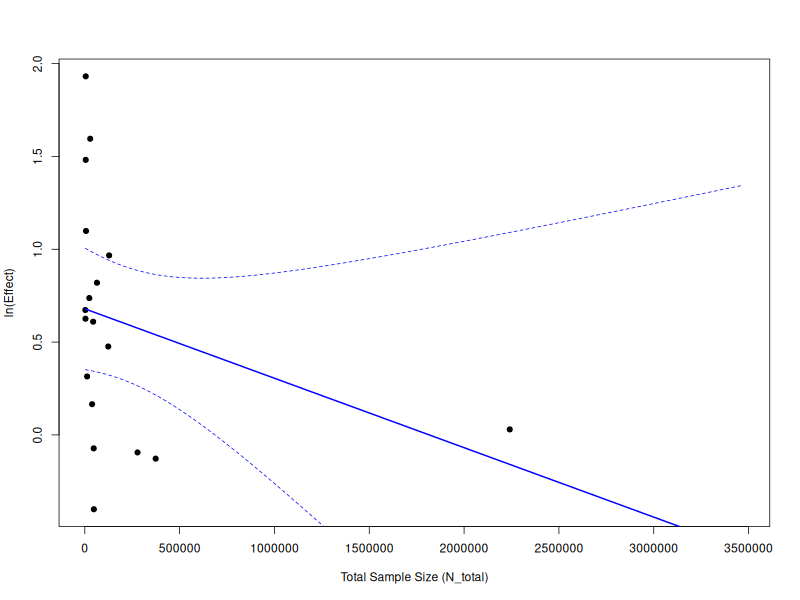
Fourteen studies (N = 3,660,068) met the inclusion criteria. Overall stimulant use was associated with an 83% increased risk of arrhythmia (HR 1.83; 95% CI 1.34–2.50; I^2=97.6%). Amphetamines showed the highest risk (HR 2.67; 95% CI 1.41–5.06; I^2=97.6%), followed by methylphenidate (HR 1.65; 95% CI 1.24–2.21; I^2=87.8%). Sudden cardiac death or ventricular fibrillation (N=882,629) did not reach statistical significance (HR 1.45; 95% CI 0.90–2.32; I^2=68.4%). Funnel plots appeared symmetric, and meta-regression showed no substantial influence of sample size on effect estimates.
Conclusion:
All major stimulant subclasses were significantly associated with increased arrhythmia risk, with the highest risk observed in amphetamines. These findings emphasize the potential cardiovascular consequences of stimulant therapy and reinforce the need for ongoing cardiac monitoring. Further research is warranted to delineate the safety profiles of individual stimulant medications.
  • Jabbar Abdl Sattar Hamoudi, Hammza  ( UT Health Houston , Houston , Texas , United States )
  • Abdelkhalek, Ahmad  ( RFU- Northwestern McHenry Hospital , McHenry , Illinois , United States )
  • Mwangi, Benson  ( UT Health Houston , Houston , Texas , United States )
  • Abdelkhalek, Omar  ( Zhejiang University , Hangzhou , Zhejiang , China )
  • Author Disclosures:
    Hammza Jabbar Abdl Sattar Hamoudi: DO NOT have relevant financial relationships | Ahmad Abdelkhalek: DO NOT have relevant financial relationships | Benson Mwangi: DO NOT have relevant financial relationships | Omar Abdelkhalek: DO NOT have relevant financial relationships
Meeting Info:

Scientific Sessions 2025

2025

New Orleans, Louisiana

Session Info:

Improving Arrhythmia Care for Vulnerable Populations: How Can We Do Better?

Sunday, 11/09/2025 , 11:50AM - 01:05PM

Moderated Digital Poster Session

More abstracts on this topic:
A-band titin-truncating variant promotes the development of arrhythmia-induced cardiomyopathy in a novel genetically-engineered porcine model

Lee Kwonjae, Del Rio Carlos, Mcnally Elizabeth, Pfenniger Anna, Bhatnagar Ashita, Glinton Kristofor, Burrell Amy, Ober Rebecca, Mcluckie Alicia, Bishop Brian, Rogers Christopher, Geist Gail

A 60-fold increase in SCA risk in the last kilometer of endurance races : Final sprint, fatal outcome.

Chocron Richard, Levy Bernard, Beganton Franckie, Bougouin Wulfran, Empana Jean-philippe, Jouven Xavier, Laurenceau Thomas, Chabrol Marion, Mignot Soline, Meli Ugo, Langlois Camille, Cezard Pierre, Schwartz Peter, Kaab Stefan

More abstracts from these authors:
Trends and Disparities in Aortic Dissection Mortality in the United States: A Retrospective Analysis

Hemida Mohamed Fawzi, Ali Muhammad Faizan, Alkasabrah Omar, Ibrahim Alyaa, Shahriar Zahin, Patel Krish, Abdelkhalek Ahmad, Islam M Rafiqul, Rathi Diya, Hussein Mirna, Sarfraz Muhammad Raza

Mortality Patterns of Atrial Fibrillation Among Adults with Renal Disease in the United States, 1999–2023: Evidence from the CDC WONDER Database

Hemida Mohamed Fawzi, Ali Muhammad Faizan, Ahmed Phd Raheel, Ibrahim Alyaa, Islam M Rafiqul, Patel Krish, Abdelkhalek Ahmad, Ahmad Aamer, Rathi Diya, Sarfraz Muhammad Raza, Hammad Noha

You have to be authorized to contact abstract author. Please, Login
Not Available