
Logo

American Heart Association

  23
  0


Final ID: Sa4094

Endothelial GPR68 Promotes Arteriogenesis and Attenuates Ischemic Injury in a Mouse Model of Peripheral Artery Disease

Abstract Body (Do not enter title and authors here): Background:
Peripheral artery disease (PAD) results from pathological narrowing of arteries, reducing blood flow to the extremities. Shear stress sensing by endothelial cells (ECs) is a key trigger of arteriogenesis, yet the molecular sensor remains poorly defined. G protein–coupled receptor 68 (GPR68) is a known shear stress sensor enriched in arterioles and involved in flow-mediated dilation, but its role in arteriogenesis has not been investigated.

Methods:
We generated Gpr68-tdTomato reporter mice to trace GPR68 expression in vivo. Inducible, EC-specific (Gpr68 iECKO) and macrophage-specific (Gpr68 mac-iKO) knockout mice were used to dissect the cell type–specific role of GPR68. An in-house dual-ligation hindlimb ischemia (HLI) model (femoral + popliteal artery) was used to induce collateral remodeling in the semimembranosus muscle. Perfusion recovery was assessed by laser Doppler imaging. Collateral growth was evaluated at day 7 post-HLI. The GPR68-specific agonist Compound 71 (25 mg/kg/day, i.p.) was used to assess therapeutic efficacy.

Results:
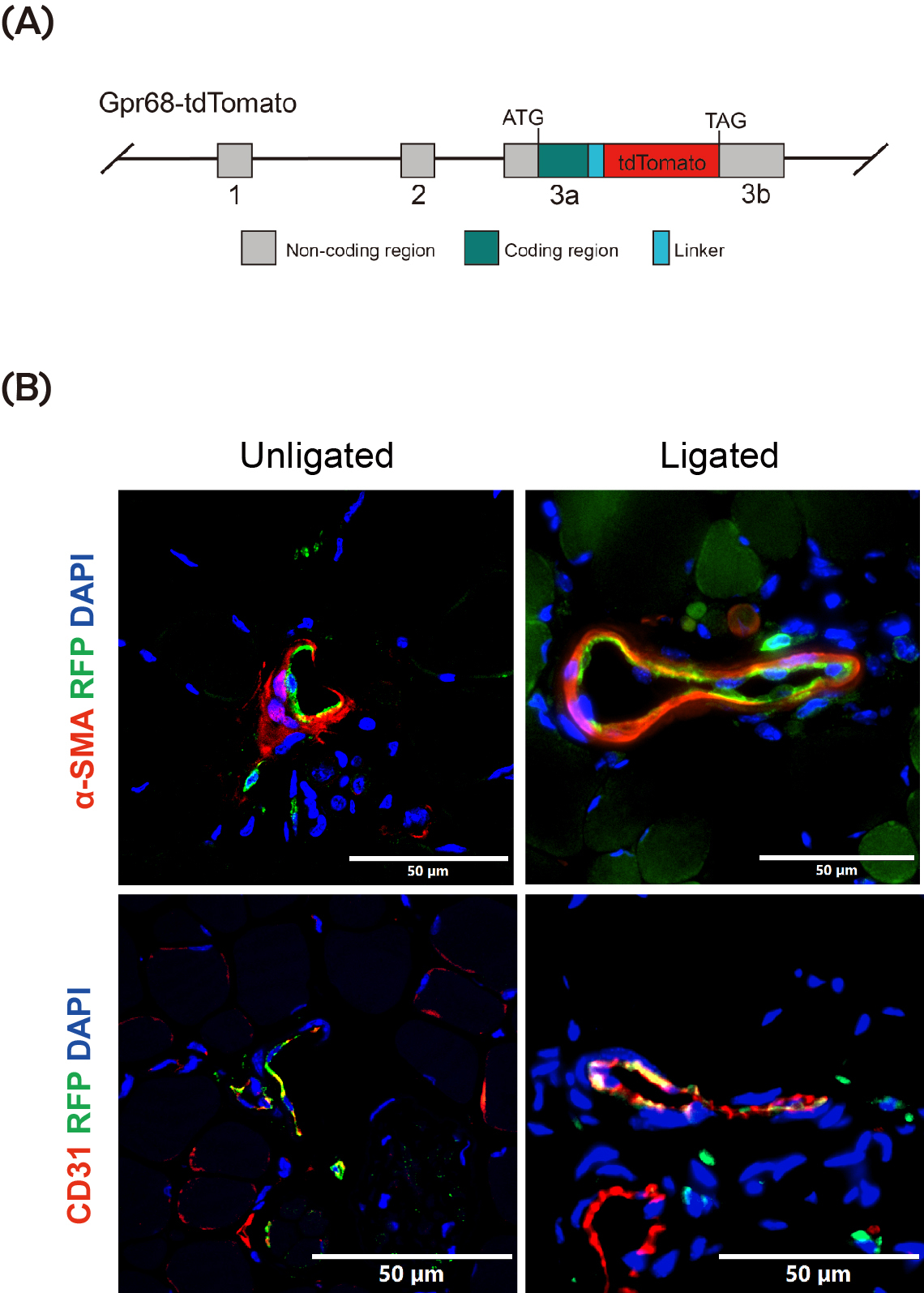
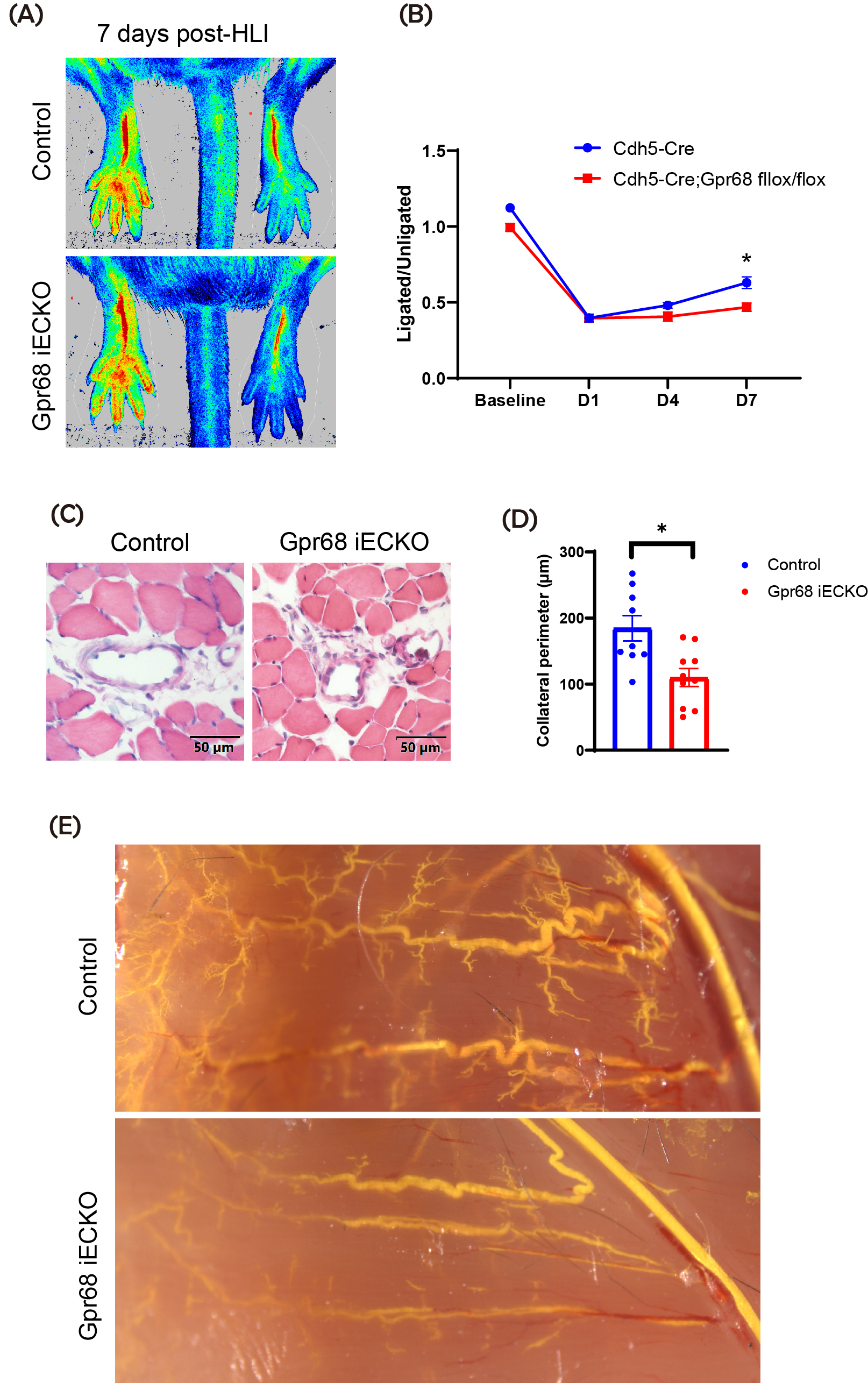
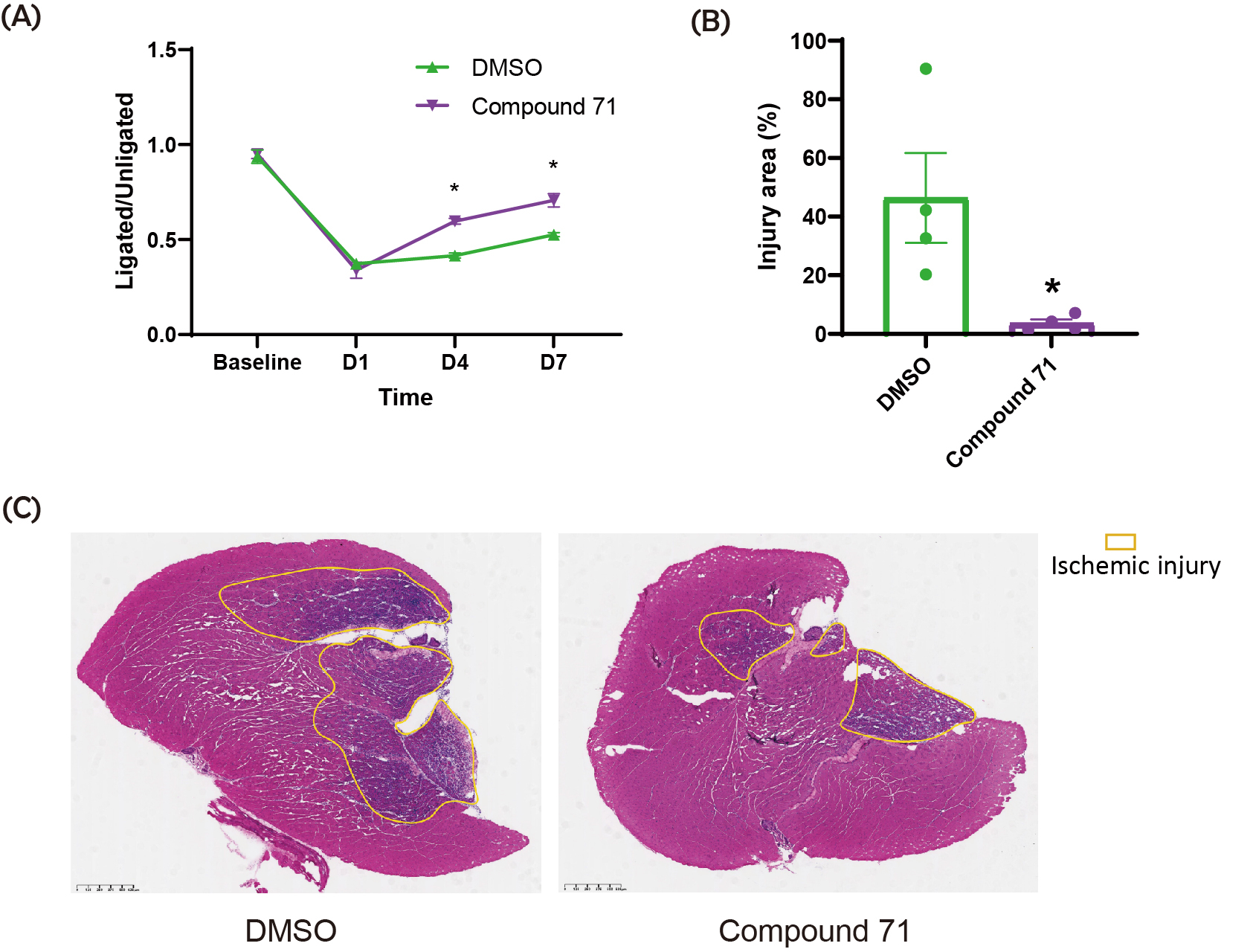
Seven days after HLI, GPR68-tdTomato expression was localized to ECs in semimembranosus muscle collaterals. Gpr68 iECKO mice exhibited impaired perfusion recovery, significantly smaller collateral size, and reduced perivascular CCR2+ macrophage infiltration. These mice also showed more severe ischemic injury in the gastrocnemius muscle compared to littermate controls. In contrast, Gpr68 mac-iKO mice exhibited no significant changes, confirming the endothelial-specific role of GPR68. RNA-seq and qPCR of semimembranosus tissue revealed downregulation of chemokines and adhesion molecules (e.g., Ccl2, Itgb3, Icam1) in Gpr68 iECKO mice, suggesting impaired monocyte recruitment. In vitro, activation of GPR68 by Compound 71 enhanced THP1 monocyte adhesion to ECs via PKC-mediated ATF3/SPP1 signaling. In vivo, Compound 71 treatment accelerated perfusion recovery and reduced ischemic injury post-HLI.

Conclusions:
Endothelial GPR68 acts as a shear stress sensor that promotes arteriogenesis by regulating chemokine expression and monocyte recruitment. Pharmacologic activation of GPR68 may represent a novel shear stress–mimetic therapeutic strategy for PAD.
  • Song, Yiyan  ( Sun Yat-sen University , Guangzhou , China )
  • Peng, Senyi  ( Sun Yat-sen University , Guangzhou , China )
  • Wu, Mingyue  ( Sun Yat-sen University , Guangzhou , China )
  • Xiang, Fuli  ( Sun Yat-sen University , Guangzhou , China )
  • Xu, Jie  ( Sun Yat-sen University , Guangzhou , China )
  • Author Disclosures:
    Yiyan Song: DO NOT have relevant financial relationships | Senyi Peng: No Answer | Mingyue Wu: No Answer | Fuli Xiang: No Answer | Jie Xu: DO NOT have relevant financial relationships
Meeting Info:

Scientific Sessions 2025

2025

New Orleans, Louisiana

Session Info:

Emerging Pathway in Endothelial Biology and Vascular Disease

Saturday, 11/08/2025 , 10:30AM - 11:30AM

Abstract Poster Board Session

More abstracts on this topic:
A Single-Short Partial Reprogramming of the Endothelial Cells Decreases Blood Pressure Via Attenuation of Endothelial-to-Mesenchymal Transition in Hypertensive Mice

Pernomian Laena, Sinclair David, Mccarthy Cam, Tan Wenbin, Wenceslau Camilla, Waigi Emily, Nguyen Vi, Mohammed Ahmed, Januarioda Costa Tiago, Fontes Milene, Kubinack Jason, Aitken Andrew, Biancardi Vinicia

CEACAM1 - central regulator of atherosclerosis

Goetz Lisa, Rueckschloss Uwe, Boemmel Heike, Ergun Suleyman, Kleefeldt Florian

You have to be authorized to contact abstract author. Please, Login
Not Available