Improving Underserved POCUS Access Through Curriculum Strategies and Innovations
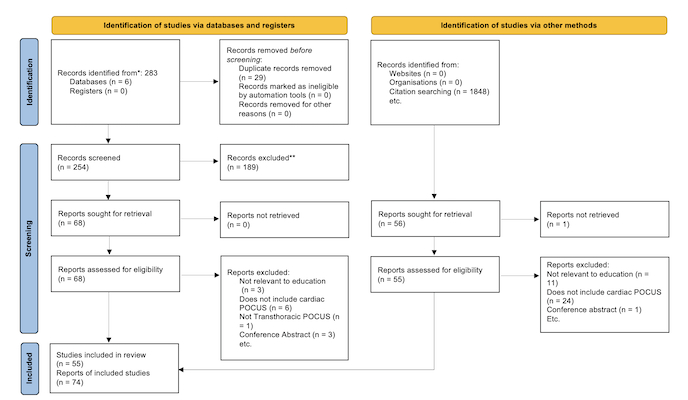
Abstract Body (Do not enter title and authors here): Introduction: Cardiac imaging, including CT, MRI, angiography, often involves complex procedures and extensive training not easily available in resource-limited areas. Nevertheless, the visualization of cardiac anatomy and function is often imperative to diagnosis and management. As such, ultrasound, specifically POCUS, has become increasingly recognized for its diagnostic value and accessibility. This review aims to identify gaps in cardiac POCUS education, while addressing opportunities to optimize cardiac care in under resourced areas. Objective: To identify barriers to effective learning, potential remedies, and innovative approaches to improve POCUS training. Additionally, using the cognitive load theory (CLT) framework to effectively construct a curriculum to meet the demands of an under resourced training site. Methods: A literature search was conducted in PubMed, Cocherane, ERIC, Embase, Web of Science, and Science Direct. Search terms included: (("point-of-care systems"[MeSH Terms] AND "ultrasonography"[MeSH Terms]) OR "POCUS"[All Fields])AND ("cardiology"[All Fields] OR "heart"[All Fields]) AND "education"[MeSH Terms]. From the initial 283 articles, those irrelevant to cardiac POCUS education were eliminated, yielding 55 articles. A snowballing process was then performed, generating 19 additional texts, totaling 74 final articles. Results: Four primary themes were identified: challenges to POCUS education, technologies, innovative teaching, and competency assessment models. Challenges include time and resource constraints, lack of standard competency evaluation, and the difficult translation of classroom learning to clinical practice. Technologies include e-learning, social media, simulators, tele-mentoring, virtual reality, and artificial intelligence. Peer-based learning and design-based approach are some of the innovative instructional methods, and competency assessment methods involve Entrusted Professional Activities and item-centered Ebel standards. Conclusions: POCUS is a high fidelity and complexity task requiring integration of content knowledge, scanning techniques, image interpretation, and clinical decision making. CLT postulates that scaffolded explorations and gradual fidelity sequencing of tasks can lessen the cognitive load. Incorporating tele-mentoring, peer-based learning, and competency-based assessments can greatly increase the effectiveness of POCUS curriculum and subsequently improve underserved cardiac care and diagnostics.
Liao, Jennifer
(
UVM Medical Center
, Winooski , Vermont , United States )
Wahlberg, Kramer
(
University of Vermont
, South Burlington , Vermont , United States )
Author Disclosures:
Jennifer Liao:DO NOT have relevant financial relationships
| Kramer Wahlberg:DO NOT have relevant financial relationships