Guideline-Directed Medical Therapy Utilization Pattern in Patients with Peripartum Cardiomyopathy
Abstract Body (Do not enter title and authors here): Background: Guideline-directed medical therapy (GDMT) is recommended for the management of peripartum cardiomyopathy (PPCM). However, real-world evidence evaluating adherence to these recommendations remains limited.
Methods: Using the TriNetX network, we identified women diagnosed with PPCM within six months postpartum. We analyzed the utilization patterns of GDMT within one year of diagnosis. Subgroup analyses were performed based on race, ethnicity, maternal age, and time period relative to the COVID-19 pandemic.
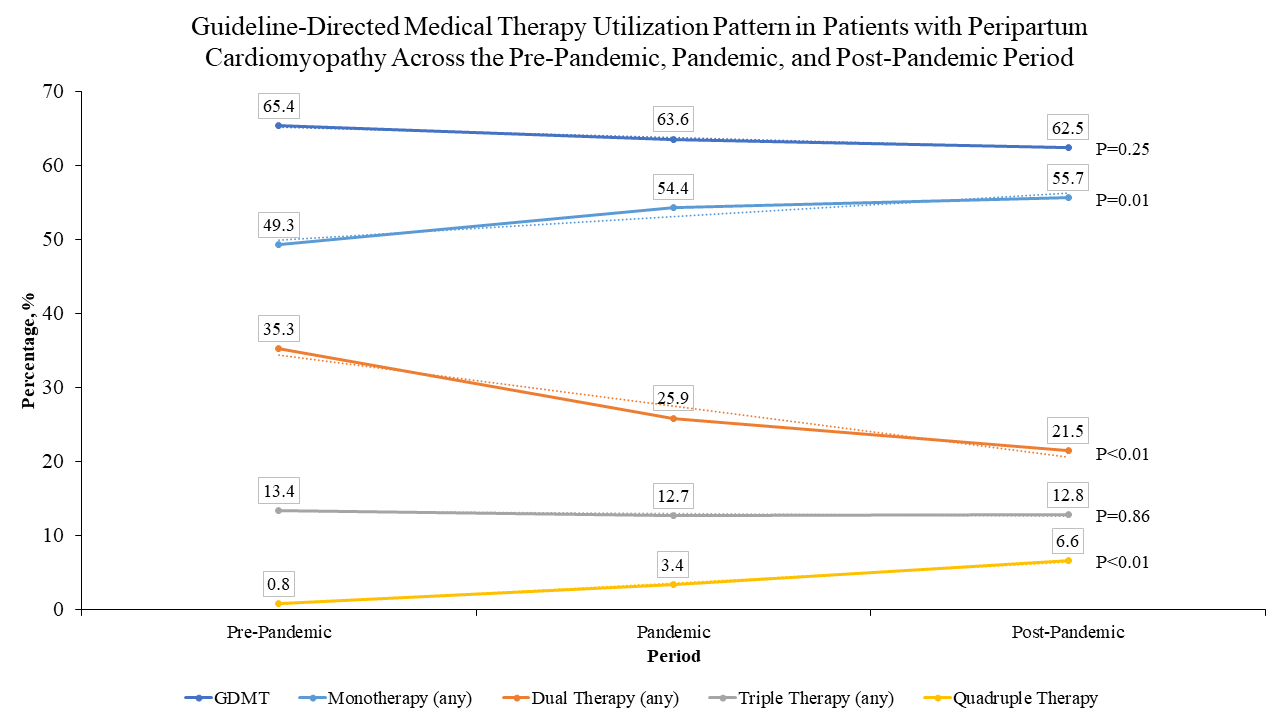
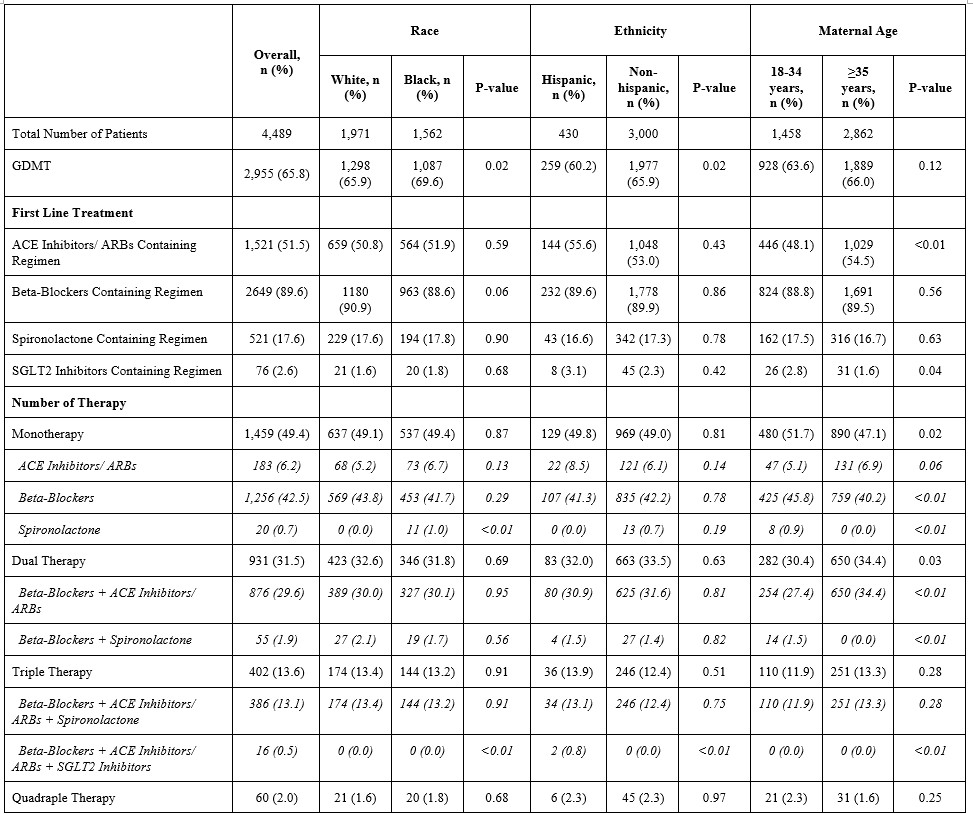
Results: A total of 4,489 patients with PPCM were identified. Overall, 65.8% of patients received guideline-directed medical therapy (GDMT), with beta-blockers (89.6%) and ACE inhibitors (ACEi)/angiotensin receptor blockers (ARBs) (51.5%) being the most commonly prescribed GDMT. Monotherapy was more frequently used than combination therapy (Table 1). GDMT use was higher among Black patients compared to White patients (69.6% vs. 65.9%, p=0.02). Hispanic patients were less likely to receive GDMT than non-Hispanics (60.2% vs. 65.9%, p=0.02). The specific types and combinations of GDMT were similar across racial and ethnic groups. Patients with advanced maternal age had comparable GDMT usage rates to younger patients (66.0% vs. 63.6%, p=0.12), but were more likely to receive ACEi/ARBs and combination therapy, and less likely to be prescribed SGLT2 inhibitors. From the pre-pandemic to post-pandemic periods, overall GDMT usage declined (65.4% to 62.2%, p=0.25). Among those who took GDMT, there was a significant decrease in ACEi/ARB use (54.0% to 43.1%, p<0.01) and a significant increase in SGLT2i use (0.8% to 11.1%, p<0.01) from the pre-pandemic to post-pandemic periods. The rate of monotherapy also increased significantly over time (49.3% to 55.7%, p=0.01).
Conclusion: In this large real-world cohort of patients with PPCM, nearly one-third did not receive any form of guideline-directed medical therapy. Disparities in treatment patterns were observed across race, ethnicity, maternal age, and time period, highlighting opportunities for improved care delivery.
Yeo, Yong Hao
(
William Beaumont Hospital Royal Oak
, Royal Oak , Michigan , United States )
Vignarajah, Aravinthan
(
Cleveland Clinic Fairview Hospital
, Fairview Park , Ohio , United States )
Ong, Tze Ern
(
Interfaith Medical Center
, Masjid Tanah , Malaysia )
Wong, Hermon Kha Kin
(
University of Malaysia Sabah
, Johor Bahru , Malaysia )
Tamirisa, Kamala
(
Texas Cardiac Arrhythmia Institute
, Southlake , Texas , United States )
Davis, Melinda
(
University of Michigan
, Ann Arbor , Michigan , United States )
Author Disclosures:
Yong Hao Yeo:DO NOT have relevant financial relationships
| Aravinthan Vignarajah:DO NOT have relevant financial relationships
| Tze Ern Ong:DO NOT have relevant financial relationships
| Hermon Kha Kin Wong:DO NOT have relevant financial relationships
| Kamala Tamirisa:DO have relevant financial relationships
;
Speaker:abbott medical:Past (completed)
; Advisor:boston scientific:Active (exists now)
| Melinda Davis:No Answer