Sex Disparities in Acute Myocardial Infarction in Japan: A 40-Year Study from the Miyagi (Regional) AMI Registry
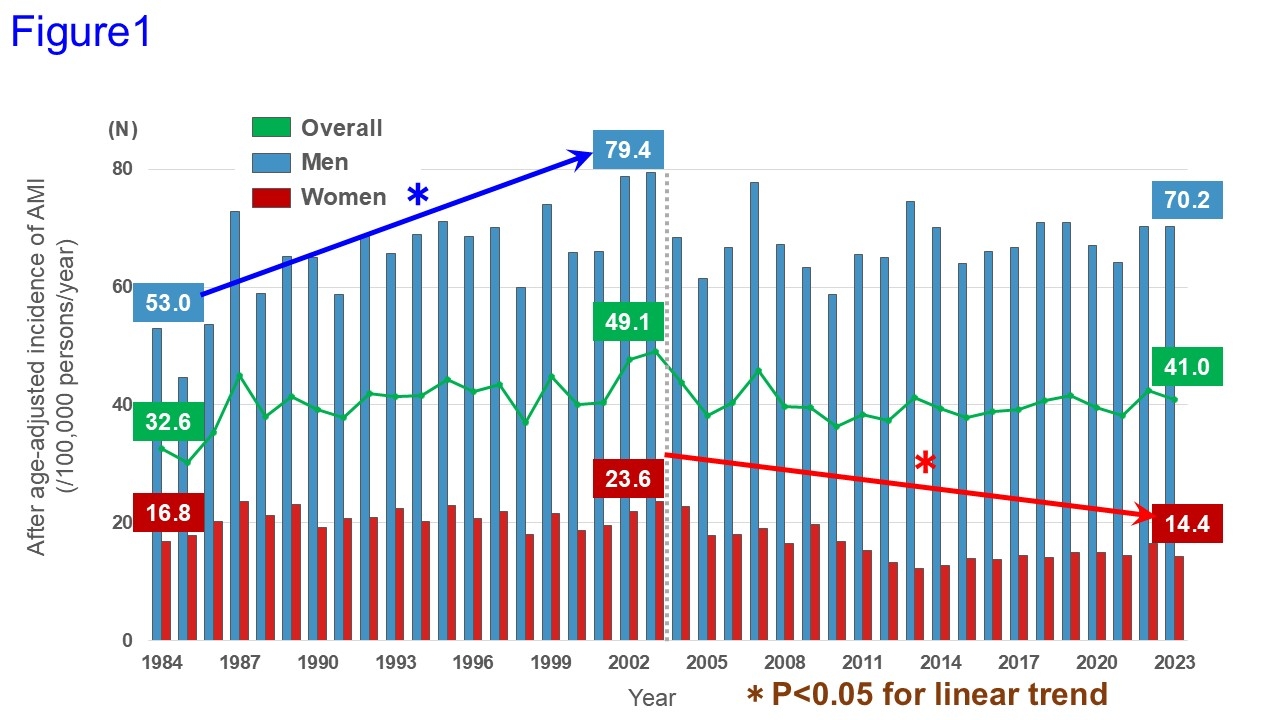
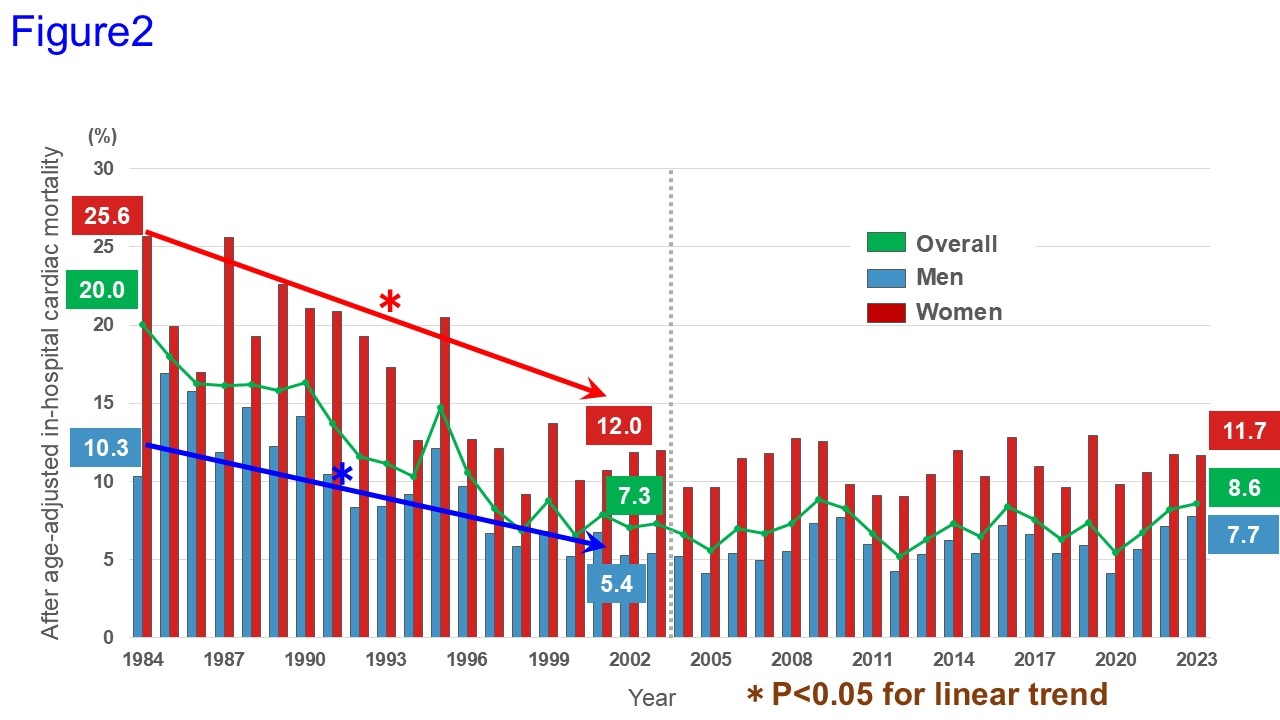
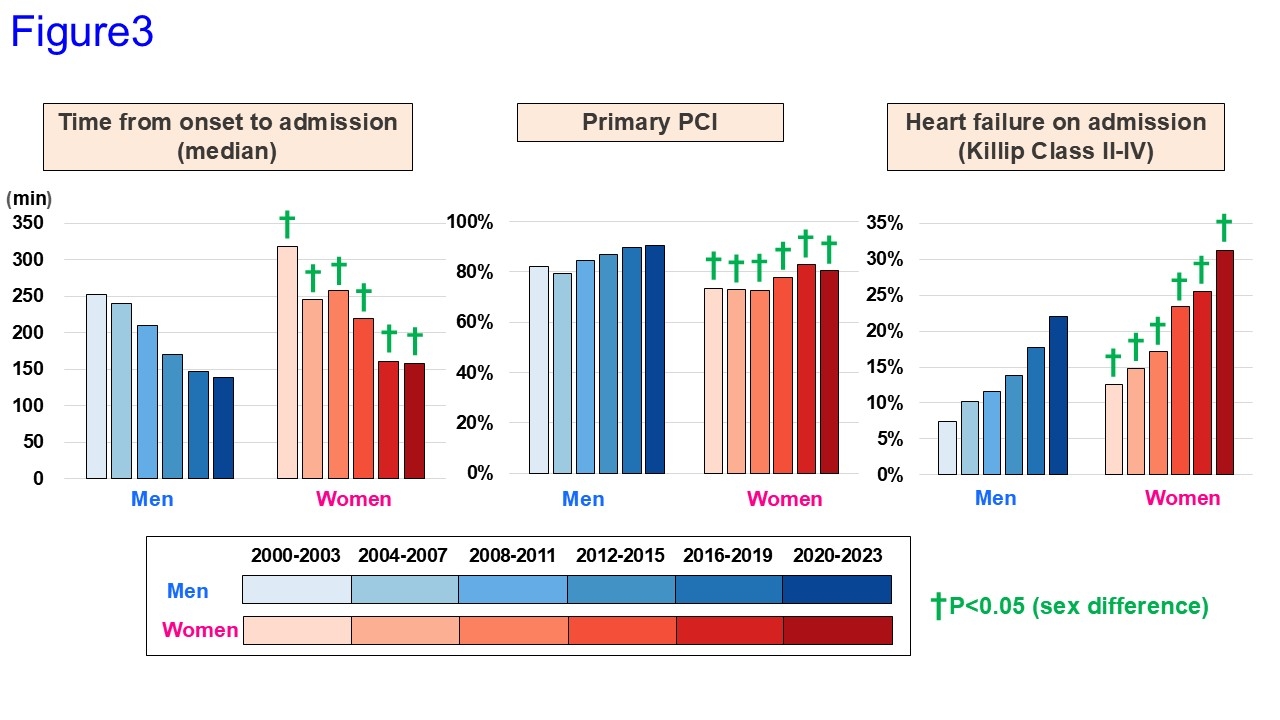
Abstract Body (Do not enter title and authors here): Background: In the U.S., acute myocardial infarction (AMI) mortality remained higher in women than in men after 1984 but declined markedly in the past decade. However, long-term sex-specific trends in MI incidence and outcomes remain unclear in Asian populations. In Japan, where rapid aging is ongoing, women with AMI often present with atypical symptoms, potentially leading to delayed care and under-treatment. Despite these concerns, few registry studies have continuously monitored sex disparities in AMI over an extended period Objective: This study aimed to investigate the 40-year trends in AMI incidence and in-hospital mortality in Japan, with a focus on sex differences. Methods: We analyzed data from the Miyagi AMI Registry, a comprehensive regional hospital-based registry covering the entire Miyagi Prefecture in northeastern Japan (population approximately 2.3 million), which has collected detailed clinical data on all hospitalized patients with AMI since 1979. A total of 38,410 patients (28,286 men and 10,124 women) were included between 1984 and 2023. Analyses were conducted separately for two periods: 1984–2003 and 2004–2023. Results: The age-adjusted incidence of AMI (/100,000 persons/year) in men significantly increased during the early period (from 53.0 to 79.4, P<0.05), but remained unchanged in the later period (from 79.4 to 70.2). In contrast, the incidence in women remained stable in the early period (from 16.8 to 23.6) and significantly declined in the later period (from 23.6 to 14.4, P<0.05). Throughout the 40 years, the incidence was consistently lower in women than in men, with the sex disparity widening in recent years (Figure 1). Age-adjusted in-hospital cardiac mortality significantly declined in both men (from 25.6% to 12.0%) and women (from 10.3% to 5.4%) during the early period (P<0.01 for both), but remained unchanged in the later period. Notably, women consistently had higher in-hospital mortality than men across all four decades (Figure 2). Between 2000 and 2023, women experienced longer delays from symptom onset to hospital admission, a higher prevalence of heart failure on admission (P<0.01), and lower rates of percutaneous coronary intervention compared with men (P<0.01 for both) (Figure 3). Conclusion: This 40-year study revealed persistent sex disparities in AMI care in Japan. Women consistently faced delayed treatment and higher in-hospital mortality, underscoring the need for greater awareness and sex-specific strategies.
Funaki, Takahiro
(
Tohoku University
, Sendai , Japan )
Hao, Kiyotaka
(
Tohoku University
, Sendai , Japan )
Onuma, Sho
(
Tohoku University
, Sendai , Japan )
Shindo, Tomohiko
(
Tohoku University
, Sendai , Japan )
Oyama, Kazuma
(
Tohoku University
, Sendai , Japan )
Godo, Shigeo
(
Tohoku University
, Sendai , Japan )
Shiroto, Takashi
(
Tohoku University
, Sendai , Japan )
Takahashi, Jun
(
Tohoku University
, Sendai , Japan )
Yasuda, Satoshi
(
Tohoku University
, Sendai , Japan )
Author Disclosures:
Takahiro Funaki:DO NOT have relevant financial relationships
| Kiyotaka Hao:No Answer
| Sho Onuma:DO NOT have relevant financial relationships
| Tomohiko Shindo:No Answer
| Kazuma Oyama:No Answer
| Shigeo Godo:DO NOT have relevant financial relationships
| Takashi Shiroto:No Answer
| Jun Takahashi:No Answer
| Satoshi Yasuda:No Answer