Uncovering the Hidden Link: Vitamin B12 Deficiency as a Predictor of Poor Outcomes in NSTEMI Hospitalizations
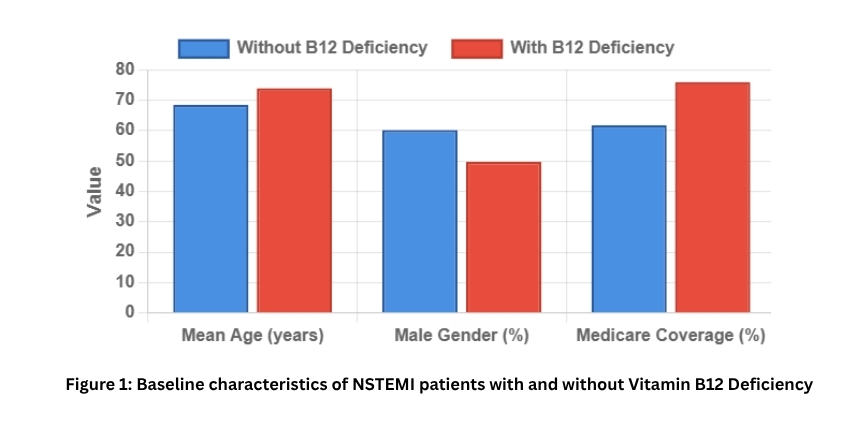
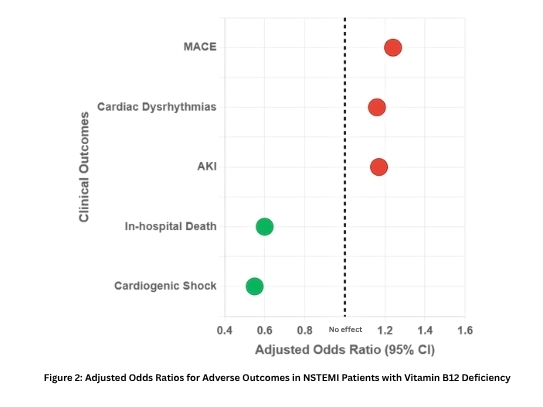
Abstract Body (Do not enter title and authors here): Introduction Vitamin B12 deficiency has been linked to cardiovascular risks, yet its impact on outcomes in patients with acute coronary syndromes, particularly Non-ST Elevation Myocardial Infarction (NSTEMI), remains understudied. Given the importance of non-traditional risk factors in cardiovascular events, we hypothesize that Vitamin B12 deficiency is associated with adverse outcomes in NSTEMI patients, potentially influencing major adverse cardiovascular events (MACE), arrhythmias, and hospital length of stay. Methods We analyzed data from the National Inpatient Sample (NIS) database (2019–2020) to identify NSTEMI hospitalizations, comparing those with and without Vitamin B12 deficiency. A total of 1,051,910 weighted hospitalizations were included (NSTEMI with B12 deficiency: N=7,545). Key outcomes included MACE, STEMI transformation, cardiac dysrhythmias, length of stay, acute kidney injury (AKI), and in-hospital mortality. Logistic regression was used to calculate adjusted odds ratios (aOR) for these outcomes, adjusting for age, sex, diabetes, hypertension, and renal function. Results Patients with Vitamin B12 deficiency were older (mean age 73.95 vs. 68.5 years, p<0.0001) and had a more balanced gender distribution (49.7% male vs. 39.8% male in non-deficient group). Medicare was the predominant payer (76.0% vs. 61.8%, p < 0.0001), with less frequent private insurance and Medicaid in the B12-deficient group. After adjusting for confounders, B12 deficiency was independently associated with an increased risk of MACE (aOR 1.24, 95% CI: 1.10–1.40, p=0.00044) and cardiac dysrhythmias (aOR 1.16, 95% CI: 1.03–1.29, p=0.011). Patients with B12 deficiency had longer hospital stays (mean 6.7 vs. 5.8 days, p<0.0001) and a slightly higher risk of AKI. The prevalence of deficiency increased with age and was more common among females and Medicare beneficiaries, indicating potential socio-economic and aging-related factors. Conclusion Vitamin B12 deficiency in NSTEMI patients is linked to a distinct demographic profile and worse in-hospital outcomes, including MACE and cardiac dysrhythmias. These findings suggest Vitamin B12 status may be crucial for cardiovascular risk assessment, emphasizing the need for further research into whether addressing deficiency can improve clinical outcomes. Future studies should explore the role of Vitamin B12 supplementation and routine monitoring in high-risk cardiovascular patients.
Pikale, Gauri
(
Northwestern Medicine
, McHenry , Illinois , United States )
Patel, Maurya
(
Smt. NHL Municipal Hospital
, Gujarat , India )
Noguer, Joaquim
(
Staten Island University Hospital
, Staten Island , New York , United States )
Alam, Nasibul
(
Northwestern Medicine
, McHenry , Illinois , United States )
Muwanguzi, Eria
(
Northwestern Medicine
, McHenry , Illinois , United States )
Author Disclosures:
Gauri Pikale:DO NOT have relevant financial relationships
| Maurya Patel:No Answer
| Joaquim Noguer:DO NOT have relevant financial relationships
| Nasibul Alam:No Answer
| Eria Muwanguzi:No Answer