Compliance, ECG quality, and engagement with a smartphone app in patients with in-clinic compared with home-based, self-applied long-term continuous ECG patch monitors
Abstract Body (Do not enter title and authors here): Background Long-term continuous ambulatory cardiac monitoring (LTCM) is a widely used diagnostic tool for arrhythmia detection, outperforming other modalities. COVID-19 accelerated adoption of home enrollment (HE) for LTCM, which includes mailing devices to patients for self-application and activation, highlighting the need for patient-centered solutions that optimize usability and comfort. HE was recently made available for a next-generation LTCM, which is smaller and lighter than prior designs, with a breathable adhesive, and has demonstrated superior performance.
Aims We assessed wear compliance and ECG signal quality for next generation LTCM devices applied in-clinic by a technician vs. HE. Additionally, we evaluated the impact of a smartphone app on wear compliance and ECG quality.
Methods U.S. adults prescribed the Zio Monitor (iRhythm Technologies, San Francisco, CA) for 14 days between December 2, 2024 - March 16, 2025, were included, corresponding to the initial availability of HE for Zio Monitor. Outcomes compared between in-clinic and HE devices included mean wear time, mean analyzable time (% free from artifact), early wear terminations (≤ 2 days), and actionable arrhythmia yield. Additional analyses evaluated outcomes among patients opting to use a smartphone app (MyZio), which provides onboarding, digitized instructions, and reminders for wear and return, vs. those who did not.
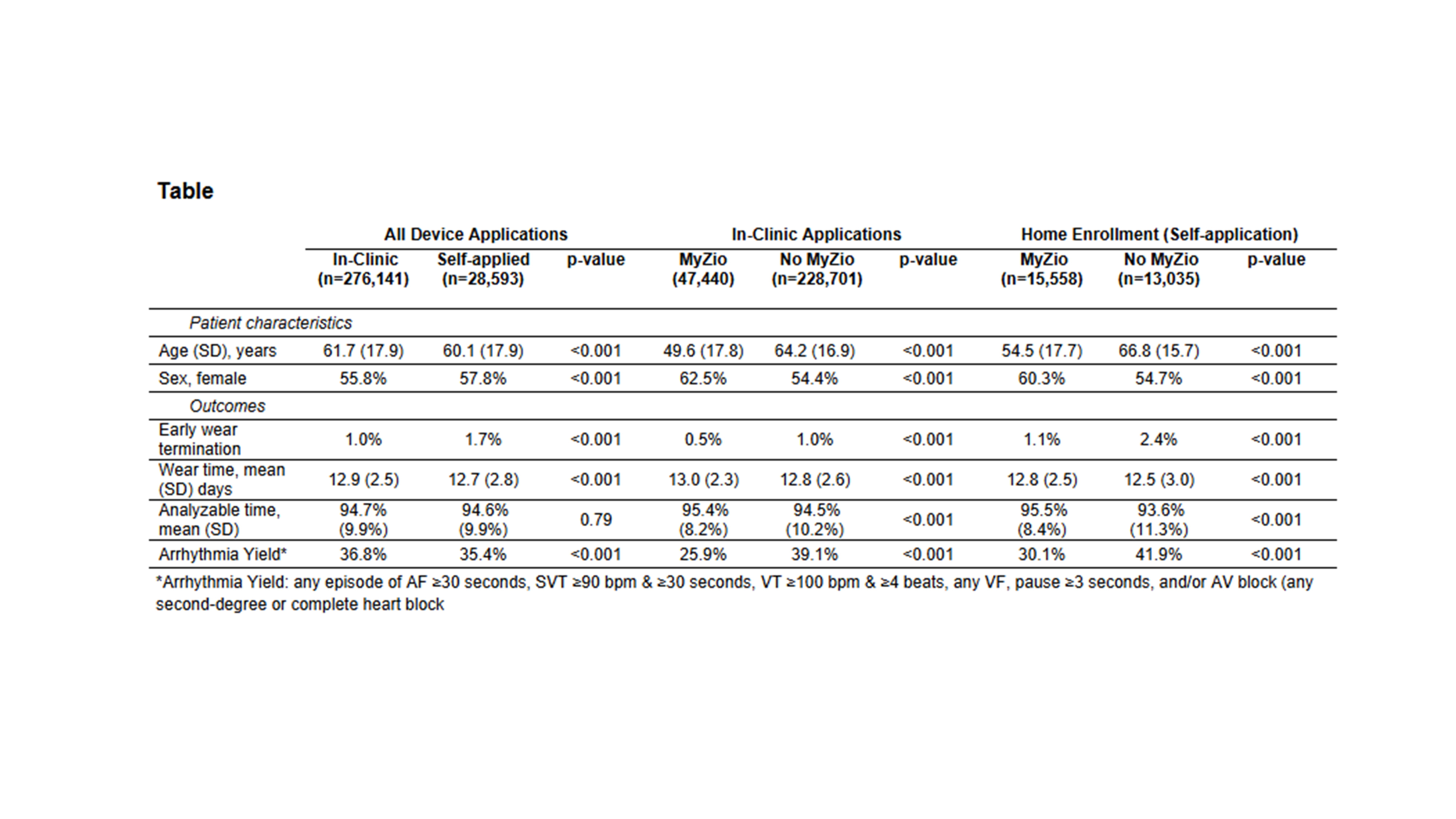
Results Of 304,735 LTCM devices worn, 276,142 (91.6%) were applied in-clinic and 28,593 (9.4%) were HE. Mean age was 61.5±17.9 years; 56.0% were female. App use was higher in the HE group (54% vs 17%, p < 0.0001). Mean wear time and % analyzable time were high and comparable for in-clinic and HE. Early wear terminations were infrequent in both groups and arrhythmia yield was comparable. App use was associated with lower % of early wear terminations and greater analyzable time in both groups (Table). Among prescribed devices, return compliance (activated, worn and returned ≤ 45 days) was higher in app users for both in-clinic (96.0% vs. 93.2%) and HE (90.4% vs. 71.1%) devices.
Conclusion Wear compliance and percent analyzable time for a next-generation LTCM were high and comparable when applied in-clinic by a technician vs. HE, indicating that HE achieves comparable arrhythmia detection while eliminating in-clinic visits and reducing provider burden. Patient apps as medical device adjuncts may further improve enrollment and compliance with home-based or ambulatory diagnostics.
Ashburner, Jeffrey
(
iRhythm Technologies, Inc.
, San Francisco , California , United States )
Pinkerton, Relana
(
iRhythm Technologies, Inc.
, San Francisco , California , United States )
Fokin, Vladimir
(
iRhythm Technologies, Inc.
, San Francisco , California , United States )
Battisti, Anthony
(
iRhythm Technologies, Inc.
, San Francisco , California , United States )
Turakhia, Mintu
(
Stanford University; iRhythm Technologies, Inc.
, Stanford , California , United States )
Author Disclosures:
Jeffrey Ashburner:DO have relevant financial relationships
;
Employee:iRhythm Technologies:Active (exists now)
| Relana Pinkerton:No Answer
| Vladimir Fokin:DO have relevant financial relationships
;
Employee:iRhythm:Active (exists now)
| Anthony Battisti:No Answer
| Mintu Turakhia:No Answer