
Risk Modeling of Same-day Missed Echocardiogram Appointments Identifies Actionable Predictors for Targeted Outreach
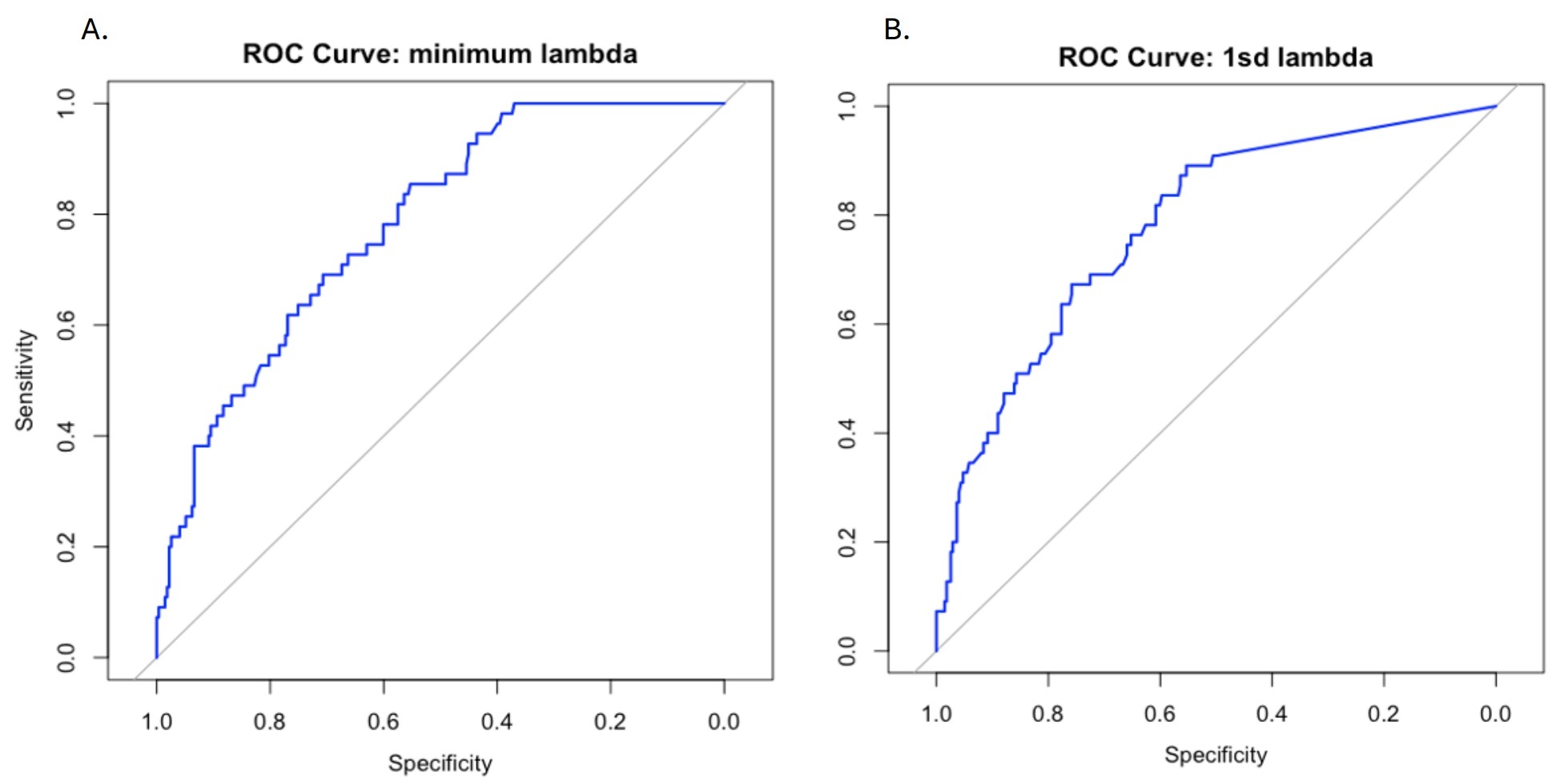
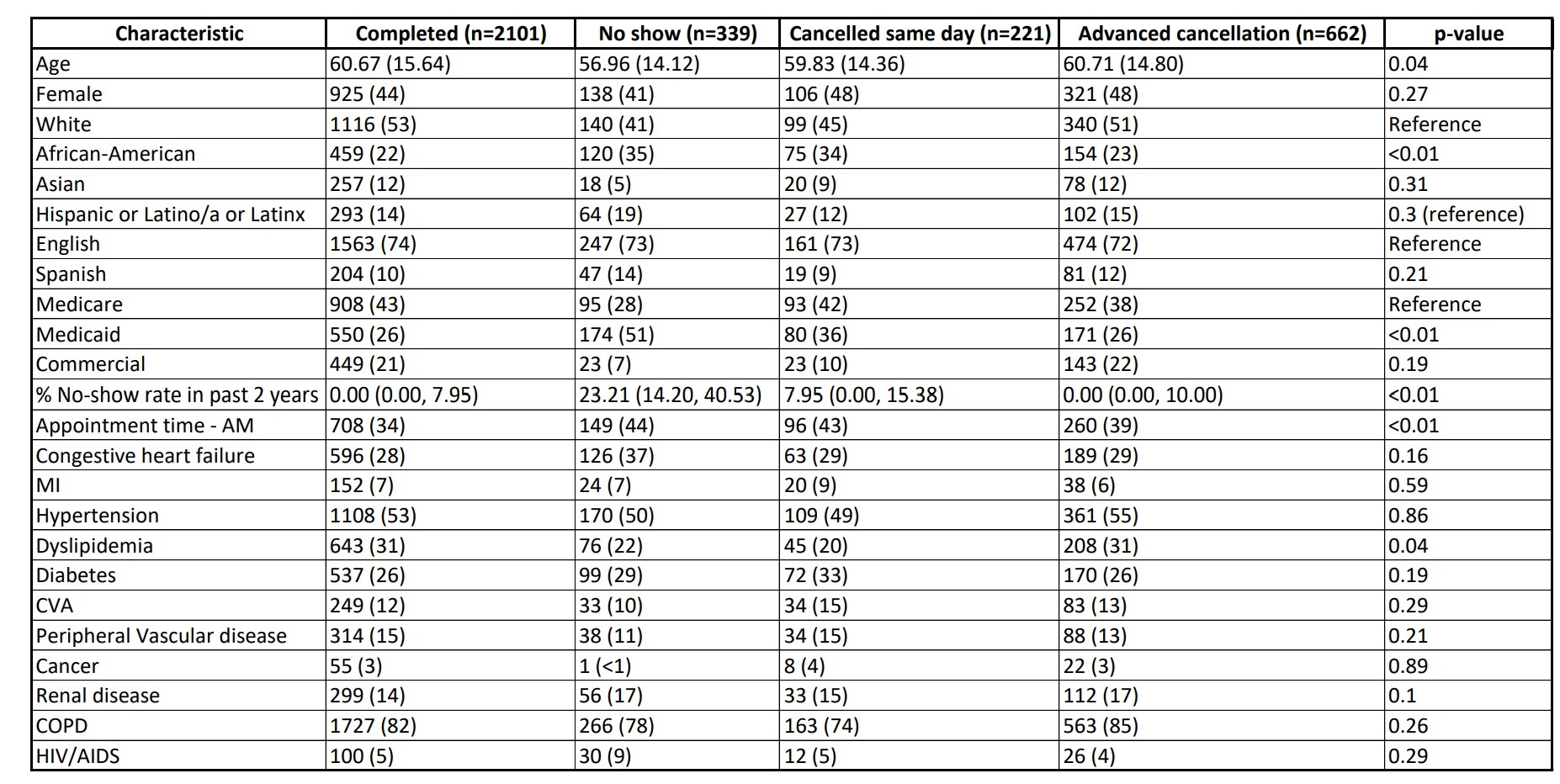
Abstract Body (Do not enter title and authors here): Title: Risk Modeling of Same-day Missed Echocardiogram Appointments Identifies Actionable Predictors for Targeted Outreach Background: Same-day - missed outpatient echocardiography appointments (SD-MOEA), including no-shows and same-day cancellations, delay cardiovascular diagnosis and reduce operational efficiency. Identifying patients at high risk of SD-MOEA could support targeted quality interventions. This study aimed to develop and validate a predictive model for SD-MOEA in a diverse urban healthcare site. Hypothesis: Sociodemographic, clinical, and appointment-level characteristics can be used to develop a predictive model that accurately identifies patients at high risk for SD-MOEA. Methods: Patients scheduled for an echocardiogram at a single academic-affiliated safety net hospital between January 2024 and December 2024 were included. SD-MOEA was defined as a no-show or same-day cancellation. Generalized estimating equations with a logit link were used to evaluate univariate associations between predictors and SD-MOEA. For multivariable modeling, LASSO logistic regression with 10-fold cross-validation was applied (90% training set and 10% validation sample). Two models were compared: one based on the minimum lambda penalty (favoring model fit) and one based on the 1-standard error lambda (favoring parsimony). Results: Of the 3323 OEA, 17% were SD-MOEA (Table 1). The LASSO model using the minimum lambda included 16 predictors and achieved an AUC of 0.78 on the validation set (Figure 1A). The more parsimonious 1-standard error lambda model retained 2 predictors (number of prior no-shows over past 2 years and % no-show rate) and had similar performance (Figure 1B). Additional predictors in the minimum lambda model included Medicare, Black race, and comorbidities such as diabetes and connective tissue disease. Conclusion: While predictive performance was moderate, the consistency across models supports the potential utility of a simplified risk model in guiding targeted outreach. Predictors identified may inform risk-based outreach strategies while highlighting opportunities to address access disparities.
Zografos, Carrie
( University of Washington
, Seattle
, Washington
, United States
)
Meno, Michael
( University of Washington
, Seattle
, Washington
, United States
)
Mohamed, Abdifitah
( University of Washington
, Seattle
, Washington
, United States
)
Marnani, Nadia
( University of Washington
, Seattle
, Washington
, United States
)
Monsell, Sarah
( University of Washington
, Seattle
, Washington
, United States
)
Kersey, Cooper
( Harborview Medical Center
, Seattle
, Washington
, United States
)
Andrikopoulou, Efstathia
( Harborview Medical Center
, Seattle
, Washington
, United States
)
Author Disclosures:
Carrie Zografos:DO NOT have relevant financial relationships
| Michael Meno:DO NOT have relevant financial relationships
| ABDIFITAH MOHAMED:DO NOT have relevant financial relationships
| Nadia Marnani:No Answer
| Sarah Monsell:No Answer
| Cooper Kersey:DO NOT have relevant financial relationships
| Efstathia Andrikopoulou:DO have relevant financial relationships
;
Advisor:Tempus Next:Active (exists now)
; Individual Stocks/Stock Options:Cloudstream Medical Imaging:Active (exists now)
; Executive Role:Cloudstream Medical Imaging:Active (exists now)