Logo

American Heart Association

  15
  0


Final ID: MP726

Development and Validation of an Interpretable Prediction Model for IVIG-Resistant Kawasaki Disease: A Multicenter Cohort Study

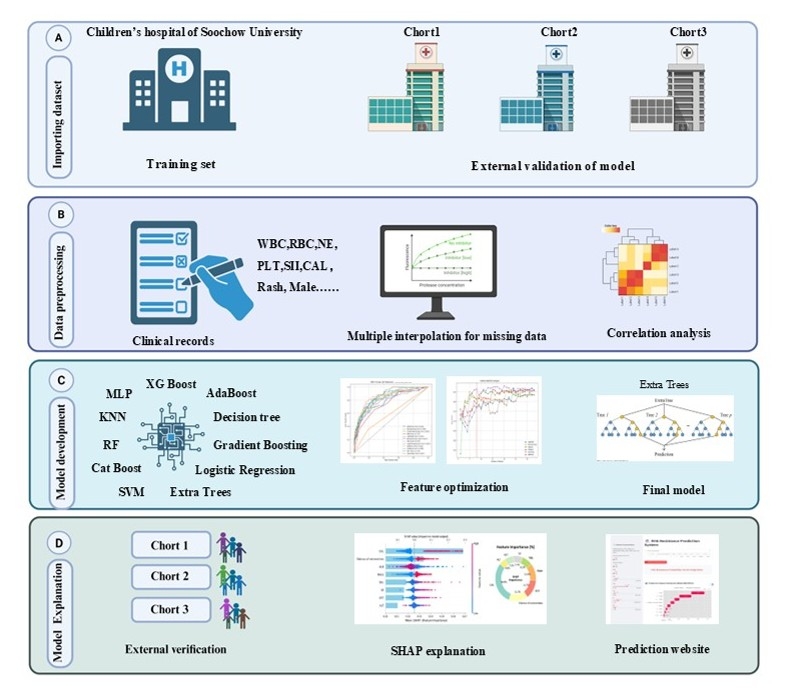
Abstract Body (Do not enter title and authors here): Background: The early identification and prediction of intravenous immunoglobulin (IVIG)-resistant Kawasaki disease (KD) patients remain essential for mitigating the incidence of coronary artery complications. This research aimed to construct and validate an interpretable prediction model for IVIG-resistant KD using machine learning (ML) approaches and convert it into an intuitive software application, explore the pathogenic contributors to IVIG-resistant in KD
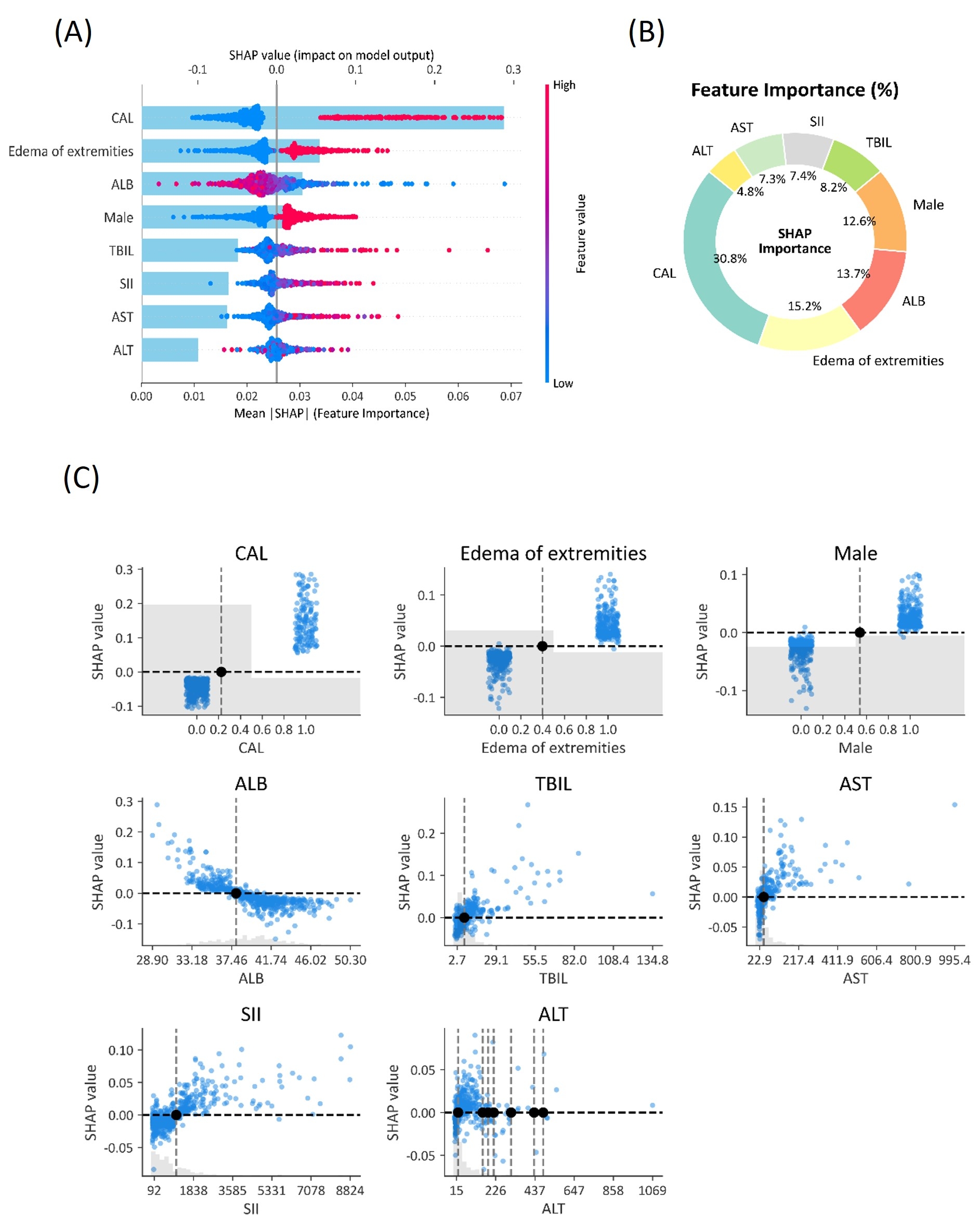
Methods: A multicenter design study aimed at constructing and validating predictive models. The derivation cohort consisted of 3,023 KD patients admitted to Children’s Hospital of Soochow University between January 2016 and December 2024, utilized for training and internal validation of the models. For external validation, a dataset comprising 1,626 KD patients from the Anhui Provincial Children's Hospital, the Affiliated Xuzhou Children's Hospital of Xuzhou Medical University, and Jiangsu Province (Suqian) Hospital, admitted between January 2020 and December 2024, was employed. Utilizing 33 clinical variables readily obtainable or assessable within 24 h of KD patient admission, twelve ML algorithms were applied to develop predictive models. Their discriminative capacities were evaluated based on the area under the receiver operating characteristic curve (AUC). SHapley Additive exPlanations (SHAP) were subsequently used to assess feature importance and interpret the final model. The ultimate model underwent external validation using the designated dataset.
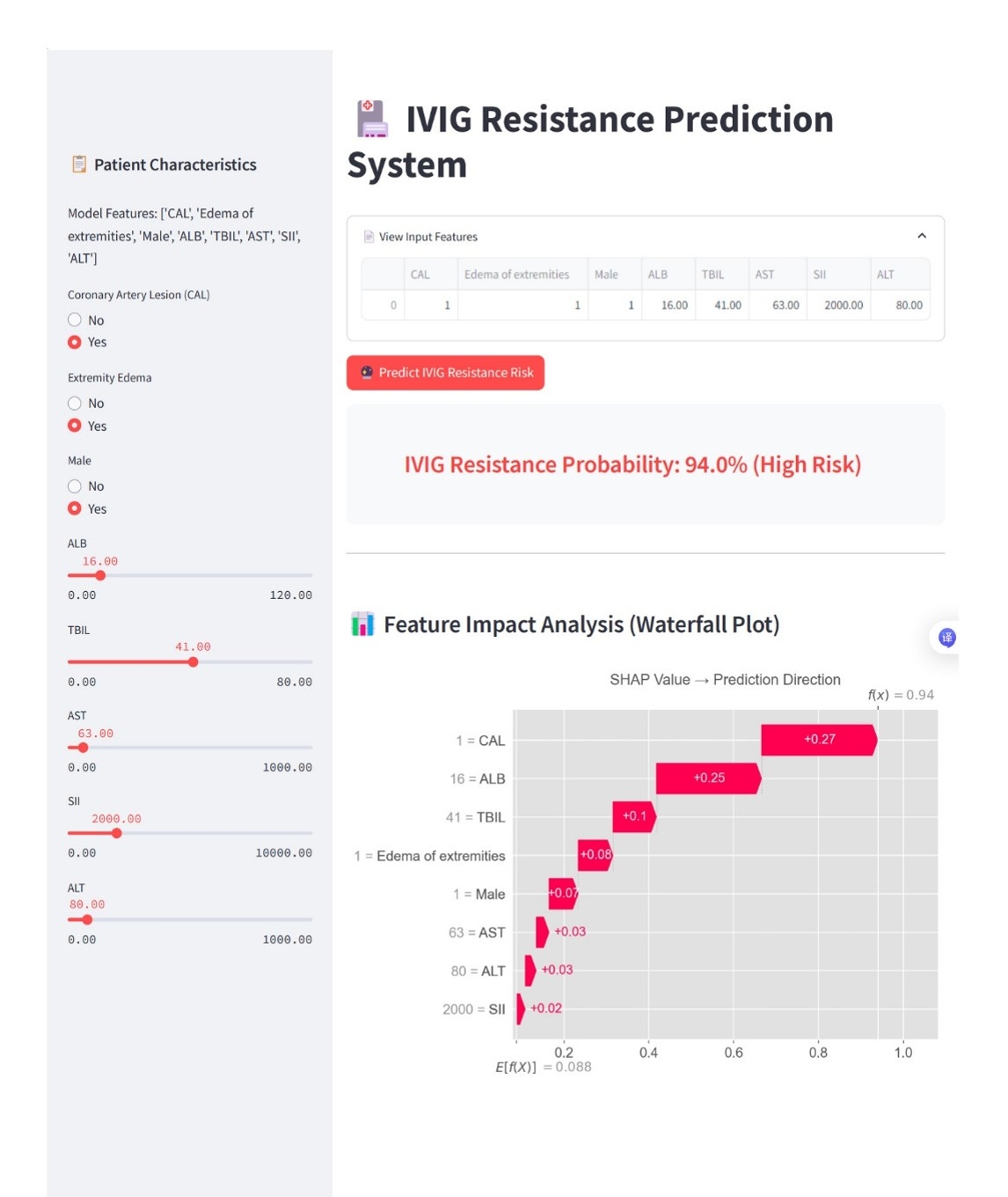
Results: Among the twelve ML algorithms, the extra trees (ET) model exhibited superior discriminative capacity. Upon dimensionality reduction based on the ranked importance of features, an interpretable ET model incorporating eight variables was finalized. It achieved AUC values of 0.865 in internal validation, 0.810 in the Anhui cohort (n = 654), 0.744 in the Xuzhou cohort (n = 546), and 0.785 in the Suqian cohort (n=408). Furthermore, the model has been implemented as an accessible web-based application, enhancing its feasibility in clinical settings.
Conclusion: This investigation established a reliable and interpretable ML model capable of predicting IVIG-resistant KD with high accuracy. The interpretation of machine learning techniques by adopting the SHAP method has potential value in helping to start preventive intervention for children with IVIG-resistant KD patients at an early stage, providing strong support for clinical practice.
  • Wang, Shuhui  ( children hospital of soochow univer , Soochow , China )
  • Lv, Haitao  ( children hospital of soochow univer , Soochow , China )
  • Liu, Zhiyuan  ( children hospital of soochow univer , Soochow , China )
  • Author Disclosures:
    shuhui Wang: DO NOT have relevant financial relationships | Haitao Lv: No Answer | zhiyuan Liu: No Answer
Meeting Info:

Scientific Sessions 2025

2025

New Orleans, Louisiana

Session Info:

Genetic and Molecular Mechanisms in Congenital Heart Disease: From Pathogenesis to Targeted Therapies

Saturday, 11/08/2025 , 12:15PM - 01:30PM

Moderated Digital Poster Session

More abstracts on this topic:
Age and White Matter Injury due to Cerebral Small Vessel Disease are Synergistically Associated with Impaired Neurovascular Coupling.

Yang Sheng, Webb Alastair

ADC-based Infarct Density – Validating a Novel Imaging Biomarker of Functional Outcome after Endovascular Thrombectomy

Favilla Christopher, Bonkhoff Anna, Rost Natalia, Messe Steven, Regenhardt Robert, Denny Braden, Simonsen Claus, Shakibajahromi Banafsheh, Patel Aman, Leslie-mazwi Thabele, Dmytriw Adam, Schirmer Markus

You have to be authorized to contact abstract author. Please, Login
Not Available