
Logo

American Heart Association

  19
  0


Final ID: MP1071

Integrative Transcriptional Analysis Identifies the Metabolic Signatures Between Dilated Cardiomyopathy and Hypertrophy Cardiomyopathy

Abstract Body (Do not enter title and authors here): Objective
Dilated Cardiomyopathy (DCM) and Hypertrophic Cardiomyopathy (HCM) are two major forms of heart diseases characterized by different pathological mechanisms. DCM is often marked by ventricular dilation and impaired contractility, while HCM involves abnormal thickening of the heart muscle, leading to compromised cardiac function. Despite the significant differences in these two conditions, their underlying molecular mechanisms are not fully understood. This study aims to use Gene Ontology (GO) and Kyoto Encyclopedia of Genes and Genomes (KEGG) pathway analyses to identify and compare the key biological processes and signaling pathways involved in DCM and HCM.
Methods
We performed GO and KEGG pathway analysis on gene expression data from DCM and HCM patient samples in two published RNA-seq datasets (GSE116250 and GSE89714). Differential gene expression analysis was performed using DESeq2 with a statistical cutoff of FDR (False discovery rate) < 0.05 and fold change > 1.5. The enrichment analysis was performed using R package “clusterProfiler” and “org.Hs.eg.db”.
Results
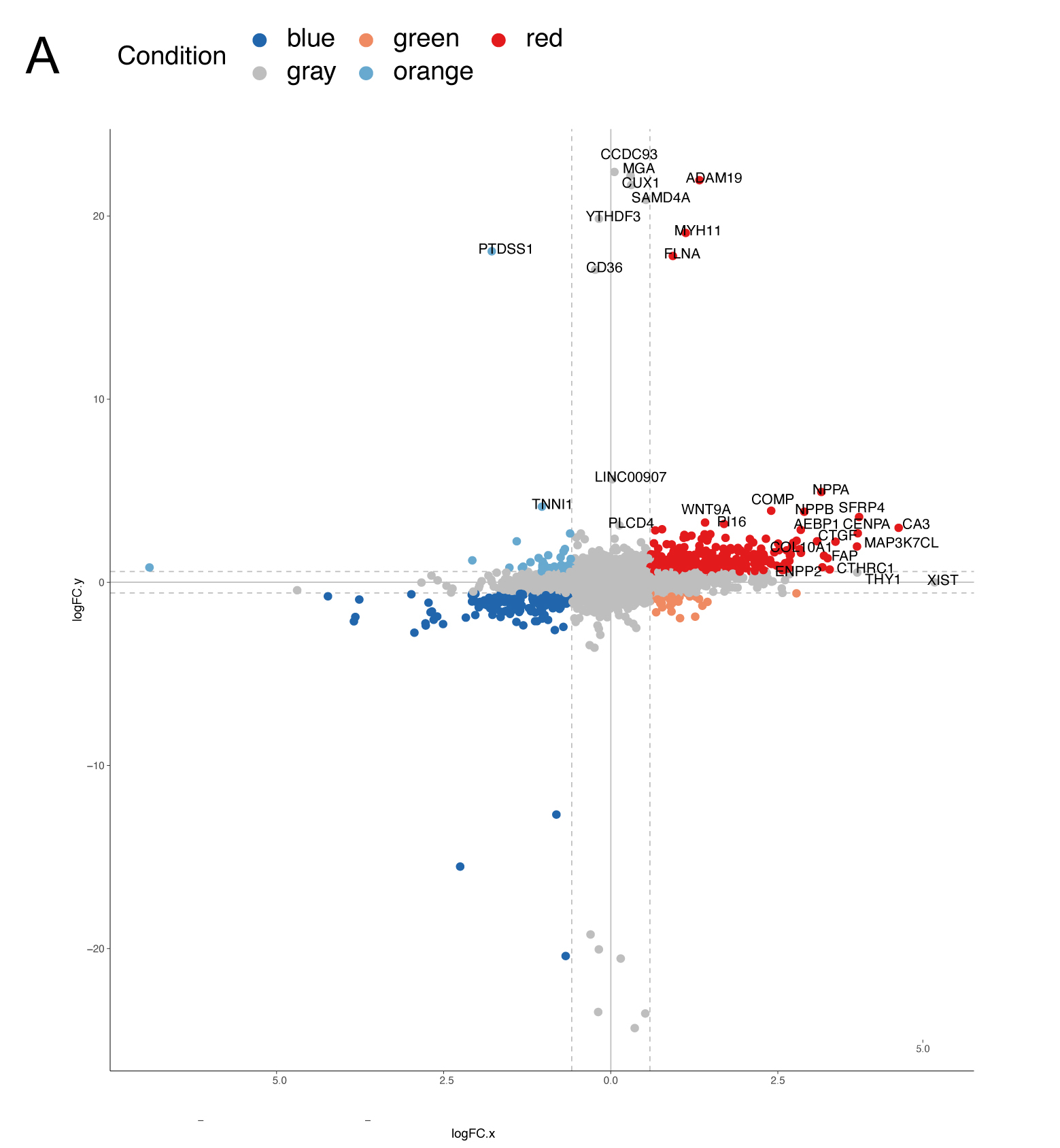
The analysis identified 3599 and 711 differentially expressed genes (DEGs) between DCM versus HCM. Interestingly, both DCM and HCM shared several overlapping genes and pathways, exhibiting a significantly common enrichment in cytoskeleton in muscle cells, suggesting common pathophysiological mechanisms despite the distinct phenotypes of these diseases (A).
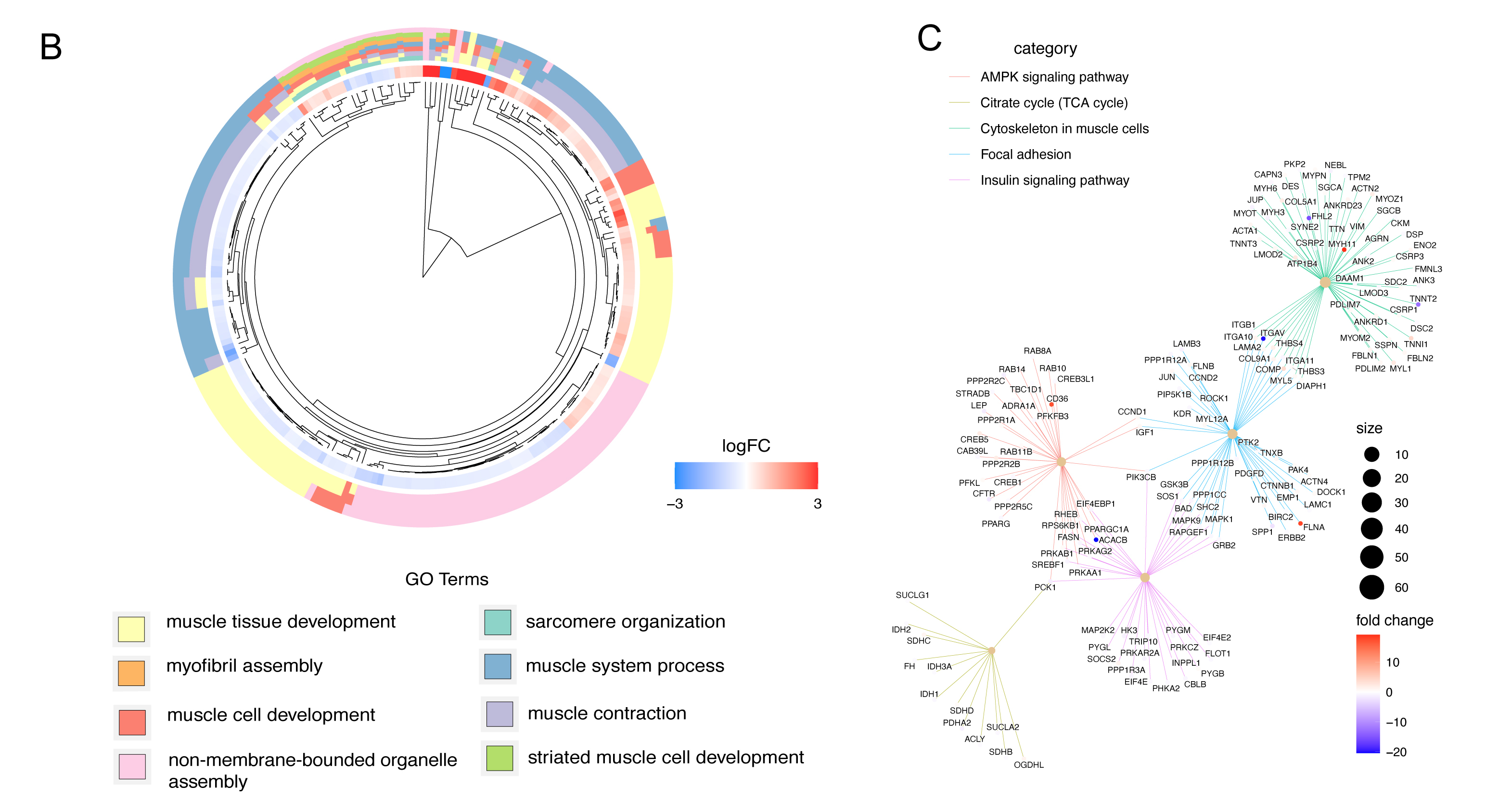
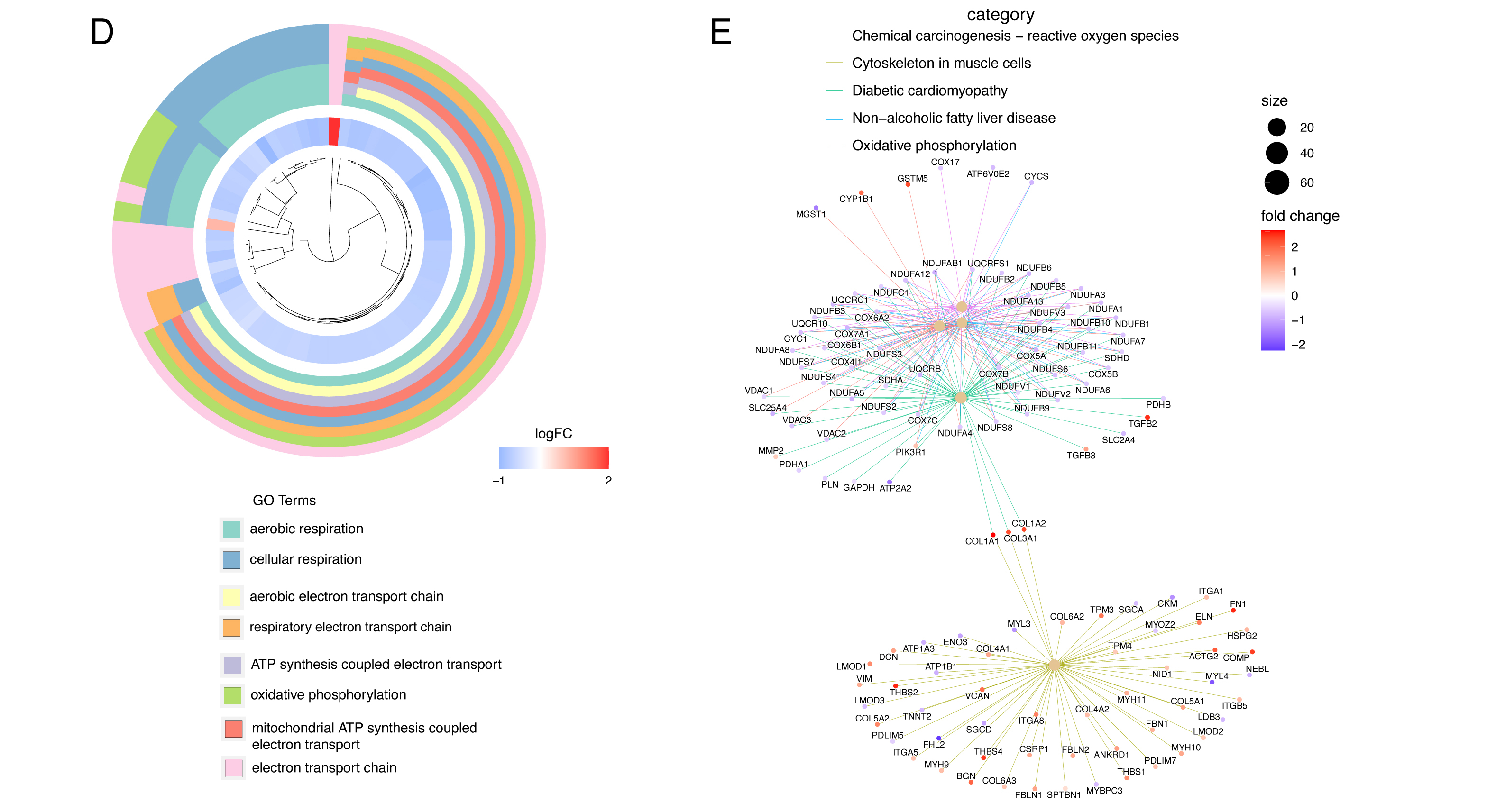
The GO analysis for DCM revealed significant alterations in processes related to sarcomere/myofibril organization. However, GO analysis for HCM suggests a crucial role of mitochondrial function alternations. The KEGG analysis also demonstrated that AMPK signaling pathway, citrate cycle, focal adhesion and insulin signaling pathway were highly enriched in DCM patients (B, C). While the same analysis for HCM patients demonstrated that chemical carcinogenesis − reactive oxygen species, diabetic cardiomyopathy, non−alcoholic fatty liver disease and oxidative phosphorylation were dramatically affected in HCM (D, E).
Conclusion
This study provides a profound understanding of DCM and HCM, helping provide new insights into the pathogenesis of two diseases. DCM exhibited a more pronounced structural disorders of cardiomyocytes whereas HCM was predominantly affected in mitochondria and metabolism disorders. These findings may give novel insights into the discovery of potential therapeutic targets for treating various types of heart failure.
  • Li, Mohan  ( Zhongshan Hospital,Fudan university , Shanghai , China )
  • Zhang, Xiaokai  ( Zhongshan Hospital,Fudan university , Shanghai , China )
  • Zeng, Linqi  ( Zhongshan Hospital,Fudan university , Shanghai , China )
  • Song, Shuai  ( Zhongshan Hospital,Fudan university , Shanghai , China )
  • Sun, Aijun  ( Zhongshan Hospital,Fudan university , Shanghai , China )
  • Ge, Junbo  ( Zhongshan Hospital,Fudan university , Shanghai , China )
  • Author Disclosures:
    Mohan Li: DO NOT have relevant financial relationships | Xiaokai Zhang: No Answer | LINQI ZENG: DO NOT have relevant financial relationships | Shuai Song: No Answer | Aijun Sun: No Answer | Junbo Ge: DO NOT have relevant financial relationships
Meeting Info:

Scientific Sessions 2025

2025

New Orleans, Louisiana

Session Info:
More abstracts on this topic:
More abstracts from these authors:
You have to be authorized to contact abstract author. Please, Login
Not Available