Sex-Related Differences in 30 Day Readmission Rates After a ST-Segment Elevation Myocardial Infarction
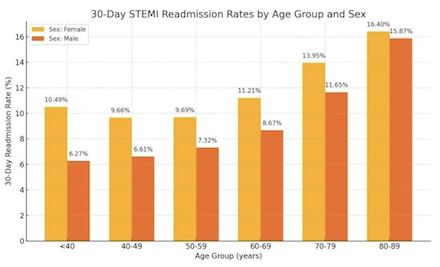
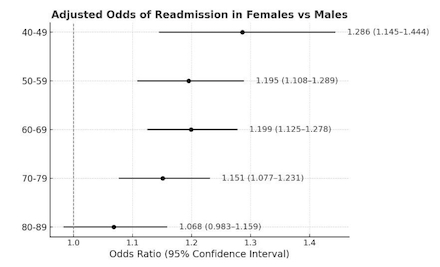
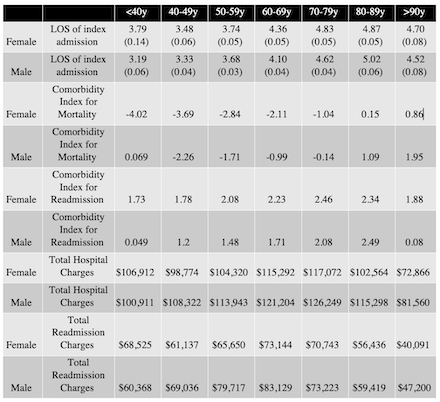
Abstract Body (Do not enter title and authors here): Introduction: Cardiovascular disease remains a leading cause of mortality despite therapeutic advances. Previous studies suggest sex-related differences in outcomes following acute coronary syndrome, including mortality, readmission, and length of stay. This study evaluates sex-related differences in 30-day readmission rates following ST-segment elevation myocardial infarction (STEMI) across age groups using the Nationwide Readmissions Database. Methods: We analyzed the Nationwide Readmissions Database 2017-2019 to identify patients discharged following hospitalization with a primary STEMI diagnosis. The primary outcome was 30-day unplanned all-cause readmission. Secondary outcomes included 30-day unplanned cardiovascular readmissions (ICD-10: I10*-I79*). We determined crude readmission rate differences by sex and age and used multivariable logistic regression to estimate adjusted odds of 30-day readmissions for females versus males, controlling for demographics, comorbidities, and hospital factors. All analyses incorporated sampling design and post-stratification weights for nationally representative estimates. Results: Among 226,106 STEMI admissions, 23,197 (10.3%) patients were readmitted within 30 days. Females consistently demonstrated higher readmission rates across age groups: <40 years (10.5% vs 6.3%), 40-49 years (9.7% vs 6.6%), 50-59 years (9.7% vs 7.3%), 60-69 years (11.2% vs 8.7%), 70-79 years (14.0% vs 11.7%), and 80-89 years (16.4% vs 15.9%). Females had higher comorbidity burden and longer length of stay across most age groups. In multivariable analysis, females had significantly greater odds of readmission (OR 1.20, 95% CI 1.16-1.24). Age-stratified analysis revealed elevated odds of readmission for females ages 40-49 (OR 1.29, CI 1.15-1.44), 50-59 (OR 1.20, CI 1.11-1.29), 60-69 (OR 1.20, CI 1.13-1.28), and 70-79 years (OR 1.15, CI 1.08-1.23), with a non-significant difference in ages 80-89 (OR 1.07, CI 0.98-1.16). Conclusion: Females demonstrated significantly higher 30-day readmission rates following a STEMI across most age groups. These findings underscore the need for investigation into contributory factors including treatment differences, sex-specific pathophysiology, and psychosocial health determinants to develop targeted interventions.
Jain, Saloni
(
Rutgers Robert Wood Johnson Medical School
, Edison , New Jersey , United States )
Visaria, Aayush
(
Rutgers Robert Wood Johnson Medical School
, Edison , New Jersey , United States )
Huang, Michael
(
Rutgers Robert Wood Johnson Medical School
, New Brunswick , New Jersey , United States )
Author Disclosures:
Saloni Jain:DO NOT have relevant financial relationships
| Aayush Visaria:DO NOT have relevant financial relationships
| Michael Huang:No Answer