Association Between Sleep Duration and Angina Characteristics in United States Adults
Abstract Body (Do not enter title and authors here): Background: Sleep is now recognized as a key factor in cardiovascular health by the American Heart Association’s Life’s Essential 8. To our knowledge, this study is the first to analyze the potential relationship between angina characteristics and daily sleep duration.
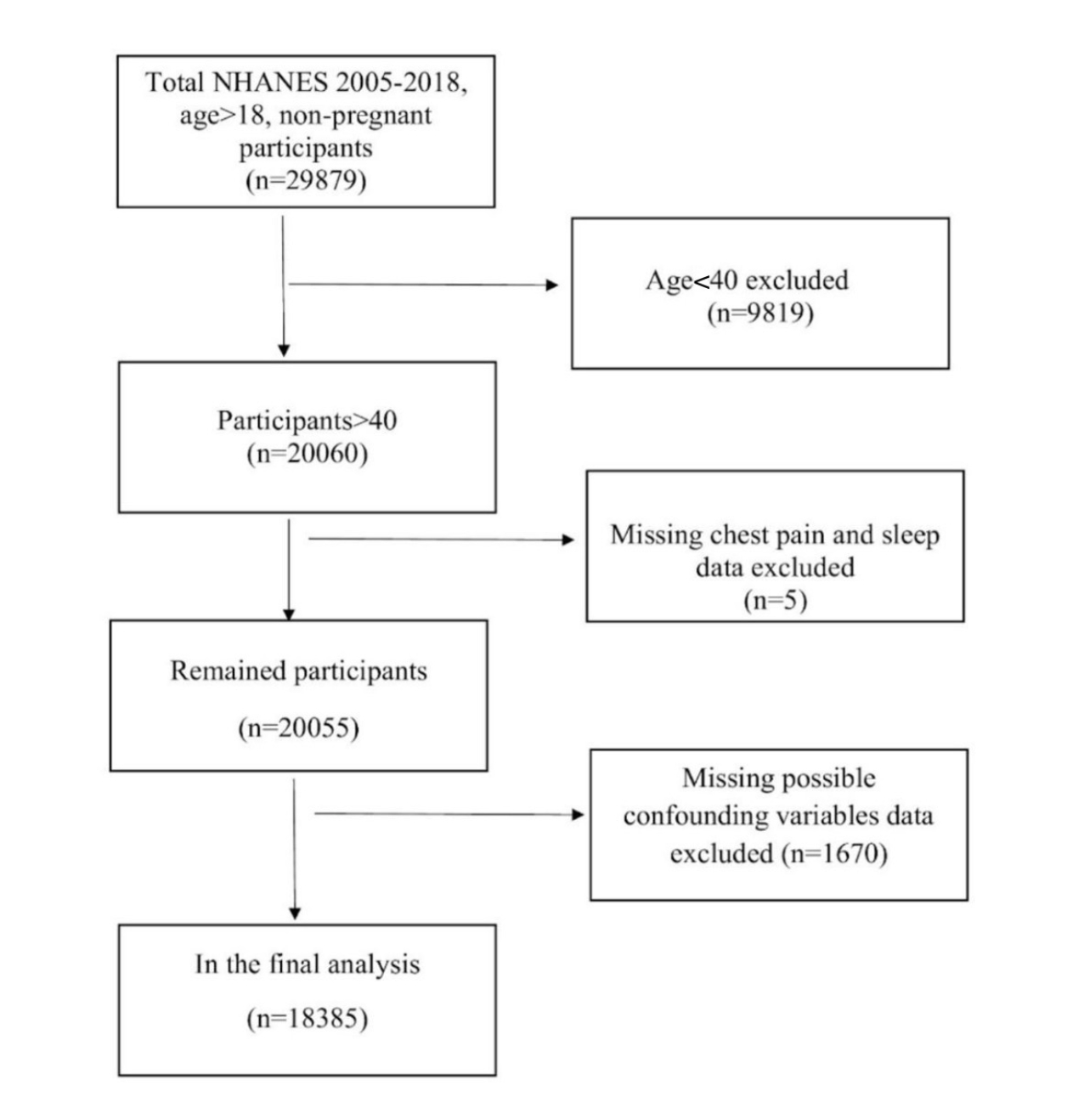
Methods: We conducted a cross-sectional study using data from 18,385 U.S. adults aged ≥40 years from the National Health and Nutrition Examination Survey (NHANES 2005–2018). Daily sleep duration was categorized as <7 hours, 7–8 hours (reference), or >8 hours. Angina was assessed via the Rose Angina Questionnaire (RAQ) and graded as Grade 1 (no pain during ordinary pace on level ground) or Grade 2 (pain during ordinary pace). Angina pain location was classified as typical (left-sided/sternal) or atypical (right-sided, neck, or epigastric). Covariates included demographics (age, sex, race, education, smoking, poverty index), clinical history (hypertension, diabetes, cancer, COPD, previous CVD), anthropometrics (BMI, waist circumference), and labs (HDL, triglycerides) based on previous literature. Analyses were performed using SAS 9.4 (Cary, NC). All analyses accounted for the complex survey design using post-stratification weights and clustering.
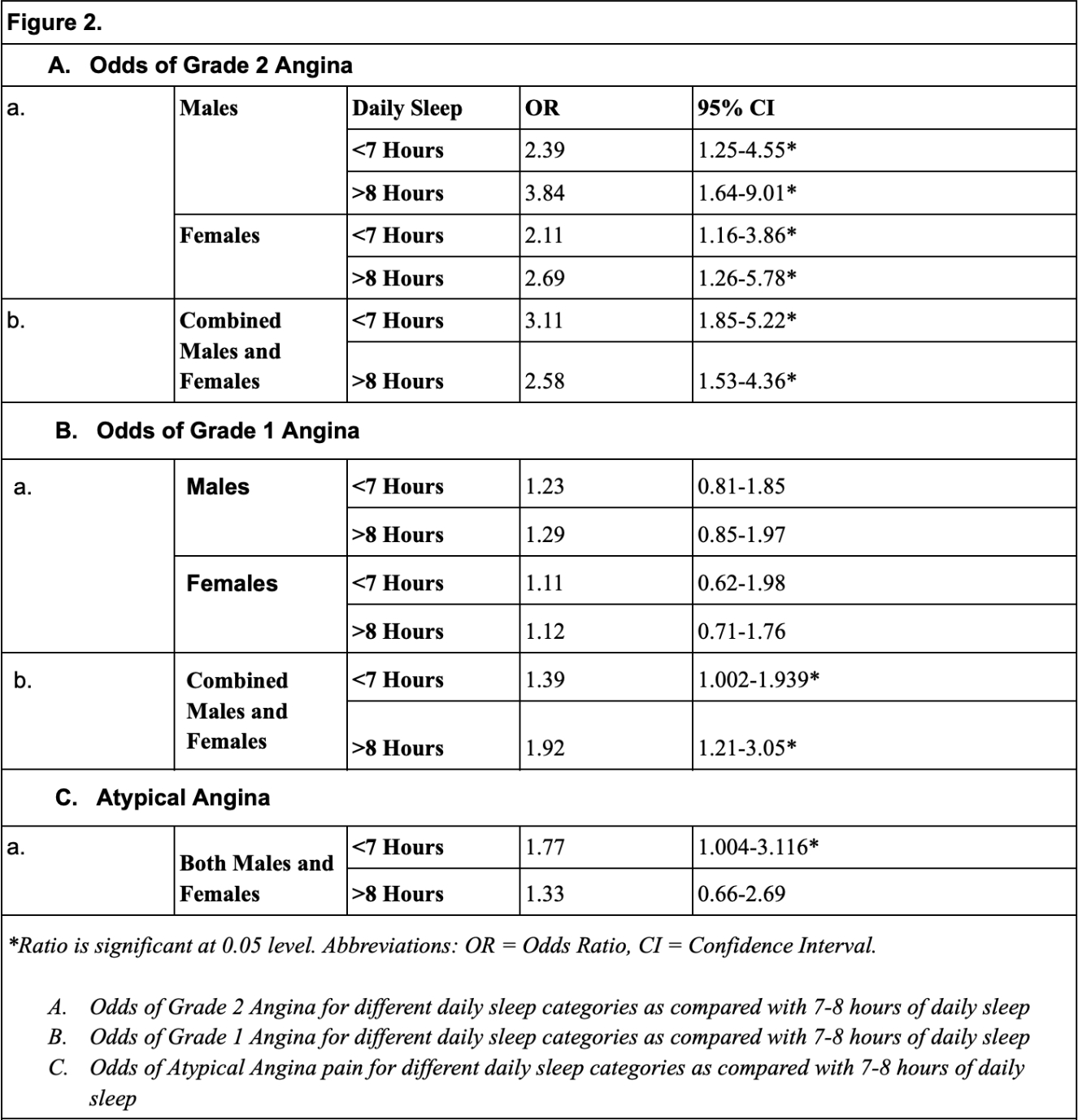
Results: Among 18,385 adults (mean age 57.6 years; 48.6% female; 70% non-Hispanic White), 954 (5.2%) reported angina, with 109 (11%) exhibiting atypical symptoms. Univariate analysis showed that both <7 hours and >8 hours of daily sleep were associated with higher odds of Grade 2 angina compared to the reference 7–8 hours. In adjusted models, >8 hours of sleep was significantly associated with Grade 2 angina (OR [95% CI]: 2.16 [1.08–4.32] in females; 2.69 [1.15–6.29] in males). Additionally, participants sleeping <7 hours had increased odds of reporting atypical chest pain during an acute angina episode (OR: 1.77 [1.004–3.116]).
Conclusion: Our findings indicate that individuals sleeping more than 8 hours are more likely to experience Grade 2 angina, while those sleeping less than 7 hours are more likely to report atypical symptoms. Understanding how sleep duration affects angina specifically, rather than just cardiovascular health in general, is crucial for developing targeted interventions that can optimize sleep and reduce the risk of angina in vulnerable populations. However, further research is needed to confirm these associations and inform clinical guidelines.
Alhaque Roomi, Maslahuddin Hayat Ahmad
(
Dr. Baba Saheb Ambedkar Medical College
, New Delhi , India )
Eid, Nehal
(
Mansoura Manchester Medical Program
, El Mansoura , Mansoura , Egypt )
Visaria, Aayush
(
Rutgers University
, New Brunswick , New Jersey , United States )
Author Disclosures:
Maslahuddin Hayat Ahmad Alhaque Roomi:DO NOT have relevant financial relationships
| Nehal Eid:No Answer
| Aayush Visaria:DO NOT have relevant financial relationships