The Reproductive Experience of U.S. Women with Congenital Heart Disease: A Report from Congenital Heart Disease Project to Understand Lifelong Survivor Experience (CHD PULSE)
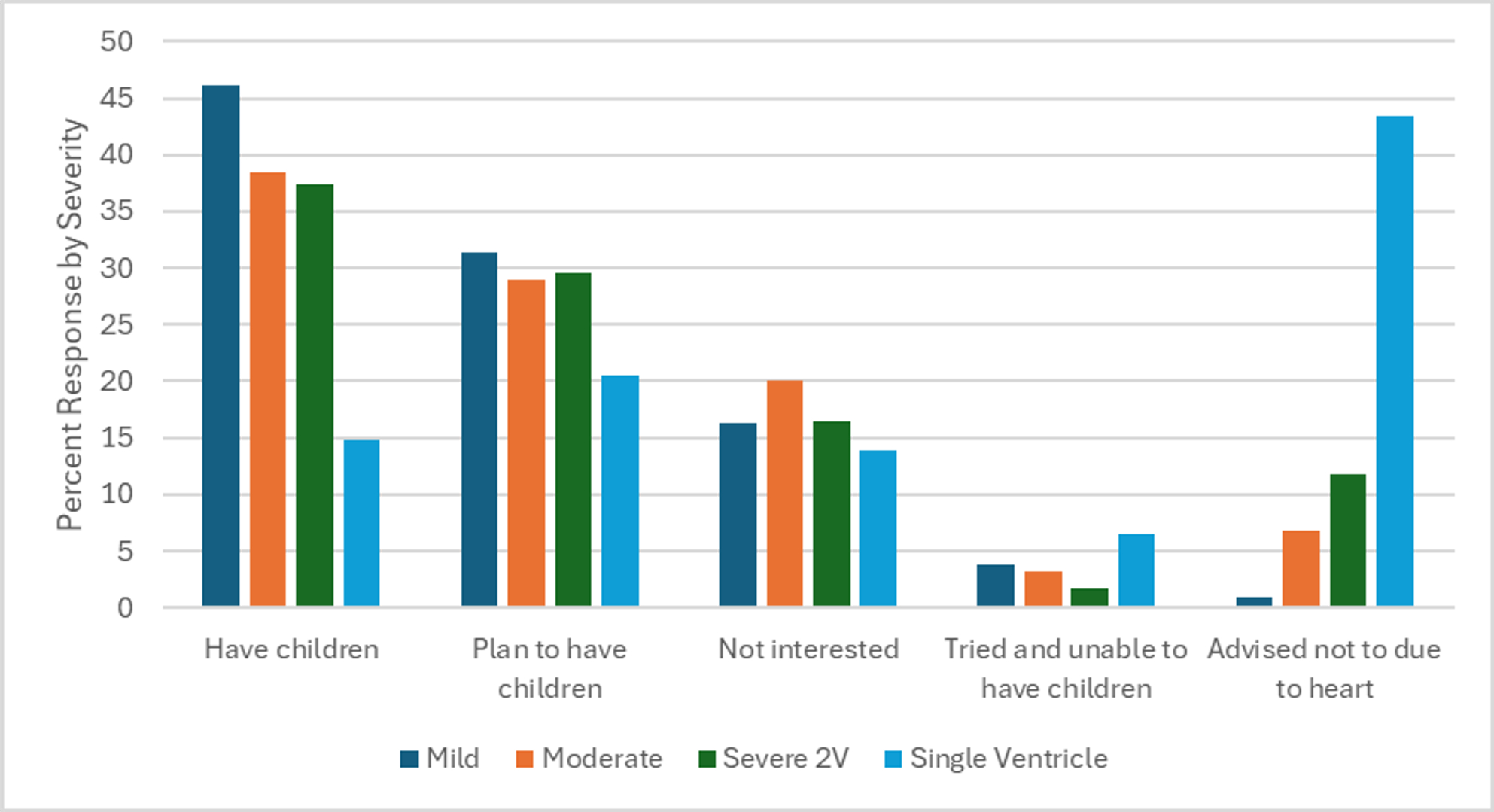
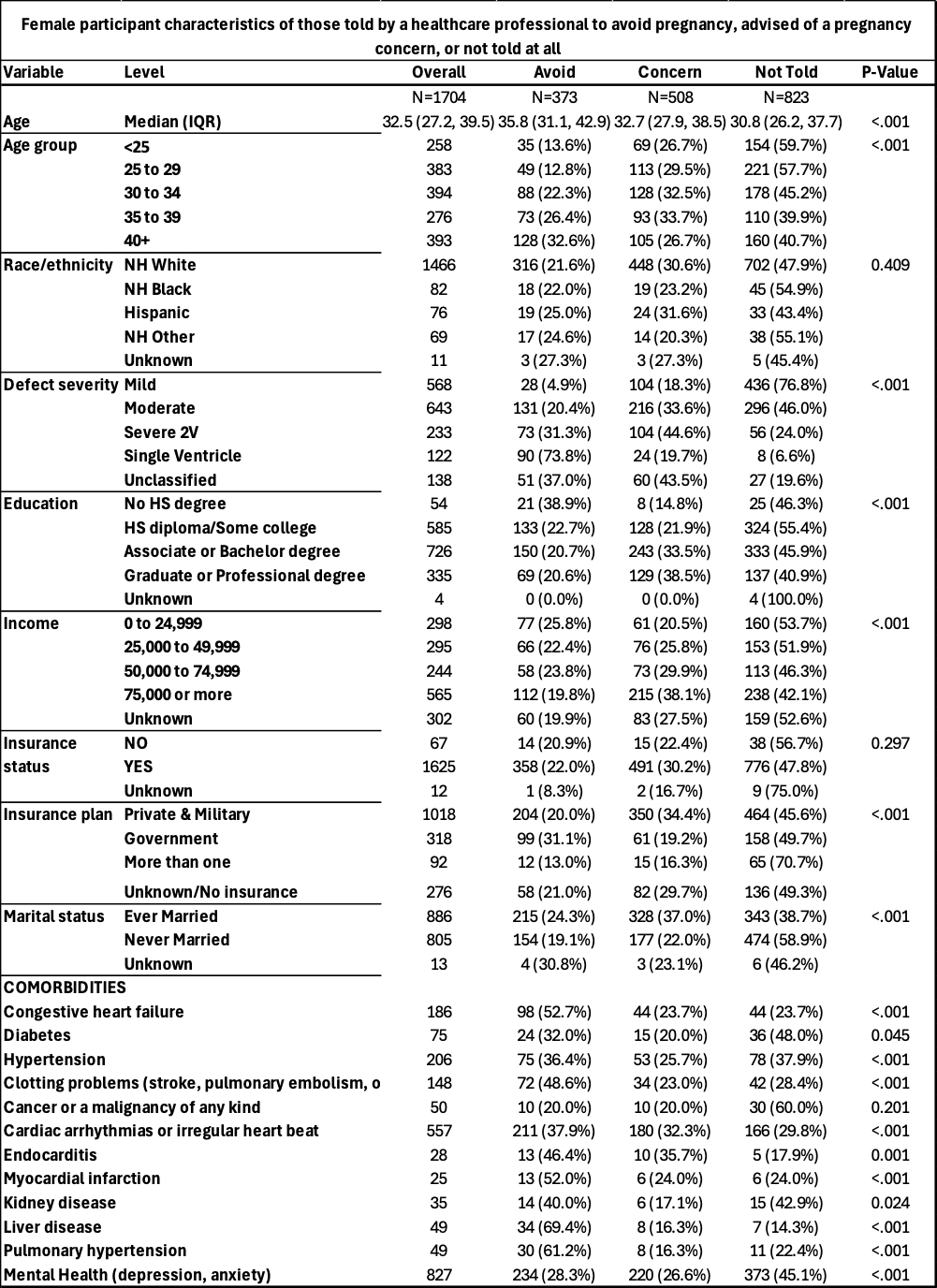
Abstract Body (Do not enter title and authors here): Background: While there are known pregnancy risks associated with congenital heart disease (CHD), it is unclear how this may affect reproductive decision making among adult women. We aimed to evaluate the impact of defect severity and preconception counseling on reproductive outcomes among U.S. women with CHD. Methods: In the Congenital Heart Disease Project to Understand Lifelong Survivor Experience (CHD PULSE), we performed a cross-sectional survey in 2021-2023 of CHD survivors with a history of intervention at 11 centers in the Pediatric Cardiac Care Consortium, a large US-based registry of CHD procedures. Participants reported their cardiac history, marital status, general health, education, income and their experiences regarding reproductive counseling, family planning, and pregnancy outcomes. Results: Among the 1704 female respondents with CHD (median age 32.5) there were 688 (40.4%) who reported having biological children. Single ventricle (SV) women were the least likely to have biological children (14%) compared to mild (46%), moderate (38%) and Severe 2 ventricle (2V) (37%) (p<0.0001). Approximately half of women (52%) reported receiving preconception counseling from a cardiologist. They were more likely to be married, older at their last surgery, having seen a cardiologist in the last three years ago, and a severe 2V or SV CHD (p<0.001). Among the 373 women told to avoid pregnancy: 41% reported having children, 10% reported planning to have children and 3.5% report trying to have children but were unsuccessful. The majority of SV women reported being told to avoid pregnancy (71%) compared to a minority of Severe 2V (31%), moderate (20%) and mild (5%) CHD women (p<0.0001). Conclusion: Women with more severe CHD were most likely to receive preconception counseling and were the least likely to have children. However, many women who were advised to avoid pregnancy either have children or still express a desire to become pregnant.
Dailey Schwartz, Andrew
(
Levine Children's Congenital Heart
, Charlotte , North Carolina , United States )
Shi, Caroline
(
Emory University
, Atlanta , Georgia , United States )
Erdem, Sukran
(
UT Southwestern Medical Center
, Dallas , Texas , United States )
Kochilas, Lazaros
(
EMORY UNIVERSITY
, Atlanta , Georgia , United States )
Oster, Matthew
(
Children s Healthcare of Atlanta
, Atlanta , Georgia , United States )
Gaitonde, Mansi
(
UT Southwestern Medical Center
, Dallas , Texas , United States )
Author Disclosures:
Andrew Dailey Schwartz:DO NOT have relevant financial relationships
| Caroline Shi:No Answer
| Sukran Erdem:No Answer
| Lazaros Kochilas:DO NOT have relevant financial relationships
| Matthew Oster:DO NOT have relevant financial relationships
| Mansi Gaitonde:No Answer