Geographic, Gender, and Age Disparities in Aortic Aneurysm Burden: Insights from GBD 2021 U.S. Dat
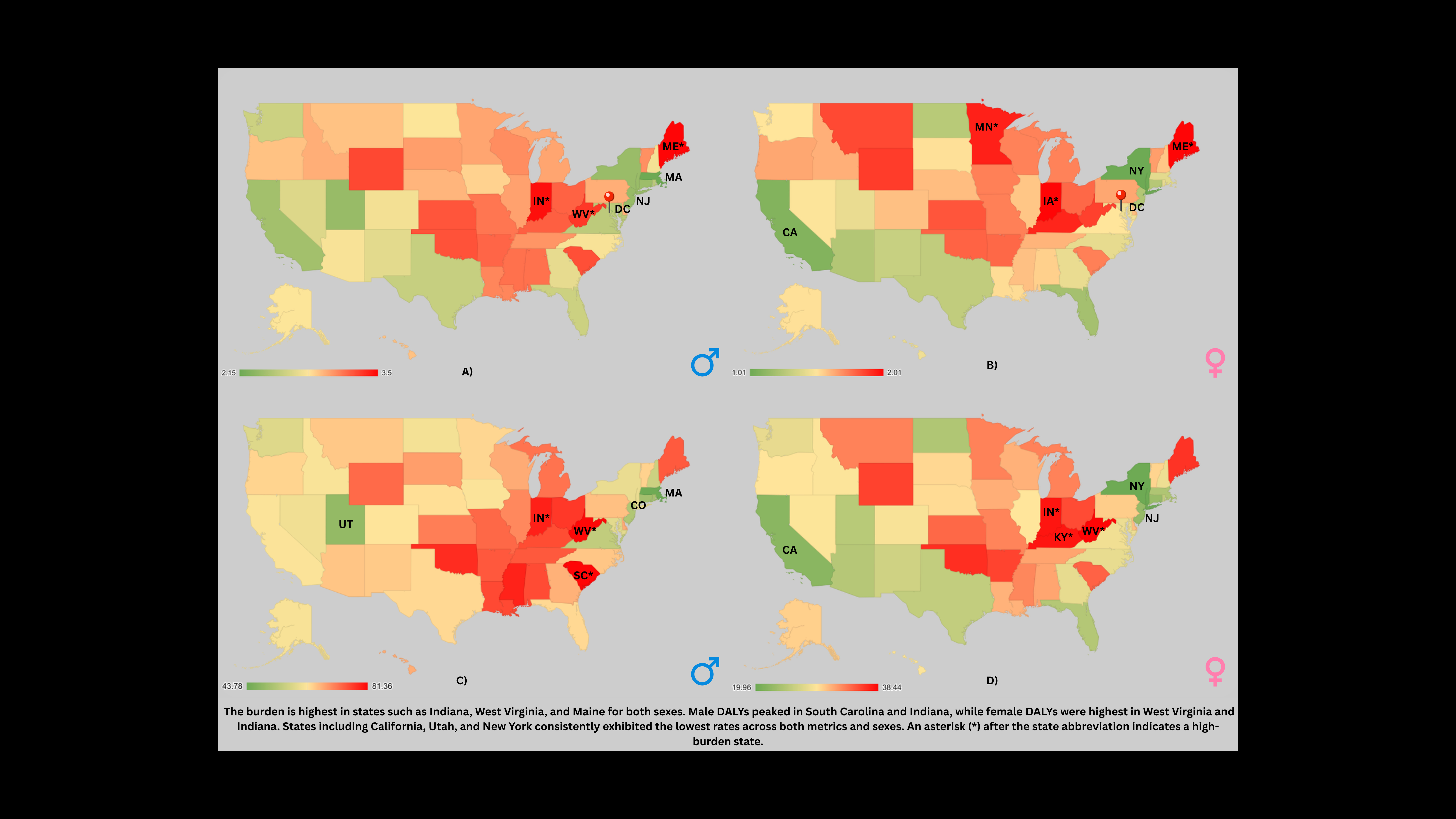
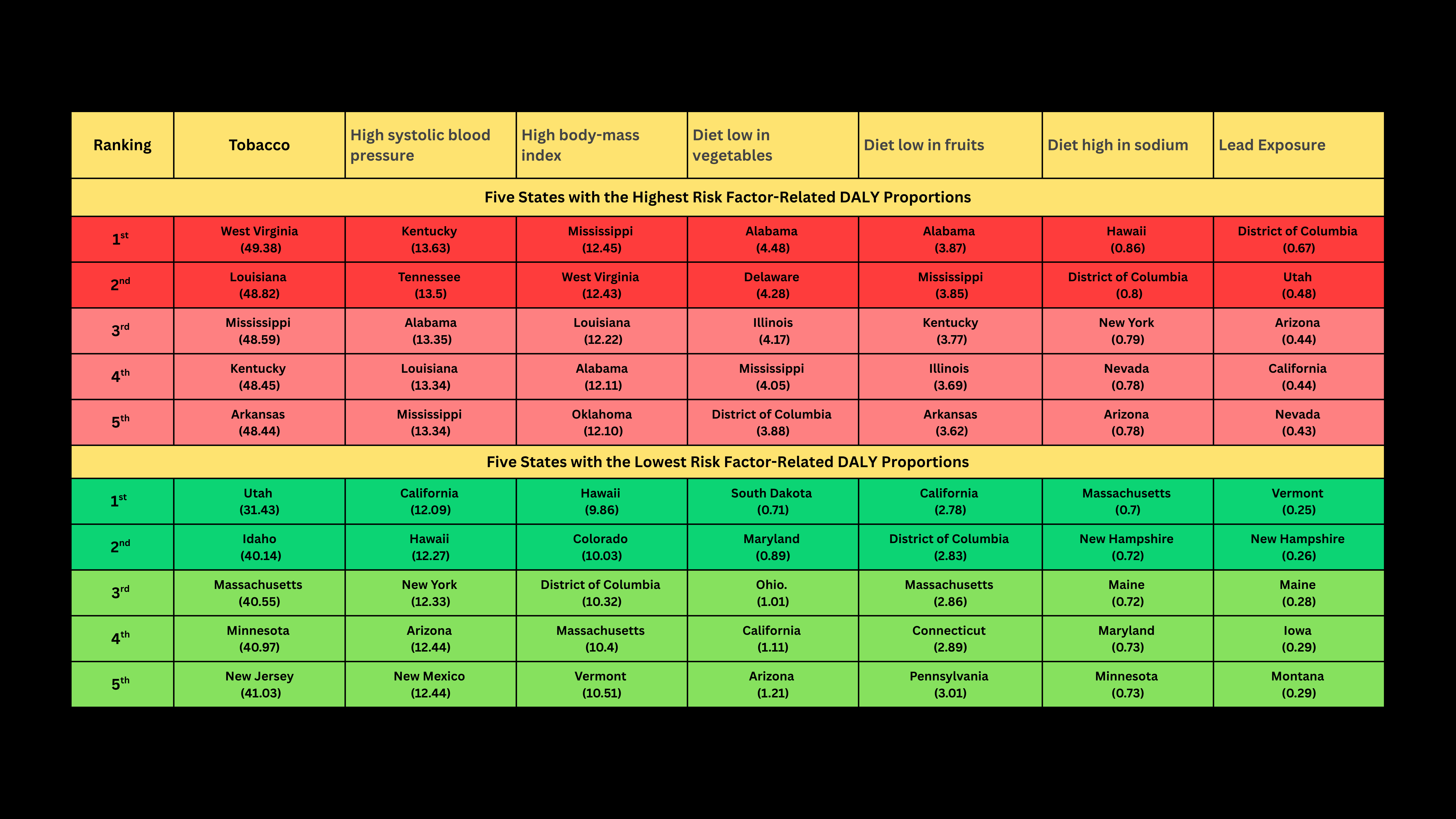
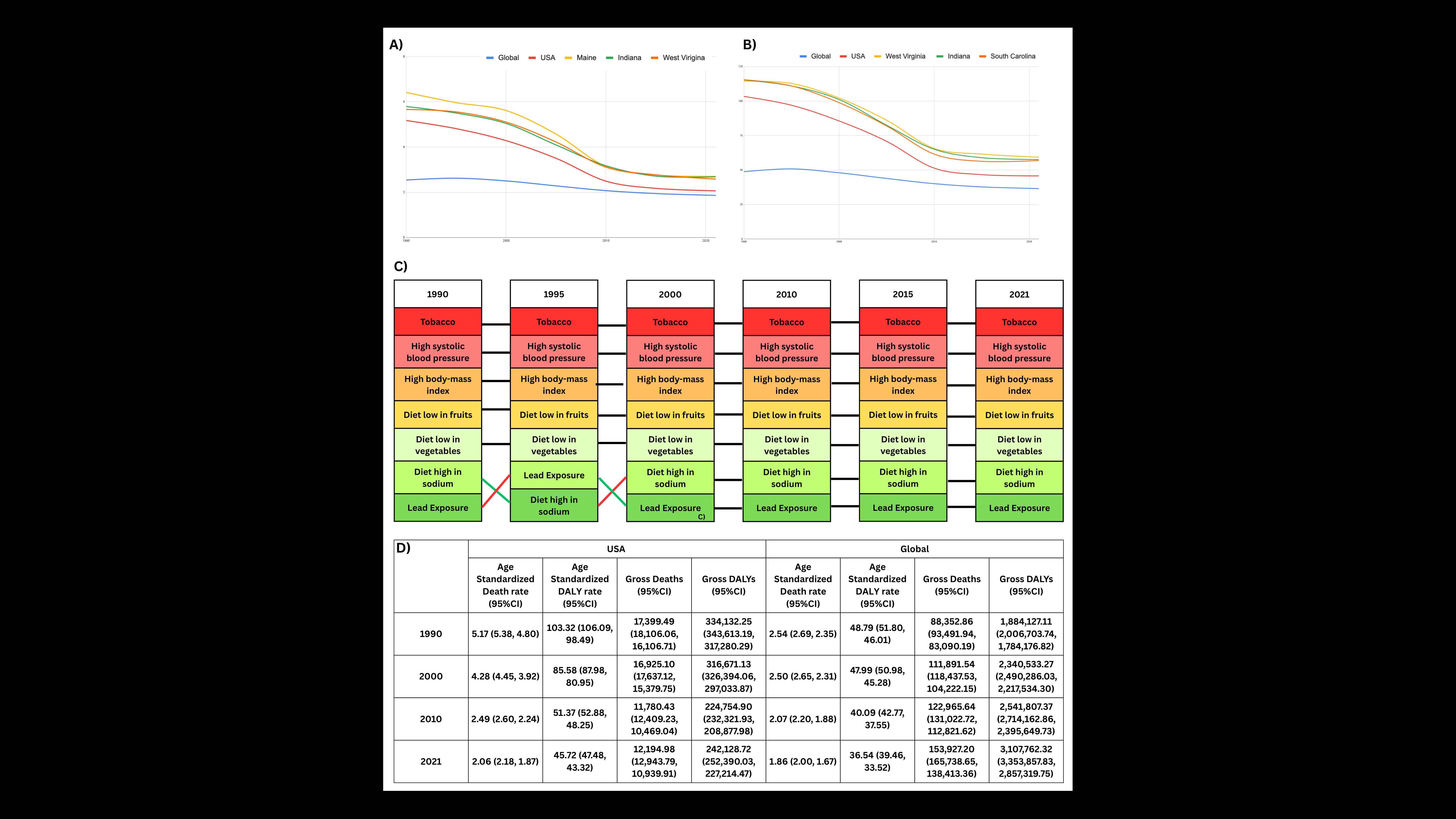
Abstract Body (Do not enter title and authors here): Background: Aortic aneurysm is a fatal but preventable cause of cardiovascular mortality. We used GBD 2021 U.S. data to analyze geographic, gender, and age disparities in death and disability-adjusted life year (DALY) burden, and to assess major risk factor (RF) contributions. Methods: Data were obtained using the Institute for Health Metrics and Evaluation (IHME) Global Burden of Disease (GBD) 2021 Results Tool. Age-standardized death and DALY rates were analyzed by state and sex. Age-stratified crude mortality and DALYs identified high-burden subgroups. Risk attribution was assessed using DALY percentages and temporal RF rankings from 1990 to 2021. Descriptive statistics were performed using Microsoft Excel. Results: Death rates were highest in Maine (2.70 (3.17, 2.28)), Indiana (2.68 (3.09, 2.27)), and West Virginia (2.58 (2.96, 2.20)), and lowest in D.C. (1.62 (1.94, 1.25)), New York (1.63 (1.91, 1.36)), and California (1.71 (1.95, 1.45)). DALYs peaked in West Virginia (59.28 (68.97, 50.45)), Indiana (57.56 (66.59, 49.33)), and South Carolina (56.86 (66.22, 47.52)). Male DALYs were highest in South Carolina (81.36 (99.58, 64.62)) and West Virginia (81.05 (98.05, 65.04)); female burden was highest in West Virginia (38.44 (46.45, 31.22)) and Indiana (37.81 (45.65, 30.81)). Mortality peaked in the 85+ age group, while DALYs were concentrated in males aged 15–49, reflecting greater life-years lost. Tobacco remained the leading RF across all years, with a notably higher burden in males. High systolic blood pressure followed, with a slightly greater burden in females. BMI ranked third. High-burden states also exhibited the highest tobacco-attributable DALY percentages—West Virginia (49.38 (55.35, 42.82)), Louisiana (48.82 (54.70, 42.59)), and Mississippi (48.59 (54.83, 42.40))—demonstrating a clear correlation between modifiable RF intensity and regional disease burden. Conclusion: Disparities in aortic aneurysm outcomes are tightly linked to the distribution of RFs across geography, gender, and age. States with elevated tobacco, hypertension, and obesity burdens consistently experience worse outcomes. Localized, data-driven public health strategies are essential to mitigate preventable mortality and improve vascular health equity.
Majety, Sameer Kumar
(
Xiamen University
, Kakinada , India )
Vedamurthy, Deepak
(
University of Louisville
, Louisville , Kentucky , United States )
Anne, Himaja
(
Hind Institute of Medical Sciences
, Sitapur , India )
Kamadi, Hemanth
(
Xiamen University
, Kakinada , India )
Sakalabaktula, Krishna Sai Kiran
(
Rangaraya Medical College
, Tekkali , India )
Author Disclosures:
Sameer Kumar Majety:DO NOT have relevant financial relationships
| Deepak Vedamurthy:No Answer
| Himaja Anne:DO NOT have relevant financial relationships
| Hemanth Kamadi:No Answer
| Krishna Sai Kiran SAKALABAKTULA:DO NOT have relevant financial relationships