The association of longitudinal NT-proBNP levels with echocardiographic measurements in heart failure with preserved ejection fraction: Insights from the PURSUIT-HFpEF Registry
Abstract Body (Do not enter title and authors here): Background: Elevated N-terminal pro-brain natriuretic peptide (NT-proBNP) levels during the stable phase are associated with poor prognosis in heart failure with preserved ejection fraction (HFpEF). Serial measurements of NT-proBNP and evaluation of its trends over time provide additional prognostic value, emphasizing the importance of maintaining lower levels of NT-proBNP.
Research questions: In clinical practice, echocardiography is one of the most useful non-invasive modalities for estimating myocardial wall stress in patients with heart failure. However, the specific echocardiographic parameters associated with longitudinal NT-proBNP levels in HFpEF remain poorly understood.
Methods: This study analyzed data from the Prospective mUlticenteR obServational stUdy of patIenTs with HFpEF (PURSUIT HFpEF). Patients hospitalized for acute decompensated HF with a left ventricular ejection fraction (LVEF) ≥50% were included. The association between longitudinal NT-proBNP levels and echocardiographic parameters was assessed using linear mixed-effects models, with further stratification by atrial tachyarrhythmias (ATAs) status.
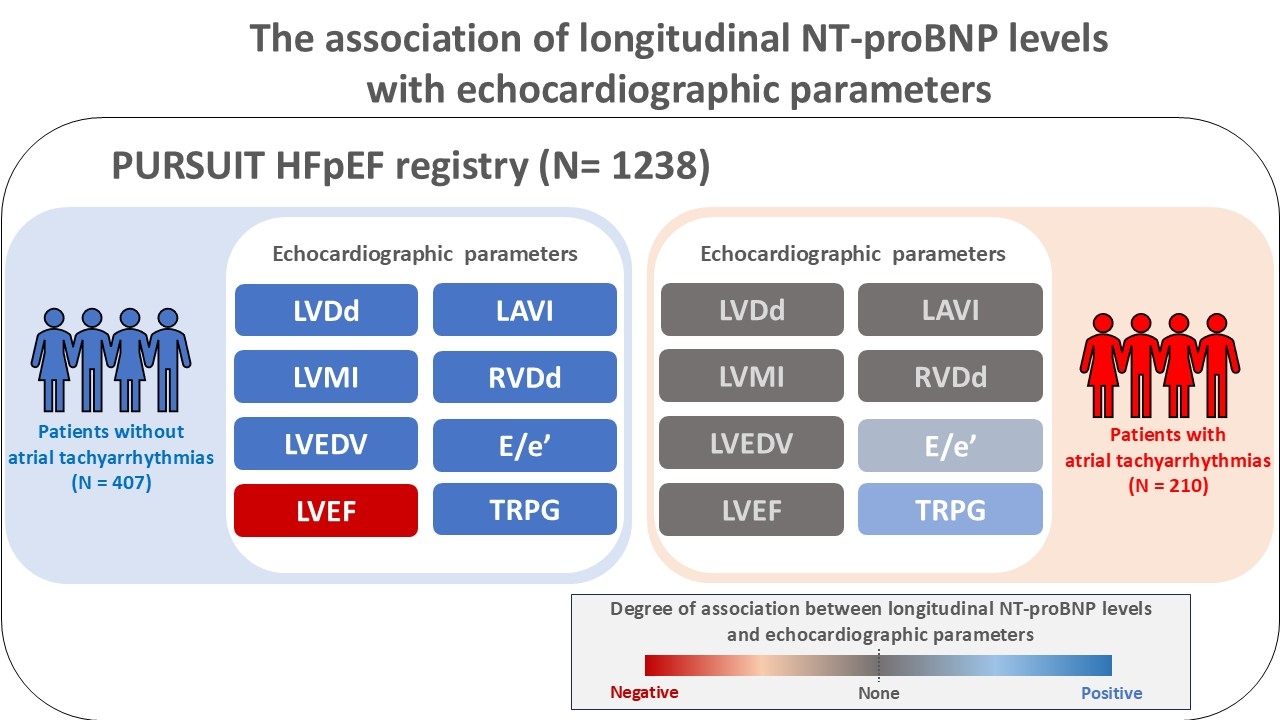
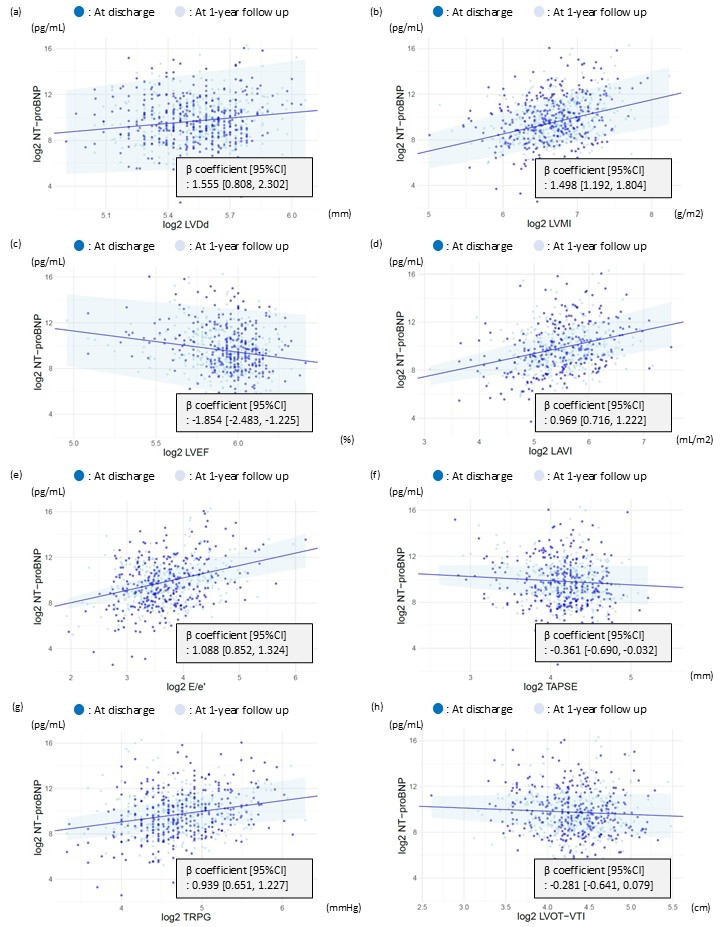
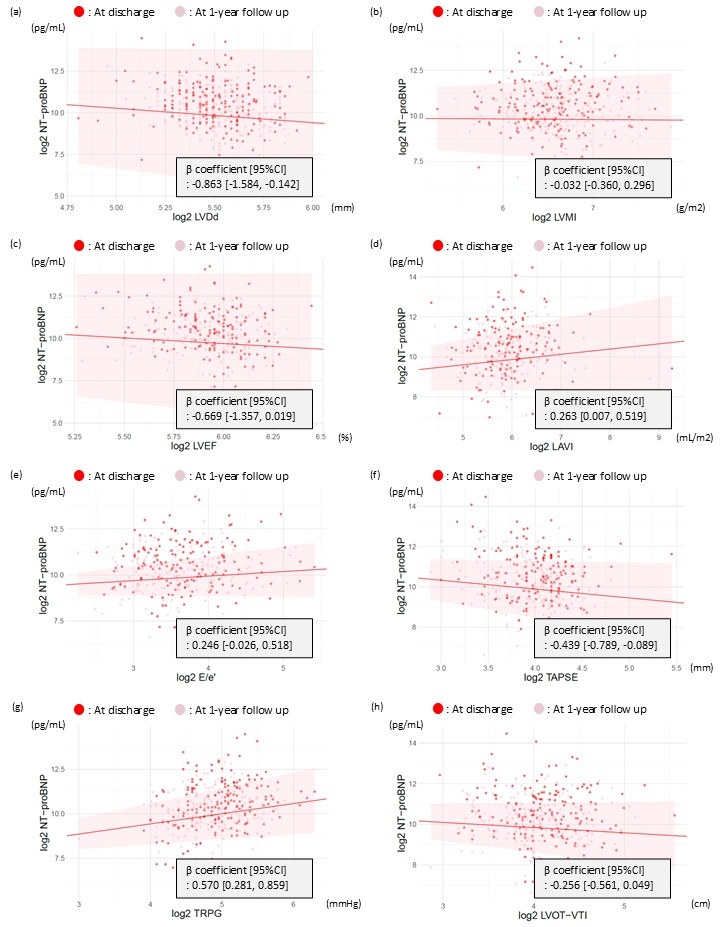
Results: Of 1,238 enrolled patients (median age 83 [77, 87] years; 551 [45%] male), 617 patients with longitudinal NT-proBNP data available (407 without ATAs, 210 with ATAs) were analyzed. In patients without ATAs , even after covariates adjusted, NT-proBNP levels were positively associated with left ventricular diastolic diameter (β-coefficient: 1.878 ± 0.736, P<0.001), left ventricular mass index (β-coefficient: 1.467 ± 0.280, P<0.001), left atrial volume index (β-coefficient: 0.795 ± 0.232, P<0.001), E/e’ (β-coefficient: 1.041 ± 0.214, P<0.001), and tricuspid regurgitation pressure gradient (TRPG) (β-coefficient: 0.849 ± 0.261, P<0.001). Conversely, left ventricular ejection fraction was negatively associated (β-coefficient: -1.632 ± 0.607, P<0.001). However, in patients with ATAs, most of these parameters except for E/e’, TRPG, and interventricular septal thickness at end-diastole had no correlation with NT-proBNP levels.
Conclusions: In HFpEF patients without ATAs, longitudinal NT-proBNP levels were broadly associated with both structural and functional echocardiographic parameters. However, patients with ATAs showed limited associations.
Sakamoto, Daisuke
( OSAKA UNIVERSITY GRADUATE SCHOOL
, Suita
, Japan
)
Seo, Masahiro
( Osaka General Medical Center
, Osaka City
, Japan
)