The Wrong Hoofbeats: Chagas Cardiomyopathy Presenting as Ventricular Tachycardia with Misleading Lyme Serology
Abstract Body (Do not enter title and authors here): Background Chagas cardiomyopathy is a common cause of nonischemic cardiomyopathy in Latin America and often presents with ventricular arrhythmias. With increasing global migration, the prevalence of Chagas cardiomyopathy in non-endemic regions is rising, including the United States. As such, evaluating the etiology of ventricular arrhythmias requires a broad differential. We present the diagnostic work up of a patient presenting with monomorphic ventricular tachycardia (VT), ultimately found to have Chagas cardiomyopathy.
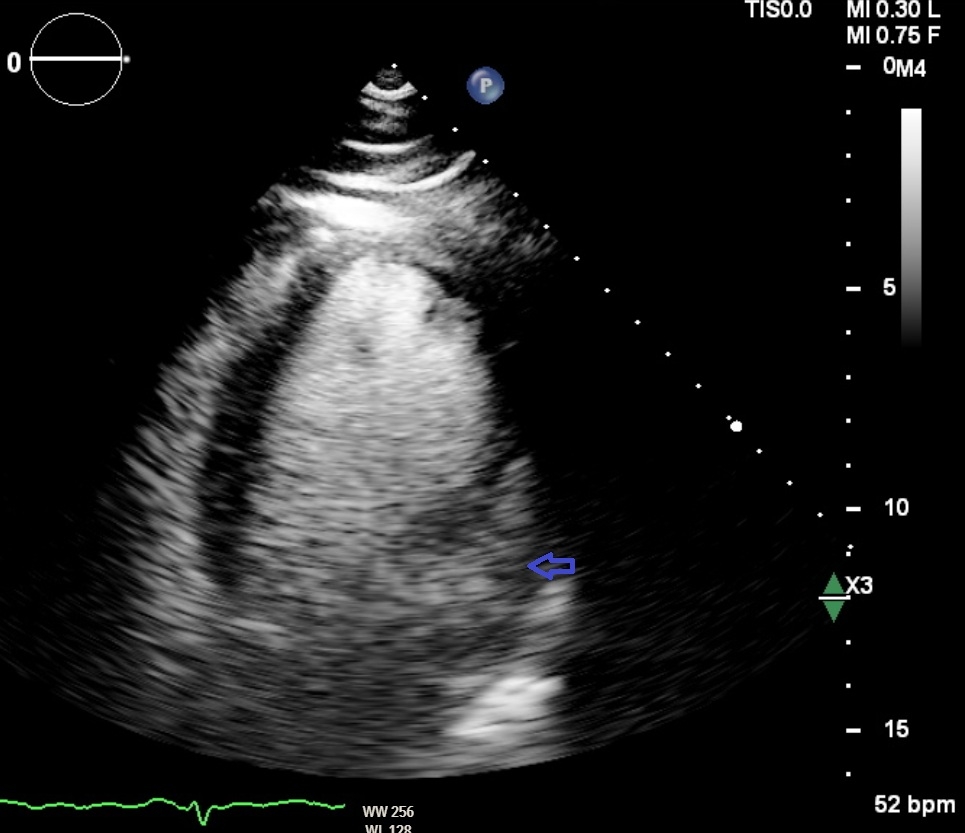
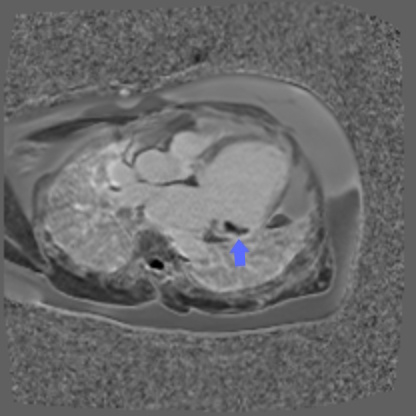
Case A 54-year-old Spanish-speaking male with no past medical history presented after being found unconscious and diaphoretic. Electrocardiogram demonstrated sustained monomorphic VT. After stabilization, transthoracic echocardiography revealed a left ventricular (LV) ejection fraction 30-35% with global hypokinesis and severely dilated LV cavity. Coronary angiography revealed patent coronaries. Further workup with cardiac magnetic resonance imaging demonstrated transmural late gadolinium enhancement in the basal to mid-lateral wall corresponding with hypokinetic myocardium, with a LV thrombus adjacent to the mitral valve and developing apicolateral aneurysm. An 18-fludeoxyglucose positron emission tomography scan was done which showed increased glucose uptake in the dysfunctional mid-lateral to apicolateral and anterolateral myocardium, without extracardiac evidence of sarcoid. Serologic testing was notable for an initially positive Lyme IgM, but confirmatory testing was negative. Further, serologies for Trypanosoma cruzi returned positive.
Discussion Although imaging was initially concerning for cardiac sarcoidosis, it did not meet clinical diagnostic criteria given absence of extracardiac involvement and presence of positive Trypanosoma cruzi titers. Empiric treatment was initiated for suspected Lyme carditis as he endorsed a history of rash resembling erythema migrans prior to presentation but was discontinued once confirmatory testing was negative. He was ultimately diagnosed with Chagas cardiomyopathy, but given his high-risk Rassi score, antiparasitic therapy was deferred and confirmatory testing was not pursued. He was started on guideline-directed medical therapy for cardiomyopathy and anticoagulation for LV thrombus. Amiodarone was initiated for VT, and an automatic implantable cardioverter defibrillator was placed for secondary prevention.
Pu, Alex
(
University of Maryland School of Medicine
, Baltimore , Maryland , United States )
Mysore, Manu
(
University of Maryland School of Medicine
, Baltimore , Maryland , United States )
Leventhal, Sarah
(
University of Maryland School of Medicine
, Baltimore , Maryland , United States )
Wade, Carol
(
University of Maryland School of Medicine
, Baltimore , Maryland , United States )
Bruno, Shelby
(
University of Maryland School of Medicine
, Baltimore , Maryland , United States )
Naami, Robert
(
University of Maryland School of Medicine
, Baltimore , Maryland , United States )
Allaham, Haytham
(
University of Maryland School of Medicine
, Baltimore , Maryland , United States )
Amara, Richard
(
University of Maryland School of Medicine
, Baltimore , Maryland , United States )
Jones, Niya
(
University of Maryland School of Medicine
, Baltimore , Maryland , United States )
Ananthram, Manjula
(
University of Maryland School of Medicine
, Baltimore , Maryland , United States )
Author Disclosures:
Alex Pu:DO NOT have relevant financial relationships
| Manjula Ananthram:No Answer
| Manu Mysore:DO NOT have relevant financial relationships
| Sarah Leventhal:DO NOT have relevant financial relationships
| Carol Wade:No Answer
| Shelby Bruno:No Answer
| Robert Naami:No Answer
| Haytham Allaham:No Answer
| Richard Amara:No Answer
| Niya Jones:No Answer