Clinical and Demographic Characteristics of Critically Ill Acute Coronary Syndrome Hospitalizations With and Without Postprocedural Circulatory System Complications
Abstract Body (Do not enter title and authors here): Background Postprocedural and postoperative circulatory system complications among patients with acute coronary syndrome (ACS) are associated with increased clinical severity, prolonged lenght of stay (LOS), and higher healthcare costs. Despite advances in ACS care, these complications remain prevalent and poorly characterized. Understanding the profiles of affected patients is helpful for risk stratification and quality improvement.
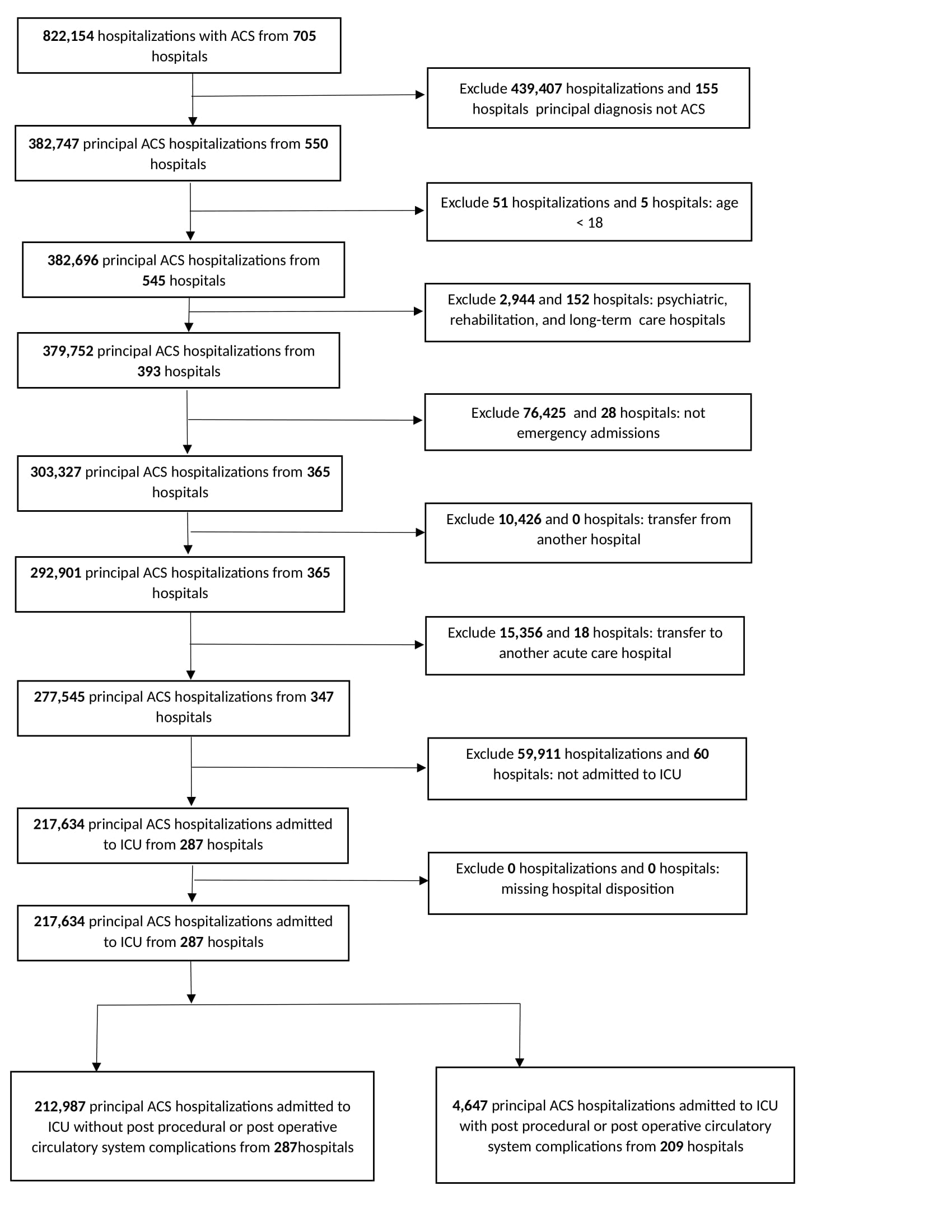
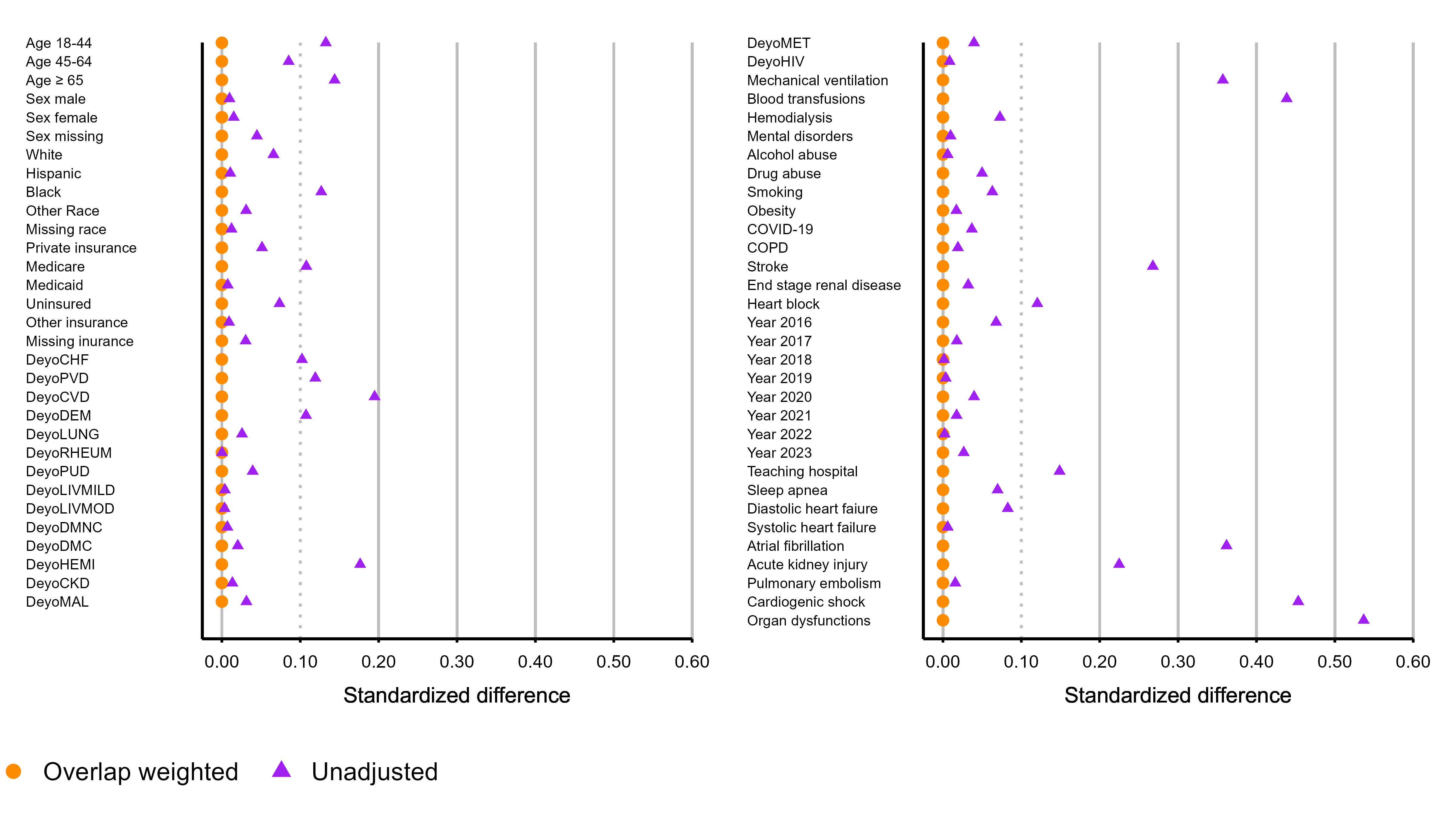
Methods We conducted a retrospective cohort study using the Texas Inpatient Public Use Data File from 2016–2023. Figure 1 details the cohort derivation. Demographics, comorbidities, interventions, LOS, and adjusted total charges were assessed. Propensity score overlap weighing was used to measure the association of post procedural complications with length of stay and total hospital charges. Results are reported as adjusted risk ratio and 95% confidence interval (aRR [95% CI]).
Results A total of 217,634 of hospitalizations from 287 hospitals were included of which 4,647 (2.1%) had postprocedural complications. Patients who developed complications were older (mean age 69.4 vs 66.2 years), more frequently female (39% vs 33%), had higher rates of chronic kidney disease (27% vs 19%), diabetes (45% vs 38%), and atrial fibrillation (33% vs 17%). Complications were associated with prolonged stay (mean 9.3 vs 6.9 days; aRR 1.35 [95% CI: 1.3 to 1.40]) and 47% higher hospital charges ($346,059 vs $234,986; aRR 1.47 [1.41 to 1.55]). Results were similar on subgroup analysis for procedure types with the most notable increased burden seen in coronary artery bypass graft patients ($490,088 vs $442,190; aRR for charges: 1.11, 95% CI: 1.07 to 1.15).
Discussion Procedural complications increase resource use and costs, emphasizing a need for preventive strategies. Our findings identify the disproportionate burden of postprocedural circulatory complications among older, multimorbid, and female ACS patients. Younger male patients without comorbidities are more likely to have a hospital stay under four days. LOS may serve as a marker of outcomes and costs, with shorter LOS after primary PCI for STEMI linked to lower 30-day readmissions and reduced expenditures. Implementing perioperative optimization and early risk identification can mitigate these issues. Standardized hospital protocols for managing high-risk ACS patients are crucial, and future studies should investigate institutional and provider-related factors contributing to complications.
Twayana, Anu
(
TTUHSC, Permian Basin
, Odessa , Texas , United States )
Rodriguez, David
(
Texas Tech University
, Midland , Texas , United States )
Herrera Ramos, Alejandro
(
TTUHSC, Permian Basin
, Odessa , Texas , United States )
Lella, Leela
(
TTUHSC, Permian Basin
, Odessa , Texas , United States )
Jimenez-garcia, Pedro
(
Universidad Nacional Autónoma de Honduras
, Tecugicalpa , Honduras )
Solorzano, Carlos
(
Universidad Nacional Autónoma de Honduras
, Tecugicalpa , Honduras )
Author Disclosures:
Anu Twayana:DO NOT have relevant financial relationships
| David Rodriguez:DO NOT have relevant financial relationships
| Alejandro Herrera Ramos:No Answer
| Leela Lella:No Answer
| Pedro Jimenez-Garcia:DO NOT have relevant financial relationships
| Carlos Eduardo Solorzano Flores:DO NOT have relevant financial relationships
Rasool Muhammad Mujtaba, Cheema Shamikha, Murtaza Muhammad, Kamran Haneen, . Abdullah, Khan Misha, Majeed Uzair, Raza Muhammad Ahmed, Zaeem Muhammad, Ali Muhammad Abdullah, Alam Umama