Documentation Time, System Integration, and Workflow Challenges in Cardiology: A Clinician Survey
Abstract Body (Do not enter title and authors here): Background: US Cardiologists face increasing documentation burdens due to the use of multiple fragmented digital systems, including EHRs, imaging archives and cardiovascular-specific applications. This complexity may add administrative workload, decrease efficiency, and reduce face-to-face time with patients. As cardiovascular disease management becomes more data-rich, these inefficiencies can significantly affect both clinician well-being and patient outcomes.
Research Question: What is the current documentation burden among U.S. cardiologists, and how does the usability and integration of clinical software affect their workflow?
Methods: An anonymous, 10-question survey was created and distributed both online and in paper format to cardiologists in the US. The survey collected data on years in practice, practice setting, EHR usage, time spent on documentation, use of speech-to-text tools, burden by task type, ease of interface across digital systems, and time needed to access cardiovascular test results. One open-ended question allowed for additional user feedback. Descriptive statistics summarized the results.
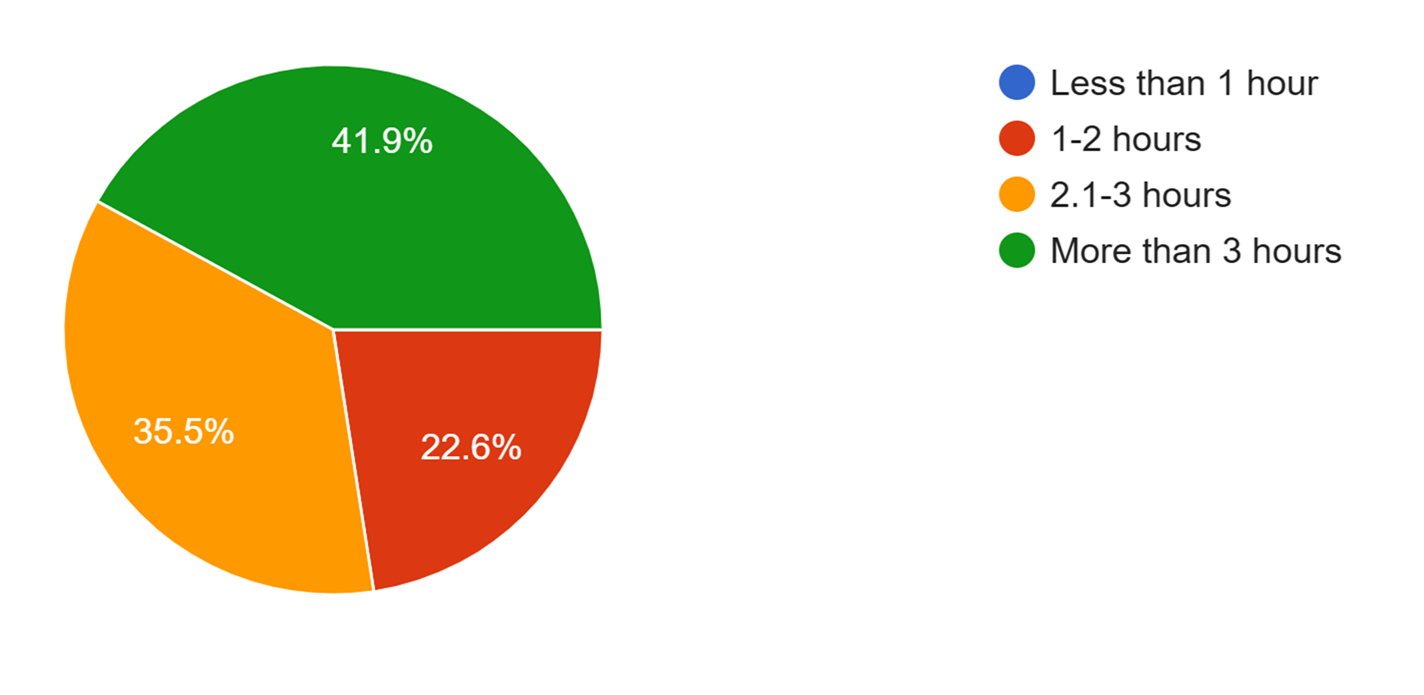
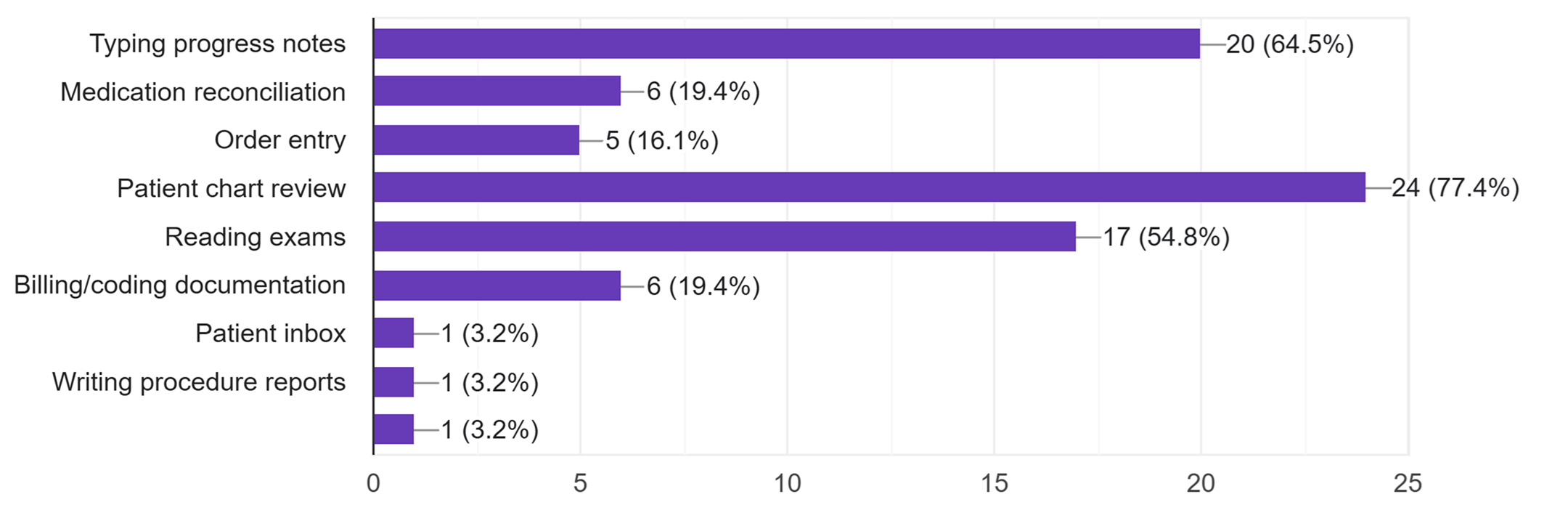
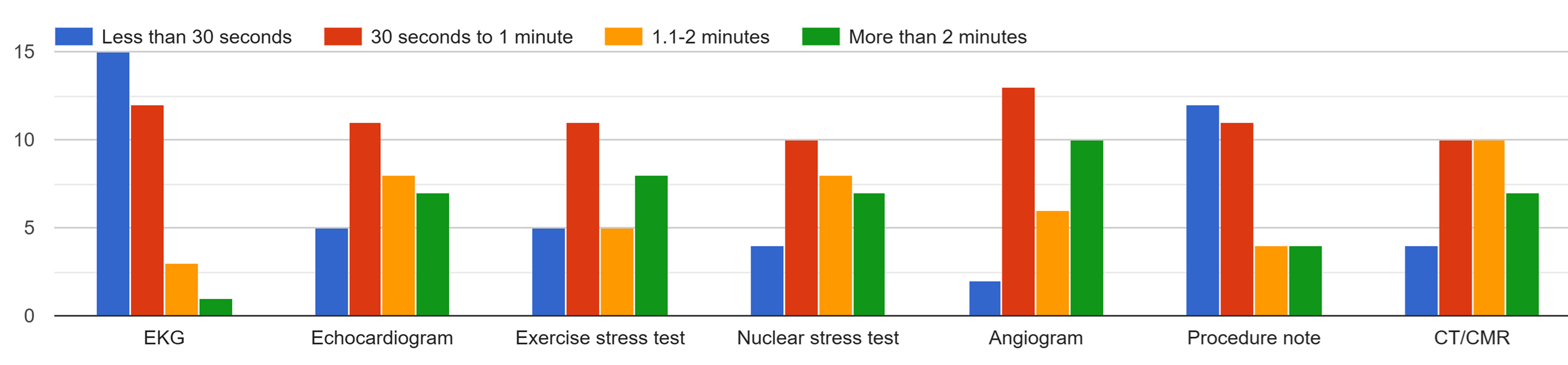
Results: Thirty-one cardiologists responded, most of whom practice in academic or hospital-based settings and see both inpatients and outpatients. Over 75% reported spending more than two hours per day on documentation. Chart review (77%), note writing (65%), and exam interpretation (55%) were cited as the most burdensome tasks. Only 23% reported frequent use of speech-to-text tools. Many found system interfaces difficult or neutral in usability. Time to access ancillary tests, especially echocardiograms, angiograms, and nuclear stress studies, frequently exceeded one minute for each image or document (see figure 1). Open comments highlighted the lack of search functionality, partial or non-existent interoperability, and inefficient workflows. Respondents emphasized that retrieving critical clinical data often takes longer than reviewing paper charts, indicating a need for substantial digital redesign.
Conclusion: This study underscores the substantial documentation burden in cardiology, driven by fragmented digital systems. Addressing usability and integration challenges, using streamlined interfaces, improved interoperability, and broader adoption of efficiency tools may reduce workload, improve clinician satisfaction, and enhance care delivery.
Tiosano, Samuel
(
University at Buffalo
, Buffalo , New York , United States )
Elkin, Peter
(
University at Buffalo
, Buffalo , New York , United States )
Koppel, Ross
(
University of Pennsylvania
, Philadelphia , Pennsylvania , United States )
Author Disclosures:
Samuel Tiosano:DO NOT have relevant financial relationships
| Peter Elkin:No Answer
| Ross Koppel:No Answer