
Logo

American Heart Association

  17
  0


Final ID: Su4095

Monocyte-derived mitochondria-containing extracellular vesicles drive inflammation in heart failure

Abstract Body (Do not enter title and authors here): Introduction:
Sterile inflammation is increasingly recognized as a key contributor to heart failure (HF) progression, yet the lack of clearly defined molecular mechanisms has limited the development of targeted therapies. Among proposed triggers, mitochondrial damage-associated molecular patterns (MitoDAMPs)—immunogenic molecules released from injured mitochondria—are elevated in the circulation of HF patients. Since mitochondria are frequently exported within extracellular vesicles (EVs), we hypothesized that mitochondria-containing extracellular vesicles (EV-Mito), a previously unrecognized subclass of circulating EVs, may act as immune-activating mediators in HF.

Methods and Results:
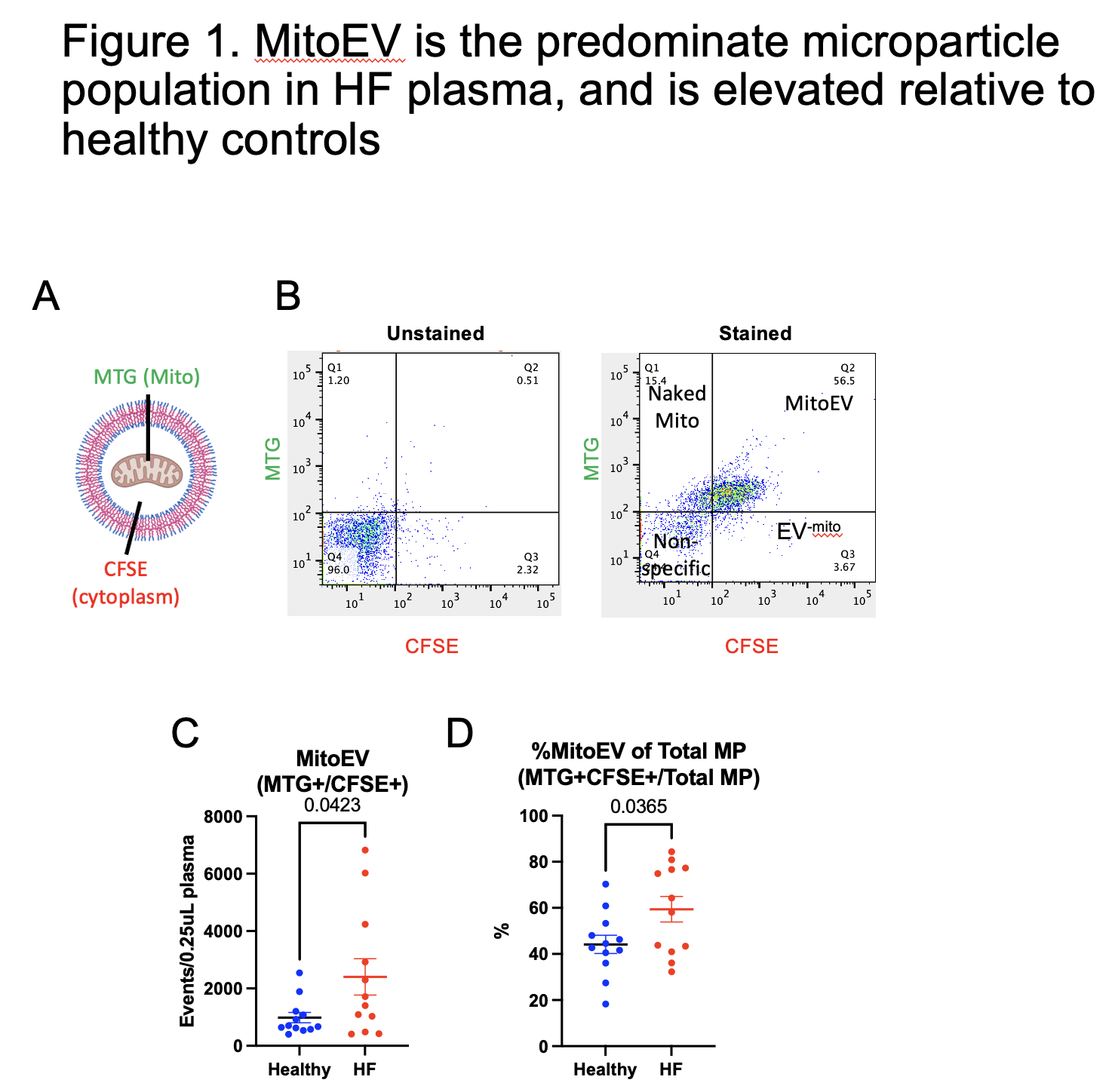
Plasma samples from patients with Stage D HFrEF (n=12) and healthy controls (n=12) were analyzed by flow cytometry using mitochondrial- and cytoplasmic-specific dyes. EV-Mito, defined as double-positive microparticles, were increased 3-fold in HF patients compared to controls (p = 0.0423) and accounted for over 70% of total plasma microparticles. EV-Mito isolated from HF plasma by size-exclusion chromatography followed by flow sorting induced robust IL1B and TNFα production in macrophages, confirming their immunogenicity. Surface marker profiling revealed CD14 enrichment, implicating monocytes as a primary source of EV-Mito in HF circulation.
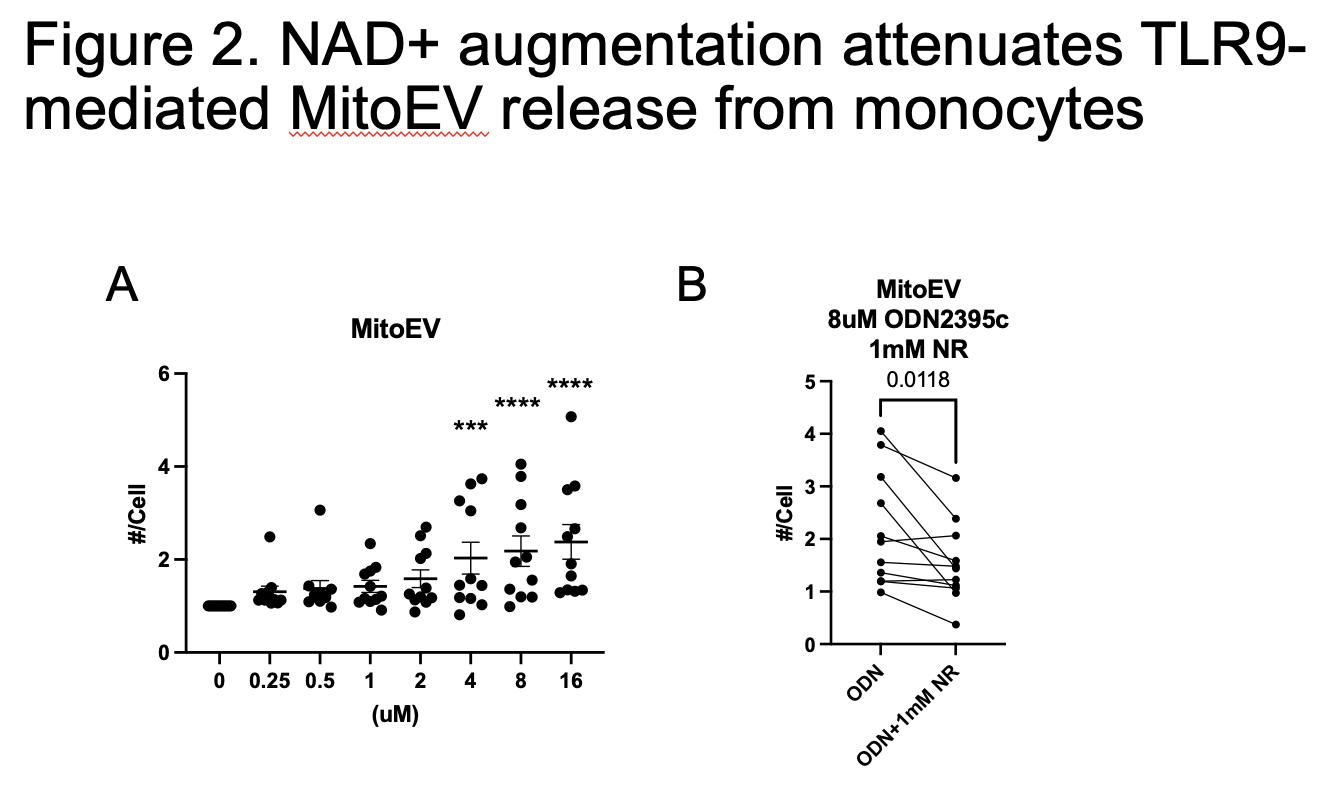
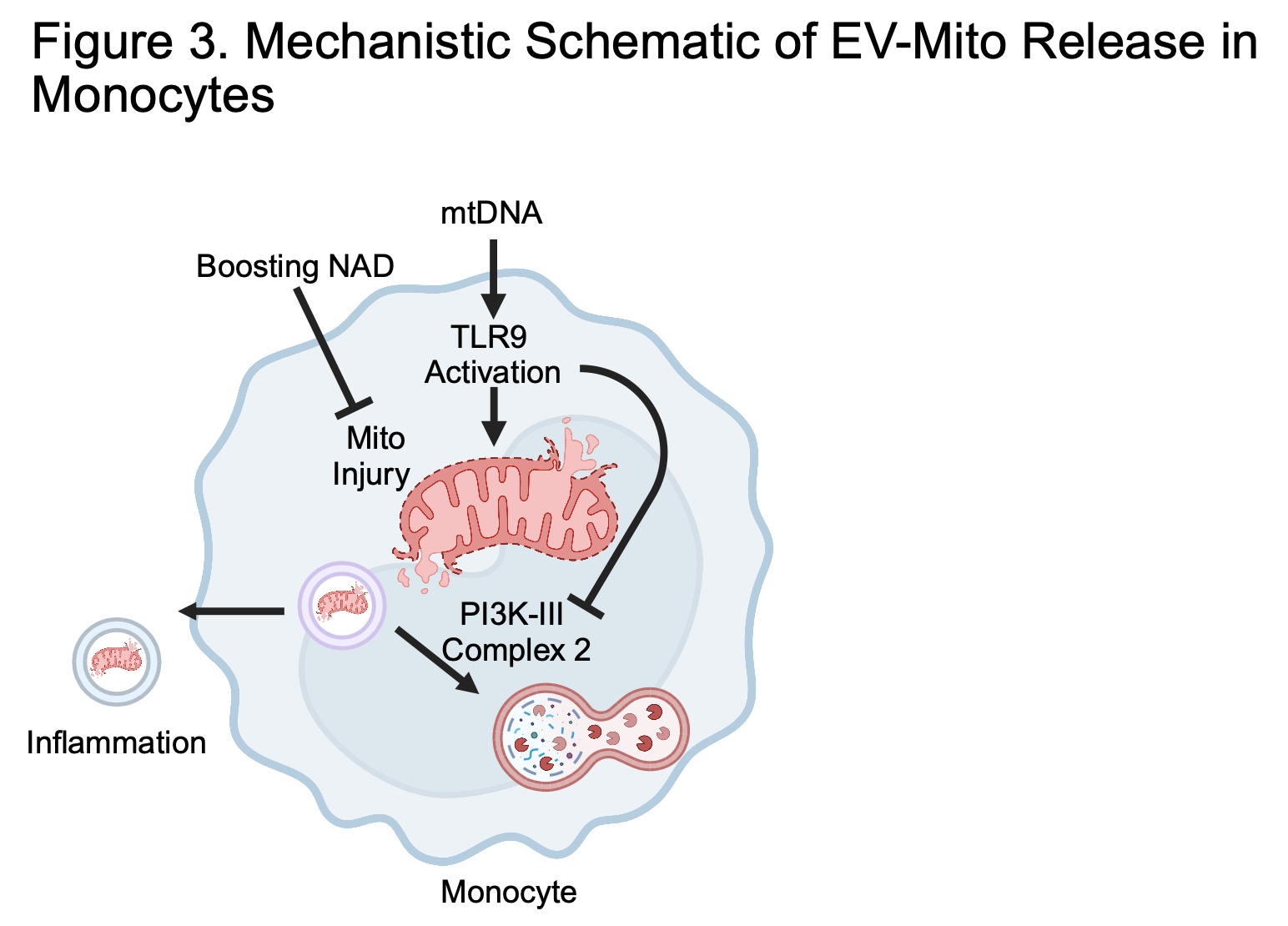
Mechanistically, mitochondrial DNA (mtDNA) activation of Toll-like receptor 9 (TLR9) in THP-1 monocytes induced mitochondrial dysfunction and impaired autophagy via disruption of the PI3K-III Complex II, resulting in EV-Mito release. Given the known role of NAD+ in preserving mitochondrial health, we tested nicotinamide riboside (an NAD+ precursor) supplementation in cultured monocytes and in HFrEF patients. While patient data are pending, NAD+ augmentation in primary monocytes preserved mitochondrial integrity and significantly reduced EV-Mito release by 30% (p = 0.0118).

Conclusion:
These findings identify EV-Mito as a mechanistically distinct and targetable mediator of inflammation in HF. By preventing their release, NAD+ augmentation offers a clinically feasible anti-inflammatory strategy with potential to improve outcomes in HF patients.
  • Wang, Dennis  ( University of Washington , Seattle , Washington , United States )
  • Huynh, Kim Anh  ( University of Washington , Seattle , Washington , United States )
  • Tong, Denise  ( University of Washington , Seattle , Washington , United States )
  • O'brien, Kevin  ( University of Washington , Seattle , Washington , United States )
  • Tian, Rong  ( University of Washington , Seattle , Washington , United States )
  • Author Disclosures:
    Dennis Wang: DO NOT have relevant financial relationships | Kim Anh Huynh: No Answer | Denise Tong: No Answer | Kevin O'Brien: No Answer | Rong Tian: No Answer
Meeting Info:

Scientific Sessions 2025

2025

New Orleans, Louisiana

Session Info:

Emerging Mechanisms in Heart Disease and Obesity

Sunday, 11/09/2025 , 11:30AM - 12:30PM

Abstract Poster Board Session

More abstracts on this topic:
Gender Differences in Cardiovascular Mortality Among Patients with Immune Mediated Diseases: A 22-Year Analysis

Motairek Issam, Husni Elaine, Wassif Heba, Abdulhai Farah, Badwan Osamah, Calcagno Tess, Issa Rochell, Tabaja Chadi, Al-dalakta Astefanos, Arab Sammy, Mirzai Saeid

Assessing Coronary Artery Disease Severity: Leveraging Inflammatory Markers As a Prognostic Indicators

Turnbull Scott, Dugal Jasmine, Gill Randeep, Wang Shawn, Cross Chad, Mubder Mohamad

More abstracts from these authors:
You have to be authorized to contact abstract author. Please, Login
Not Available