
First-in-Human Clinical Application of Induced Pluripotent Stem Cell-Derived Cardiomyocyte Patches for Non-Ischemic Dilated Cardiomyopathy
Abstract Body (Do not enter title and authors here): Background: Transplantation of induced pluripotent stem cell (iPSC)-derived cardiomyocytes has emerged as a novel therapeutic approach for severe heart failure. While clinical applications have been reported in ischemic cardiomyopathy, no studies have addressed non-ischemic etiologies. Given reports of impaired myocardial perfusion due to microcirculatory disturbances in non-ischemic cardiomyopathy, we hypothesized that iPSC-derived cardiomyocyte transplantation may exert beneficial effects via angiogenesis, similar to its mechanism in ischemic disease. This study presents both preclinical efficacy data in large animal models and the first clinical application of cardiomyocyte patch transplantation in patients with dilated cardiomyopathy (DCM).
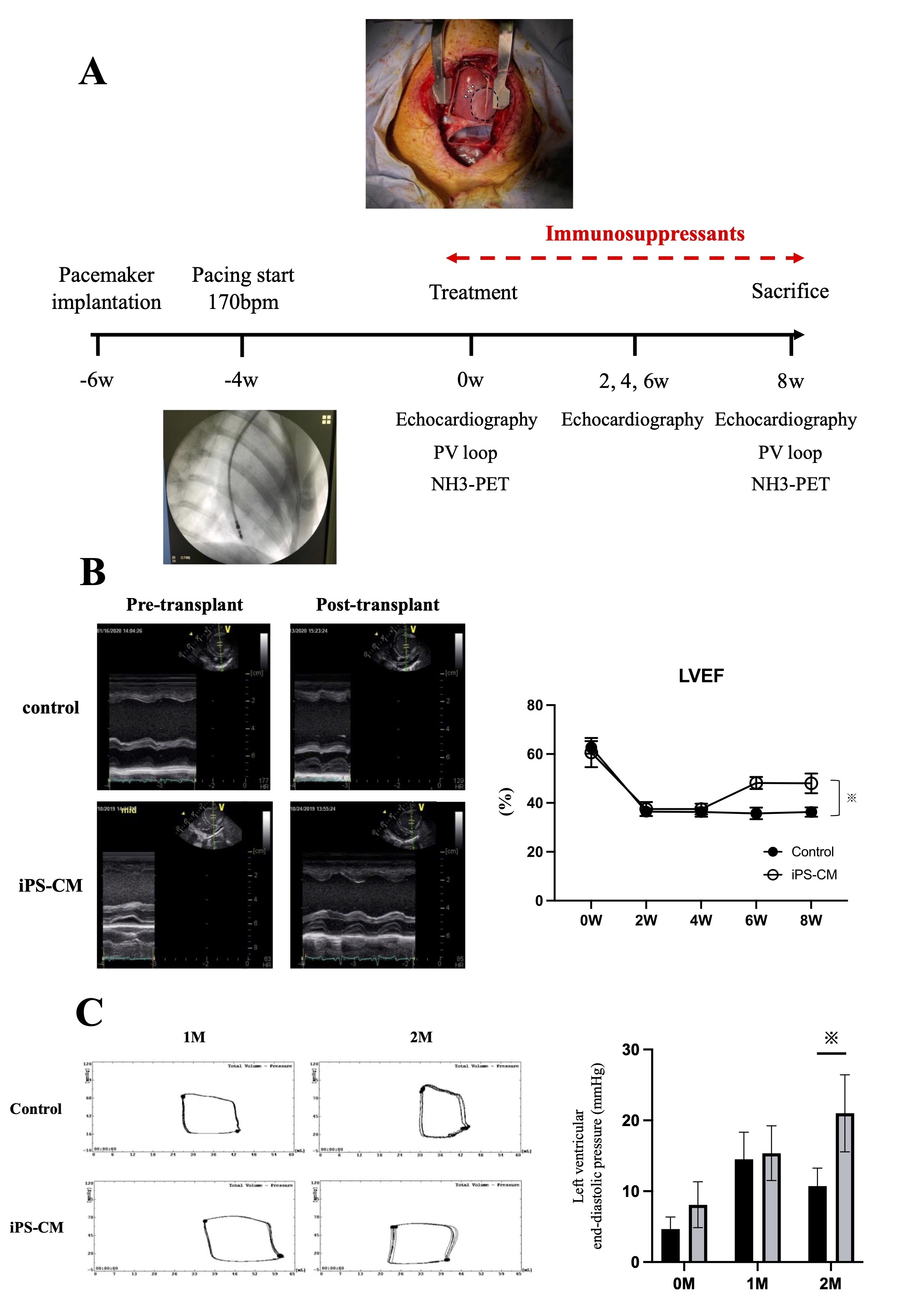
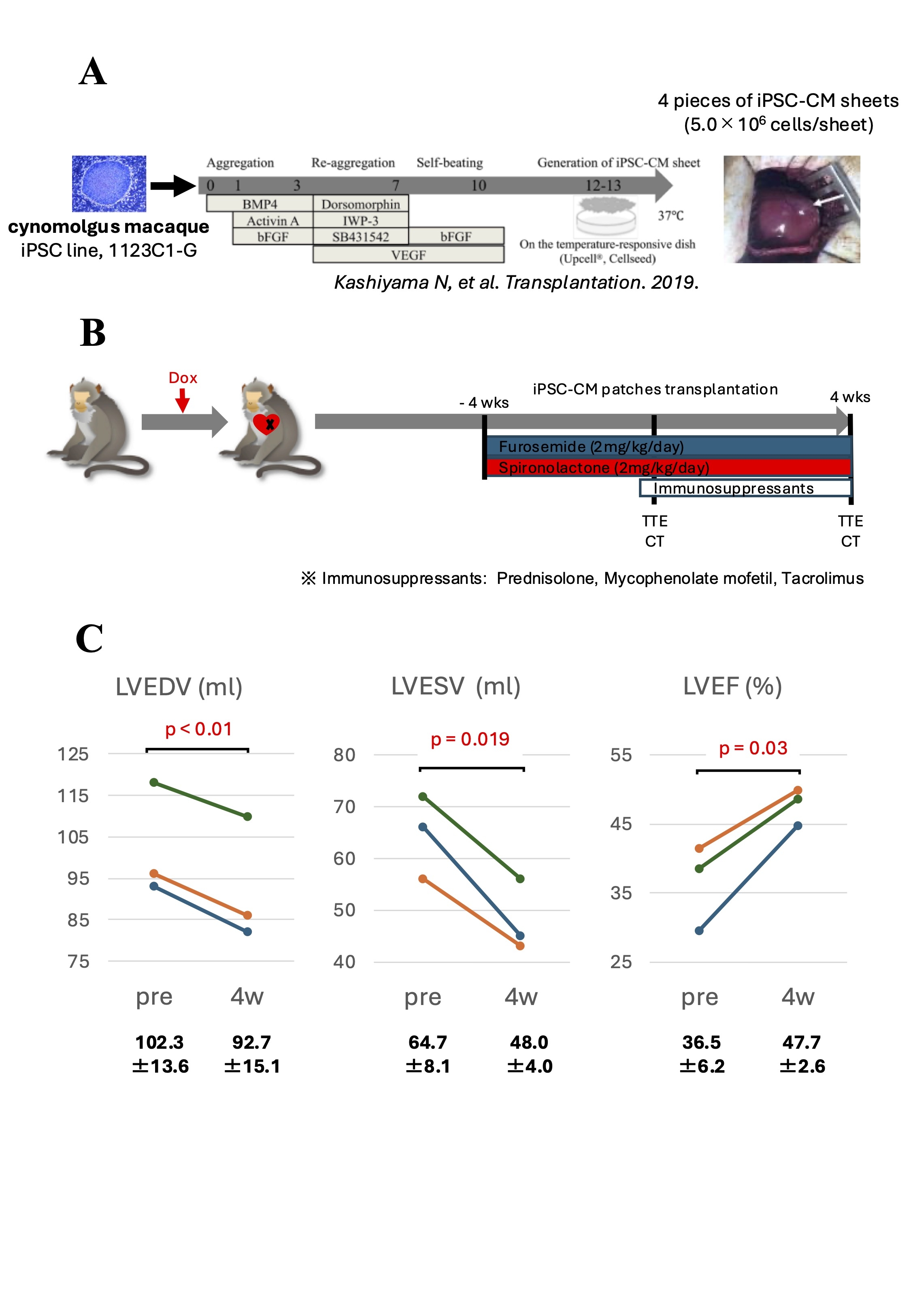
Methods and Results: Preclinical studies were conducted in two large animal models: (1) human iPSC-derived cardiomyocyte (iPSC-CM) patches were transplanted into a minipig model of pacing-induced DCM, and (2) iPSC-CM patches from genetically distinct macaques were transplanted into crab-eating macaques with doxorubicin-induced cardiomyopathy. In the minipig model, the iPSC-CM patch group showed significantly reduced left ventricular (LV) dilation and improved LV ejection fraction (LVEF) compared to sham controls. Catheterization revealed decreased LV end-diastolic pressure, and ammonia-PET imaging showed enhanced global myocardial perfusion. In the macaque model, transplantation led to a significant reduction in LV volume and an increase in LVEF at 4 weeks post-implantation, as confirmed by echocardiography and cardiac CT.
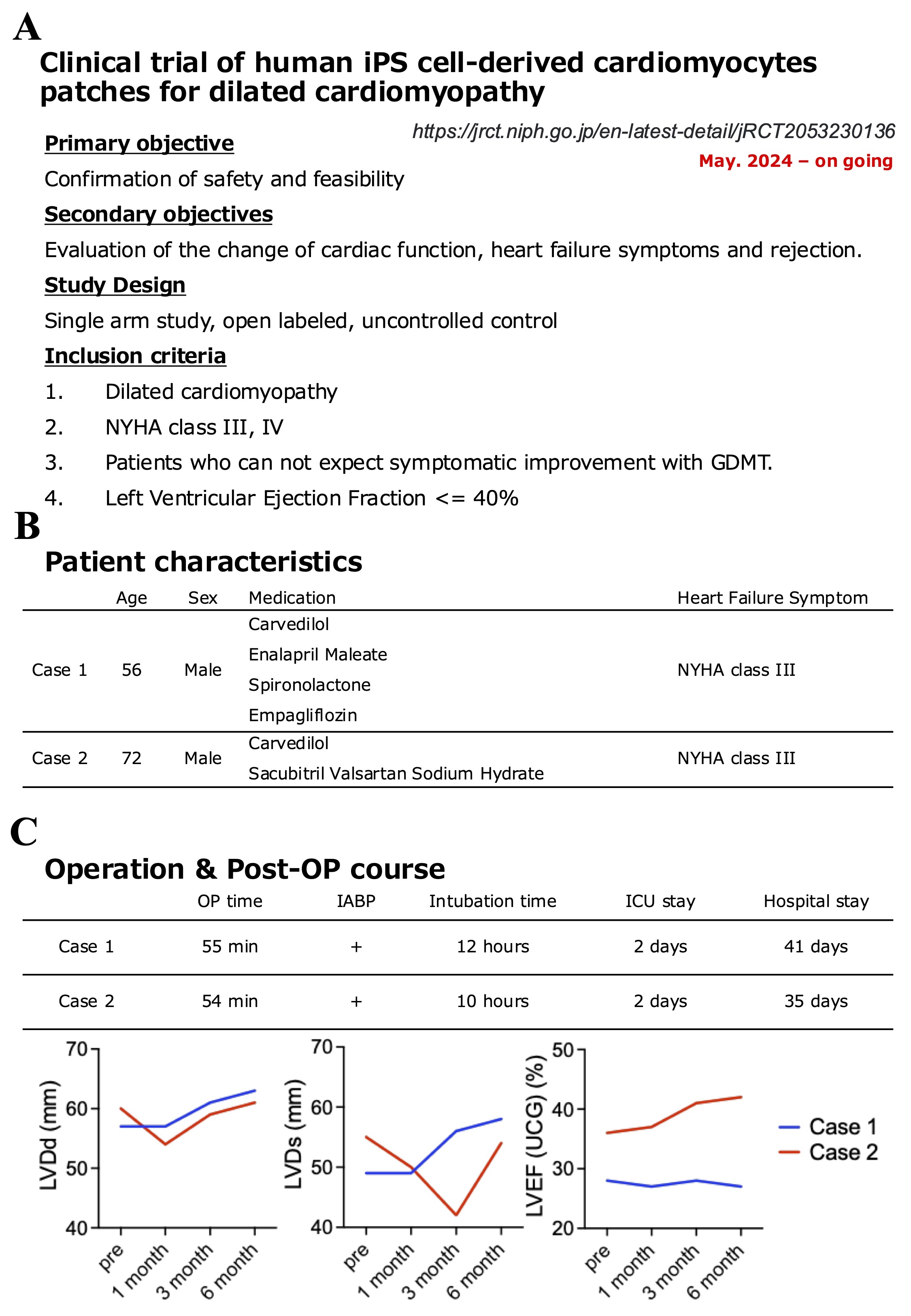
Based on these findings, a first-in-human, investigator-initiated clinical trial for non-ischemic DCM began in 2024. Eligible patients had an LVEF ≤40% and NYHA class III or higher symptoms despite guideline-directed medical therapy. To date, two patients have undergone iPSC-CM patch transplantation. At follow-up, one patient showed an improvement in LVEF from 36% to 42%, while the other had a marginal change (28% to 27%). Further evaluation, including myocardial perfusion analysis, is ongoing.
Conclusion: Preclinical studies demonstrated the therapeutic efficacy of iPSC-derived cardiomyocyte patches in models of non-ischemic DCM. Initial clinical results confirm safety and feasibility, and suggest potential for functional benefit. Further studies with larger patient cohorts are warranted to fully assess clinical efficacy.
Kawamura, Takuji
( Osaka University
, Osaka
, Japan
)
Takeda, Maki
( Osaka University
, Suita
, Japan
)
Sasai, Masao
( OSAKA UNIVERSITY
, Osaka
, Japan
)
Saito, Shunsuke
( Osaka University
, Suita, Osaka
, Japan
)
Miyagawa, Shigeru
( Osaka University
, Osaka
, Japan
)
Mikami, Tsubasa
( Osaka University Hospital
, Suita
, Japan
)
Suzuki, Kota
( Osaka University
, Osaka
, Japan
)
Nakae, Masaro
( OSAKA UNIVERSITY
, Suita
, Japan
)
Yoshioka, Daisuke
( OSAKA UNIVERSITY HOSPITAL
, Suita Osaka
, Japan
)
Kawamura, Ai
( Osaka University
, Suita-city, Osaka
, Japan
)
Yajima, Shin
( Osaka University
, Osaka
, Japan
)
Misumi, Yusuke
( OSAKA UNIVERSITY
, Suita
, Japan
)
Ito, Emiko
( Osaka university
, Suita
, Japan
)
Author Disclosures:
Takuji Kawamura:DO NOT have relevant financial relationships
| Maki Takeda:DO NOT have relevant financial relationships
| Masao Sasai:DO have relevant financial relationships
;
Advisor:Cuorips Inc.:Active (exists now)
; Advisor:ROHTO Pharmaceutical Co., Ltd.:Active (exists now)
| Shunsuke Saito:DO NOT have relevant financial relationships
| Shigeru Miyagawa:No Answer
| Tsubasa Mikami:DO NOT have relevant financial relationships
| Kota Suzuki:No Answer
| Masaro Nakae:No Answer
| Daisuke Yoshioka:No Answer
| Ai Kawamura:DO NOT have relevant financial relationships
| Shin Yajima:No Answer
| Yusuke Misumi:DO NOT have relevant financial relationships
| Emiko ito:No Answer