
Serum levels of IgG4 as a preoperative indicator of IgG4-related abdominal aortic aneurysm
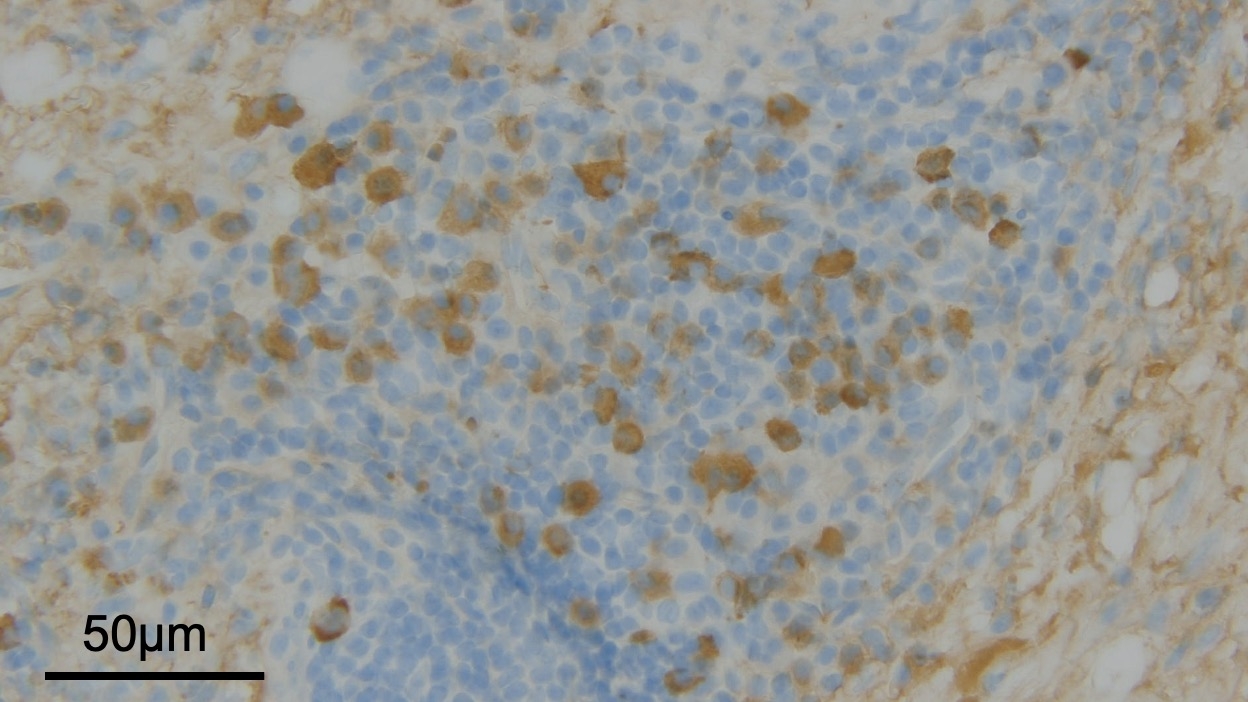
Abstract Body (Do not enter title and authors here): [Background] Immunoglobulin G4-related disease (IgG4-RD) has systemic inflammatory fibrous lesions characterized by elevated serum IgG4 and infiltration of IgG4-positive plasmacytes that frequently form aortic aneurysm with prominent thickening of the adventitia. The relationship between preoperative serum IgG4 levels and the histopathological features of IgG4-related abdominal aortic aneurysm (IgG4-AAA) remains unclear. [Aims] We sought to investigate whether preoperative elevation in serum IgG4 levels is associated with histopathologically diagnosed IgG4-AAA. [Methods] We retrospectively recruited 26 patients (22 males, mean age: 73.0 ± 5.2 years), who underwent open surgical repair for AAA between October 2023 and February 2025. Serum IgG4 levels were preoperatively measured, and resected aneurysmal tissues were examined by hematoxylin-eosin and IgG/IgG4 immunohistochemical staining. IgG4-AAA was diagnosed according to international criteria: >10 IgG4-positive plasma cells per high-power field (HPF) and IgG4/IgG ratio >40%. The presence of storiform fibrosis and obliterative phlebitis was also assessed. Patients were categorized into a group with elevated serum levels of IgG4 (E group; IgG4>135mg/dL, n=3) and a normal group (N group; IgG4£135mg/dL, n=23). [Results] Fusiform aneurysms were observed in 21 patients (80.8%), saccular aneurysms in 5. The average maximum transverse diameter was 54.2±9.5mm. Among the three patients with elevated serum IgG4, two met the full histopathological criteria for IgG4-RD, while one only one of three required features. Two patients with normal IgG4 levels also met the pathologic criteria. The median IgG4 level was 164 mg/dL (interquartile range: 124–577) in the E group and 43 mg/dL (interquartile range: 34–62) in the N group. Receiving operator curve analysis for serum IgG4 levels yielded a sensitivity of 0.50, a specificity of 0.95 for the diagnosis of IgG4-RD. An area under the curve was 0.727, indicating moderate diagnostic accuracy. No significant differences in inflammatory markers or surgical outcomes were found between the 2 groups. [Conclusion] Elevated preoperative serum IgG4 levels were mostly consistent with histologically confirmed IgG4-AAA. Serum IgG4 may be a useful non-invasive marker for preoperative screening of IgG4-AAA.
Negoto, Shinya
(
Kurume University School of Medicine
, Fukuoka , Japan )
Tahara, Nobuhiro
(
Kurume University School of Medicine
, Fukuoka , Japan )
Sato, Yukako
(
Kurume University School of Medicine
, Fukuoka , Japan )
Mine, Hiroki
(
Kurume University School of Medicine
, Fukuoka , Japan )
Kanamoto, Ryo
(
Kurume University School of Medicine
, Fukuoka , Japan )
Zaima, Yasuyuki
(
Kurume University School of Medicine
, Fukuoka , Japan )
Kono, Takanori
(
Kurume University School of Medicine
, Fukuoka , Japan )
Yusuke, Shintani
(
Kurume University School of Medicine
, Fukuoka , Japan )
Takagi, Kazuyoshi
(
Kurume University School of Medicine
, Fukuoka , Japan )
Shojima, Takahiro
(
Kurume University School of Medicine
, Fukuoka , Japan )
Otsuka, Hiroyuki
(
Kurume University School of Medicine
, Fukuoka , Japan )
Takaseya, Tohru
(
Kurume University School of Medicine
, Fukuoka , Japan )
Arinaga, Koichi
(
Kurume University School of Medicine
, Fukuoka , Japan )
Tayama, Eiki
(
Kurume University School of Medicine
, Fukuoka , Japan )