Outcomes of Cardiac Implantable Electronic Device-Related Infective Endocarditis (CIED-IE) in Dialysis Patients
Abstract Body (Do not enter title and authors here): Introduction End-stage kidney disease (ESKD) patients on dialysis are particularly vulnerable to developing cardiac implantable electronic device-related infective endocarditis (CIED-IE), which carries significant morbidity and mortality. Outcomes of these patients are not well known.
Research Questions To compare outcomes of CIED-IE among patients with ESKD, chronic kidney disease (CKD), and those without CKD (no-CKD), using a nationally representative database.
Methods The National Readmission Database (2016–2022) was used to identify patients with CIED-IE using ICD-10-CM codes. Those with prosthetic valves were excluded. Patients were categorized into ESKD, CKD, and no-CKD groups.
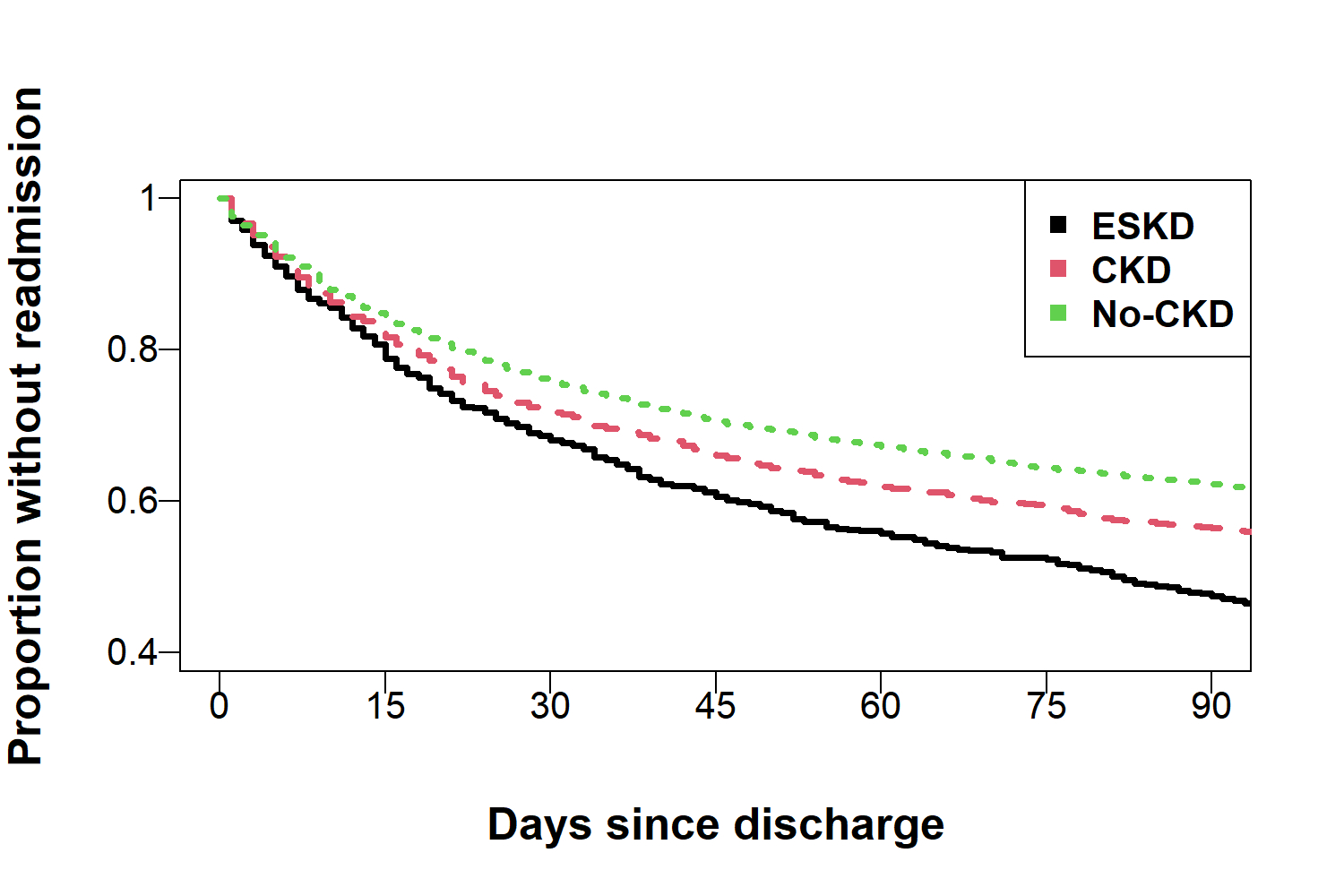
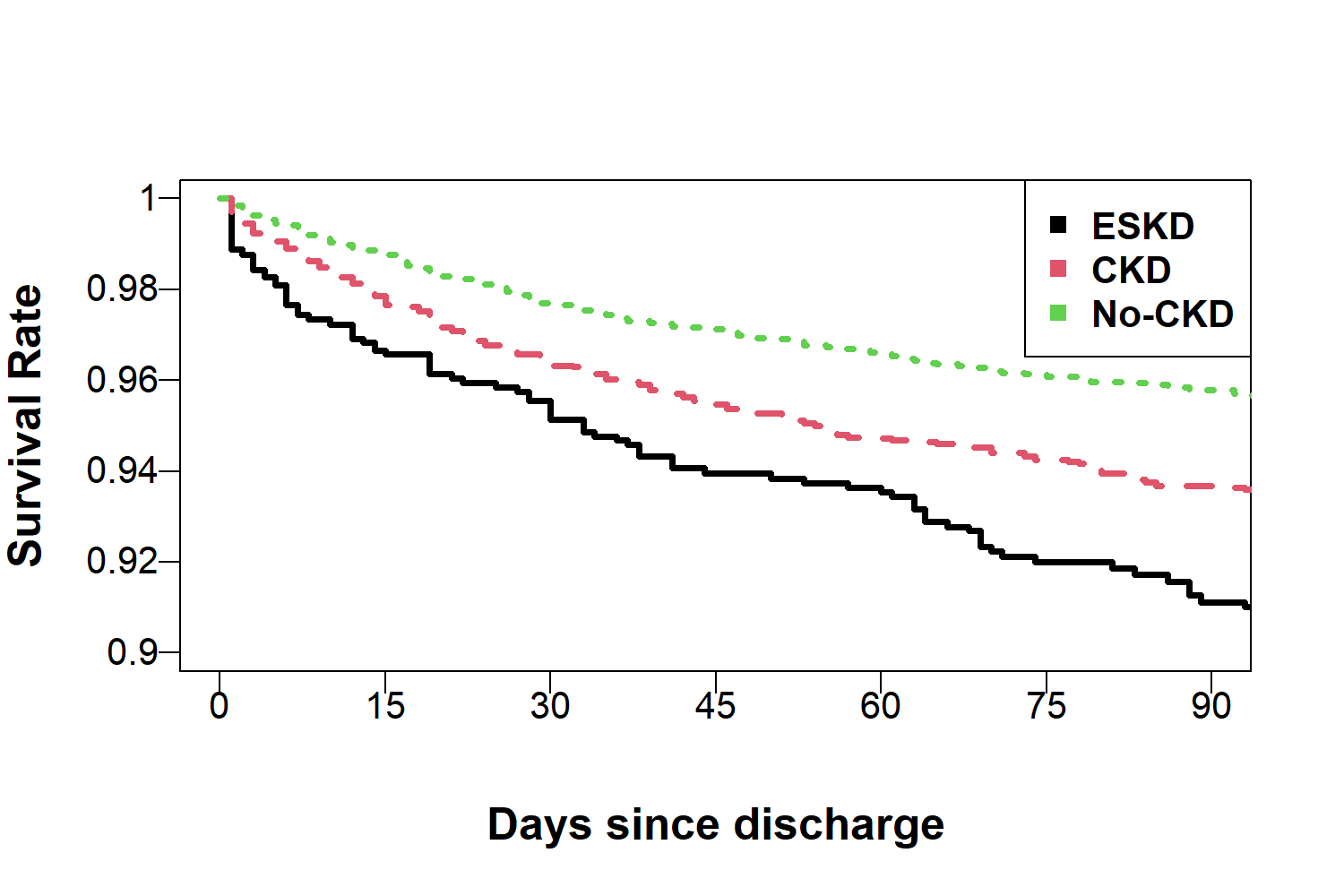
Results We identified 22,172 patients hospitalized with CIED-IE: 1,979 (8.9%) with ESKD, 5,573 (25.1%) with CKD, and 12,233 (55.2%) without CKD. ESKD patients were younger (mean age: ESKD 66.3, CKD 76.5, no-CKD 69.9 years; P<0.001) and had a lower proportion of males (ESKD 62.6%, CKD 68.9%, no-CKD 64.1%; P<0.001). ESKD patients had the highest in-hospital mortality (ESKD 16.5%, CKD 12.0%, no-CKD 8.3%; P<0.001) and 3-month post-discharge mortality (ESKD 8.9%, CKD 3.7%, no-CKD 2.4%; P<0.001). The lead extraction rate within 3 months of CIED-IE diagnosis was highest in patients without CKD (no-CKD 24.3%, CKD 20.6%, ESKD 17.6%; P<0.001). ESKD patients also had the highest 3-month readmission rate (ESKD 52.5%, CKD 43.5%, no-CKD 37.7%; P<0.001). Stroke rates were low and showed no significant differences across groups during hospitalization (no-CKD: 0.9%, CKD: 1.2%, ESKD: 1.7%; P=0.0959) or within 3 months post-discharge (no-CKD: 0.9%, CKD: 1.0%, ESKD: 1.1%; P=0.9209).
Conclusions ESKD patients with CIED-IE experienced significantly worse outcomes, including higher in-hospital mortality, post-discharge mortality, and readmission rates, compared to those with CKD or no-CKD. ESKD patients were also the least likely to undergo lead extraction within 3 months of CIED-IE diagnosis. Stroke incidence did not significantly differ between groups during hospitalization or after discharge.
Chan, Wan-chi
(
KU School of Medicine-Wichita
, Wichita , Kansas , United States )
Oundo, Emmanuel
(
KU School of Medicine-Wichita
, Wichita , Kansas , United States )
Fancher, Andrew
(
KU School of Medicine-Wichita
, Wichita , Kansas , United States )
Alchaer, Anthony
(
KU School of Medicine-Wichita
, Wichita , Kansas , United States )
Odai, Reuben
(
KU School of Medicine-Wichita
, Wichita , Kansas , United States )
Mannam, Hari Priya
(
KU School of Medicine-Wichita
, Wichita , Kansas , United States )
Banda, Ramya
(
KU School of Medicine-Wichita
, Wichita , Kansas , United States )
Sajjad, Laiba
(
KU School of Medicine-Wichita
, Wichita , Kansas , United States )
Eid, Freidy
(
KU School of Medicine-Wichita
, Wichita , Kansas , United States )
Gupta, Kamal
(
University of Kansas
, Kansas City , Kansas , United States )
Author Disclosures:
Wan-Chi Chan:DO NOT have relevant financial relationships
| Kamal gupta:No Answer
| Emmanuel Oundo:DO NOT have relevant financial relationships
| Andrew Fancher:DO NOT have relevant financial relationships
| Anthony Alchaer:DO NOT have relevant financial relationships
| Reuben Odai:DO NOT have relevant financial relationships
| Hari Priya Mannam:No Answer
| Ramya Banda:DO NOT have relevant financial relationships
| Laiba Sajjad:DO NOT have relevant financial relationships
| Freidy Eid:No Answer