
L-canavanine Attenuates Pathological Cardiac Hypertrophy by Directly Targeting the CDC42-JNK Signaling Pathway
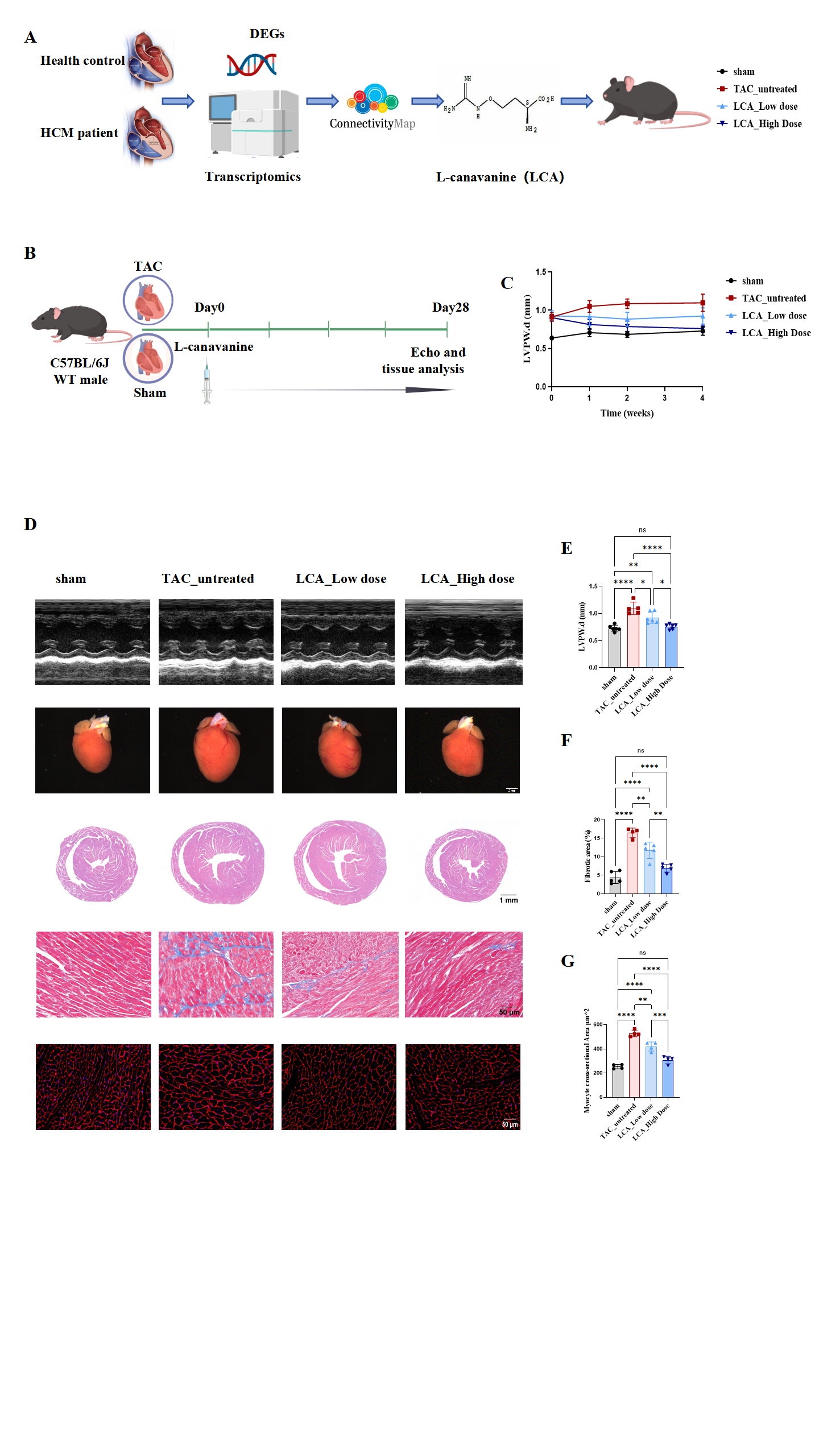
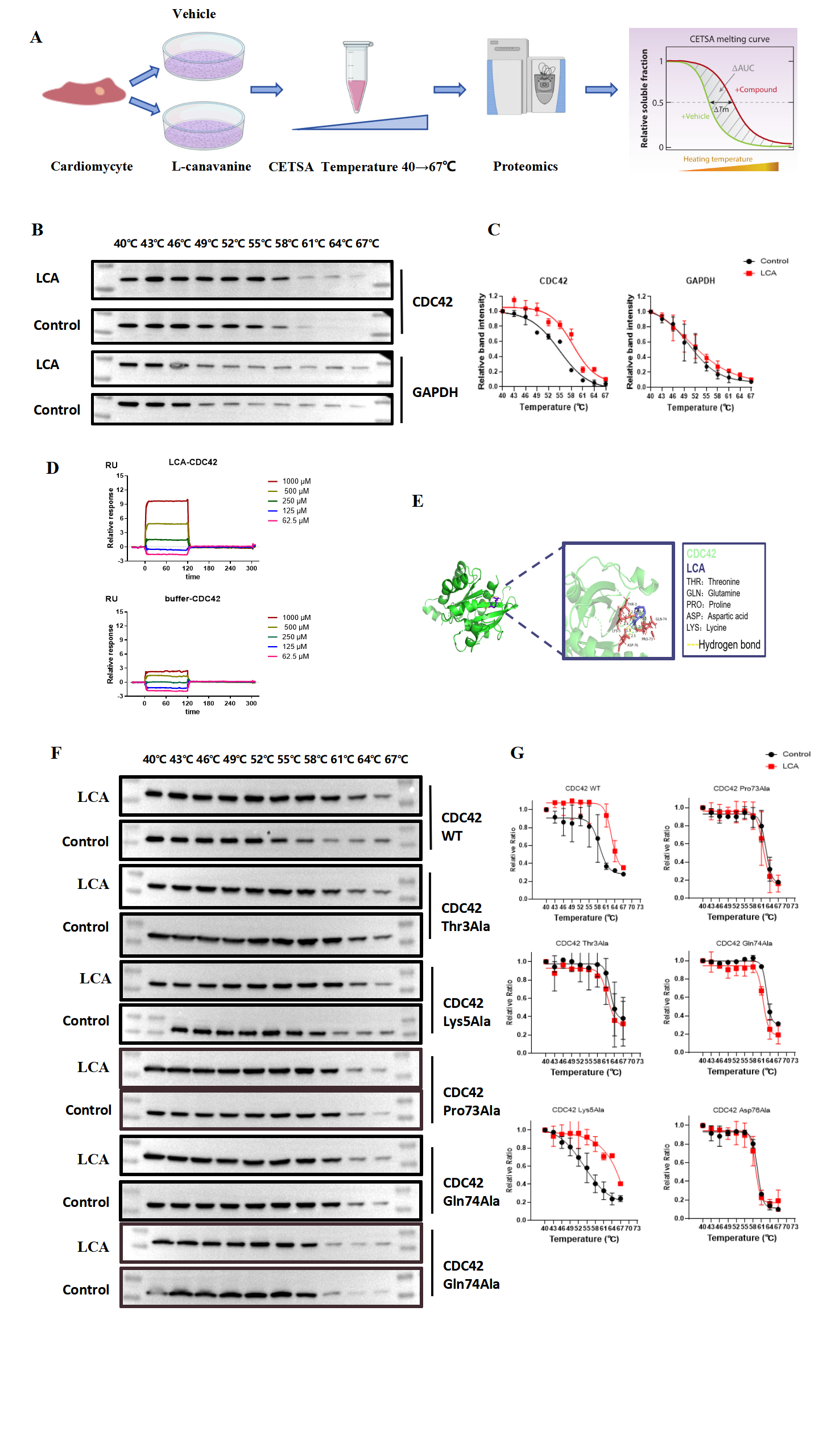
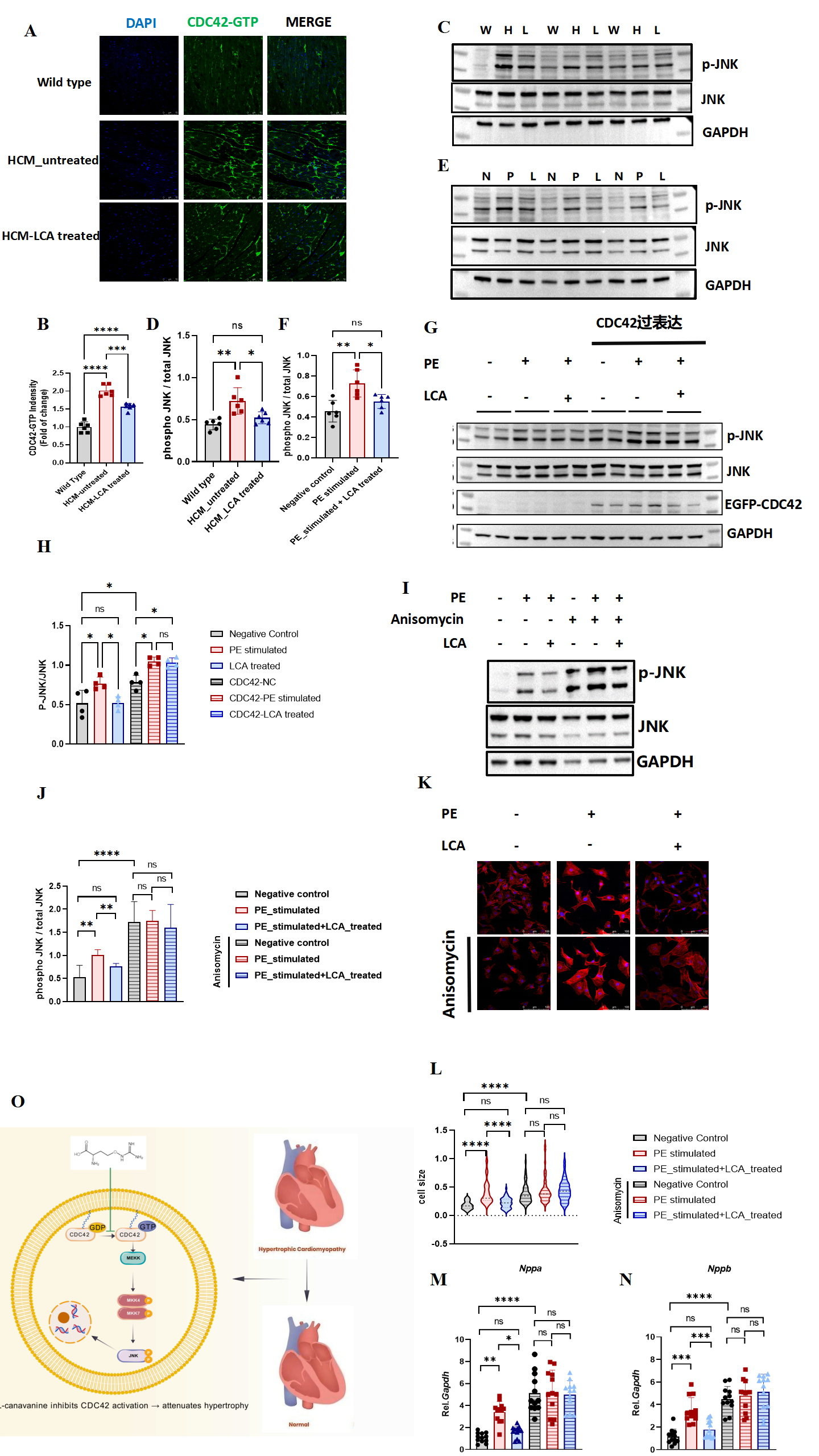
Abstract Body (Do not enter title and authors here): Background Hypertrophic cardiomyopathy (HCM) lacks targeted pharmacotherapy. We employed RNA-seq of human HCM myocardium combined with Connectivity Map screening to identify repurposable drugs modulating hypertrophy-associated pathways. Hypothesis L-canavanine(LCA), identified through HCM transcriptome screening, directly binds CDC42 to inhibit GTP-loading and downstream JNK signaling, thereby reversing pathological hypertrophy. Goals/Aims (1) Determine in vivo therapeutic efficacy of LCA in pressure-overload cardiac hypertrophy (2) Elucidate direct molecular target and binding mechanism of LCA (3) Delineate the CDC42-JNK signaling pathway in hypertrophy regression Methods We identified L-canavanine (LCA) through Connectivity Map analysis of dysregulated pathways in human hypertrophic cardiomyopathy (HCM) myocardium (RNA-seq; n=15 HCM vs. 8 controls). In vivo, C57BL/6J mice undergoing transverse aortic constriction (TAC) were randomized to sham, vehicle, or LCA treatment (4 weeks; n=6/group). Cardiac hypertrophy was monitored by serial echocardiography and validated by histology (fibrosis/cross-sectional area). In vitro, target engagement was confirmed by cellular thermal shift assay (CETSA) coupled with surface plasmon resonance and mutagenesis. CDC42-GTP activity and JNK signaling were assessed in human HCM samples and phenylephrine-stimulated cardiomyocytes. Rescue experiments employed CDC42 overexpression and JNK activation to investigate underlying mechanisms. Results L-canavanine ameliorated pressure overload-induced cardiac pathology in mice, reducing left ventricular hypertrophy (LVPWd), myocardial fibrosis, and cardiomyocyte size post-TAC. LCA directly bound CDC42 with high affinity (SPR), stabilizing its structure (CETSA). Critical CDC42 mutations (Thr3Ala/Pro73Ala/Gln74Ala/Asp76Ala) abolished binding. Mechanistically, LCA suppressed CDC42-JNK signaling, decreasing GTP-CDC42 and JNK phosphorylation (p-JNK/JNK). Rescue experiments confirmed causality: CDC42 overexpression reversed LCA-mediated JNK inhibition, and JNK activation (anisomycin) blocked LCA's anti-hypertrophic effects.Thus, LCA attenuates cardiac remodeling via direct CDC42 targeting and JNK pathway disruption. Conclusion LCA ameliorates pathological hypertrophy by binding CDC42 at Thr3/Pro73/Gln74/Asp76, inhibiting GTP loading and JNK signaling. This establishes CDC42 as a novel therapeutic target for HCM.
Ma, Bingxuan
(
Fuwai hospital
, Beijing , China )
Wan, Fangfang
(
Fuwai hospital
, Beijing , China )
Zhang, Yu
(
Fuwai hospital
, Beijing , China )
Lu, Minjie
(
Fuwai hospital
, Beijing , China )
Zhang, Channa
(
Fuwai hospital
, Beijing , China )
Song, Lei
(
Fuwai hospital
, Beijing , China )
Wang, Jizheng
(
Fuwai hospital
, Beijing , China )
Author Disclosures:
bingxuan Ma:DO NOT have relevant financial relationships
| Fangfang Wan:DO NOT have relevant financial relationships
| Yu Zhang:DO NOT have relevant financial relationships
| Minjie lu:No Answer
| Channa Zhang:No Answer
| lei song:No Answer
| Jizheng Wang:DO NOT have relevant financial relationships