Influence of Cardiovascular Magnetic Resonance Imaging Phenotype and Variant Type on Ventricular Arrhythmia Risk in RBM20-Related Cardiomyopathy
Abstract Body (Do not enter title and authors here): Background: Pathogenic/likely pathogenic (P/LP) variants in the RBM20-encoded RNA-binding protein motif 20 splicing factor result in a penetrant form of arrhythmogenic/dilated cardiomyopathy (ACM/DCM) characterized by ventricular arrhythmias (VA) and early-onset heart failure. The role of cardiac magnetic resonance (CMR) imaging in characterizing RBM20 cardiomyopathy and guiding risk stratification remains inadequately defined. Objectives: To characterize CMR phenotypes in patients with RBM20 cardiomyopathy and explore associations between variant type, CMR phenotype, and VA risk.
Methods: Retrospective analysis of 1,061 genotype-positive ACM/DCM patients was used to identify individuals with P/LP arginine/serine-rich domain-localizing missense (RBM20msv) or truncating (RBM20tv) variants in RBM20. Clinical outcomes, including major VA (MVA; sudden cardiac arrest, sustained ventricular arrhythmia, or appropriate ICD therapy) events, were compared between RBM20msv and RBM20tv-positive patients. When available, CMR findings were also analyzed by variant type and correlated with MVA events.
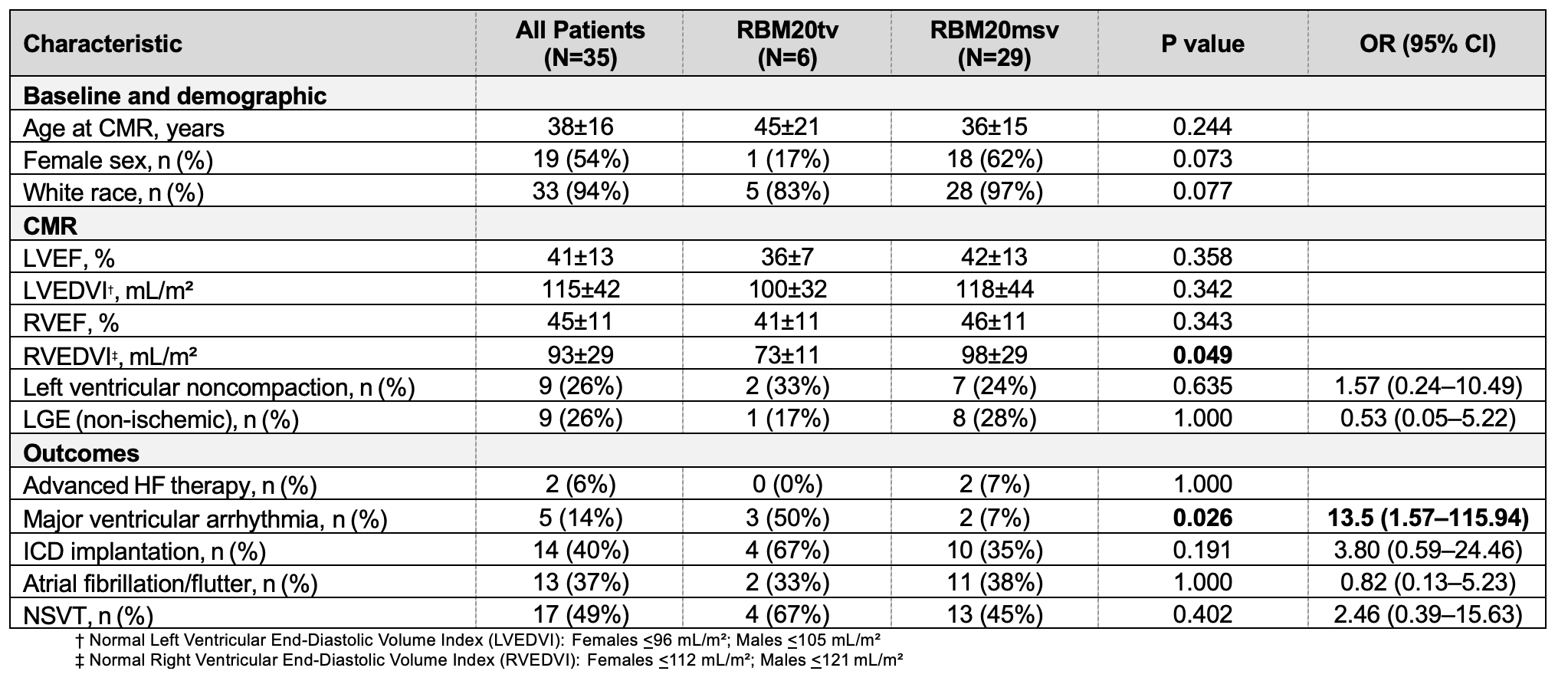
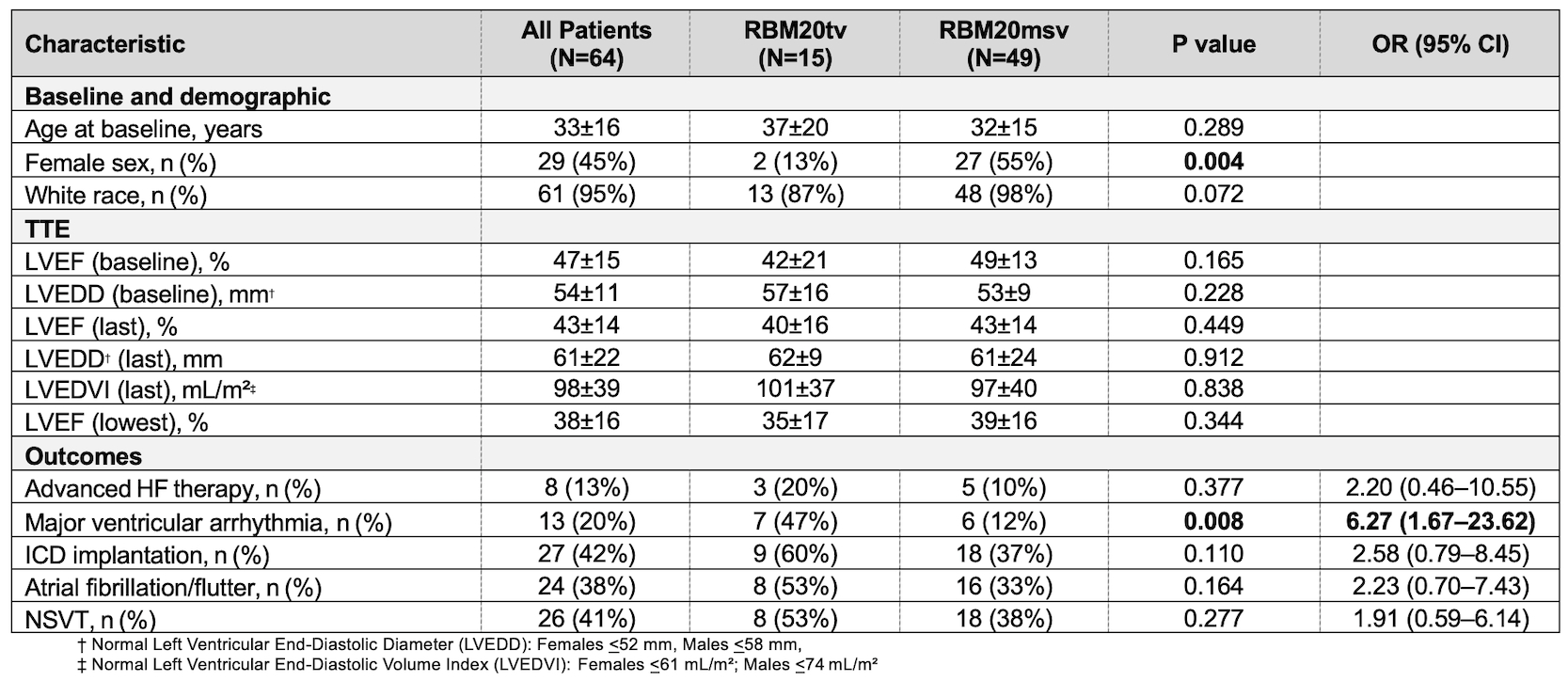
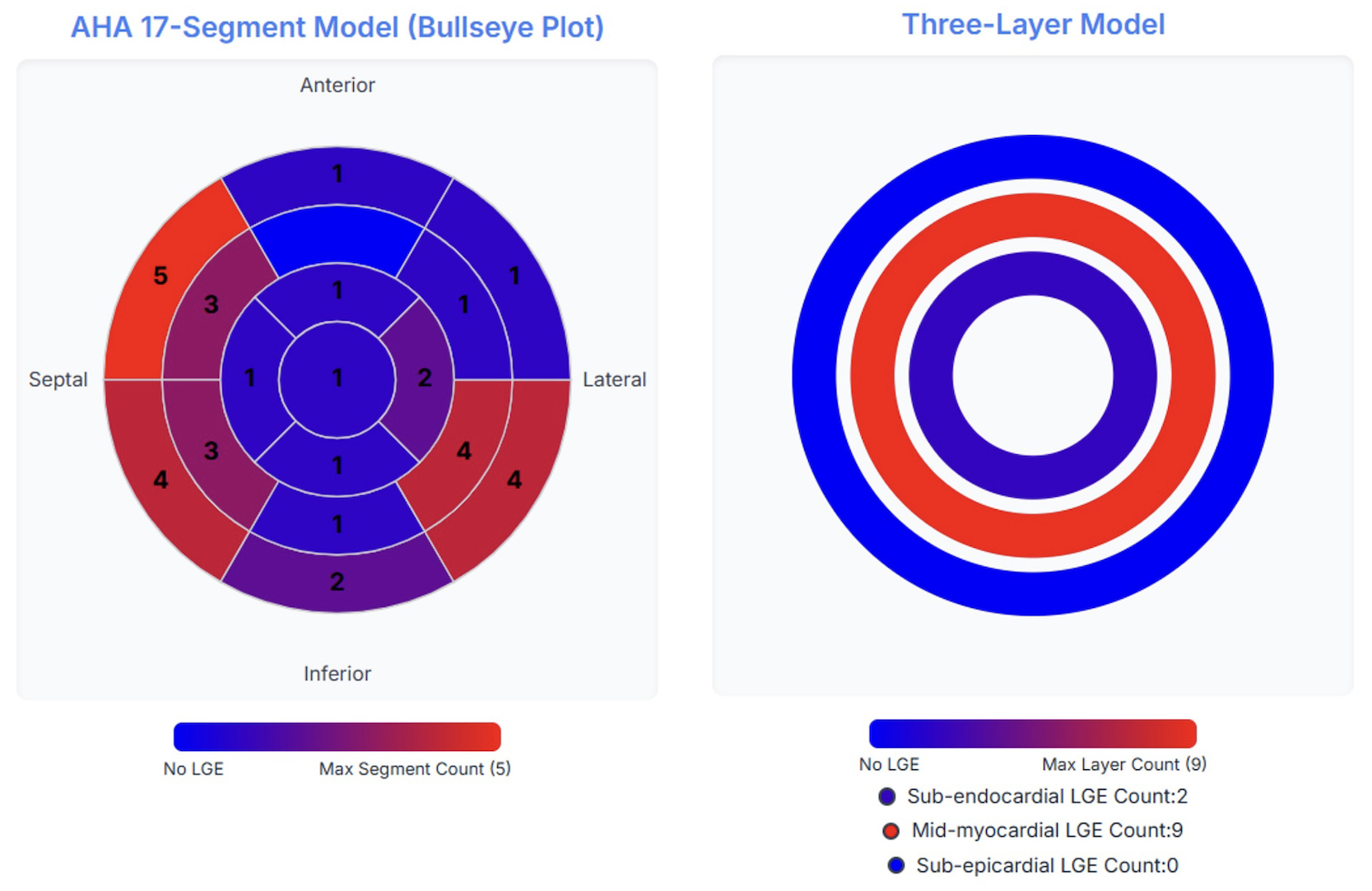
Results: Overall, 64 of 1,061 (6%) ACM/DCM patients possessed an RBM20msv or RBM20tv. Of those, 35 (mean age 38±16 years, 54% female, 94% Caucasian) underwent CMR. Late gadolinium enhancement (LGE) was present in 9/35 (26%), typically in a mid-myocardial septal or inferolateral pattern. Left ventricular (LV) noncompaction was noted in 9/35 (26%). Within the CMR subgroup, RBM20msv accounted for 29/35 (83%) of cases, while RBM20tv was observed in 6/35 (17%). No significant difference in LV ejection fraction (36±7% vs. 42±13%, p=0.358), LV end-diastolic volume index (100±32 mL/m2 vs. 118±44 mL/m2, p=0.342), or LGE prevalence (1/6 [17%] vs. 8/29 [28%], p=1.000) was observed between RBM20tv- and RBM20msv-positive patients. However, MVA events were more frequent among RBM20tv-positive patients in the CMR subset (3/6 [50%] vs. 2/29 [7%], p=0.026) and the overall cohort (7/15 [47%] vs. 6/49 [12%], p=0.008).
Conclusions: RBM20tv-positive patients experienced a higher rate of MVA events despite similar rates of LGE and structural remodeling compared to those with RBM20msv. Future studies are needed to determine whether mechanisms independent of fibrosis/re-entry drive arrhythmogenesis in RBM20tv-positive patients and to establish if RBM20tv represents an independent risk factor for MVA events that merits incorporation into genotype-specific risk stratification strategies.
Schlesinger, Reid
(
Mayo Clinic
, Rochester , Minnesota , United States )
Castrichini, Matteo
(
Mayo Clinic
, Rochester , Minnesota , United States )
Garmany, Ramin
(
Mayo Clinic
, Rochester , Minnesota , United States )
Witter, Taylor
(
Mayo Clinic
, Rochester , Minnesota , United States )
Ackerman, Michael
(
Mayo Clinic
, Rochester , Minnesota , United States )
Giudicessi, John
(
Mayo Clinic
, Rochester , Minnesota , United States )
Author Disclosures:
Reid Schlesinger:DO NOT have relevant financial relationships
| Matteo Castrichini:DO NOT have relevant financial relationships
| Ramin Garmany:DO NOT have relevant financial relationships
| Taylor Witter:DO NOT have relevant financial relationships
| Michael Ackerman:DO have relevant financial relationships
;
Consultant:Abbott:Active (exists now)
; Royalties/Patent Beneficiary:UpToDate:Active (exists now)
; Royalties/Patent Beneficiary:Thryv Therapeutics:Active (exists now)
; Royalties/Patent Beneficiary:Solid Biosciences:Active (exists now)
; Royalties/Patent Beneficiary:Prolaio:Active (exists now)
; Royalties/Patent Beneficiary:ARMGO Pharma:Active (exists now)
; Royalties/Patent Beneficiary:AliveCor:Active (exists now)
; Consultant:Tenaya Therapeutics:Active (exists now)
; Consultant:Medtronic:Active (exists now)
; Consultant:Invitae:Past (completed)
; Consultant:Illumina:Active (exists now)
; Consultant:Bristol Myers Squibb:Past (completed)
; Consultant:Boston Scientific:Active (exists now)
; Consultant:BioMarin Pharmaceutical:Past (completed)
| John Giudicessi:DO have relevant financial relationships
;
Consultant:Avidity Biosciences:Active (exists now)
; Consultant:Nuevocor Therapeutics:Active (exists now)
; Consultant:Citizen Health:Active (exists now)