Dynamic Associations of Metabolic Obesity Phenotype Transitions with Cardiovascular Disease in Middle-Aged and Elderly Adults: Insights from a Multinational Longitudinal Study
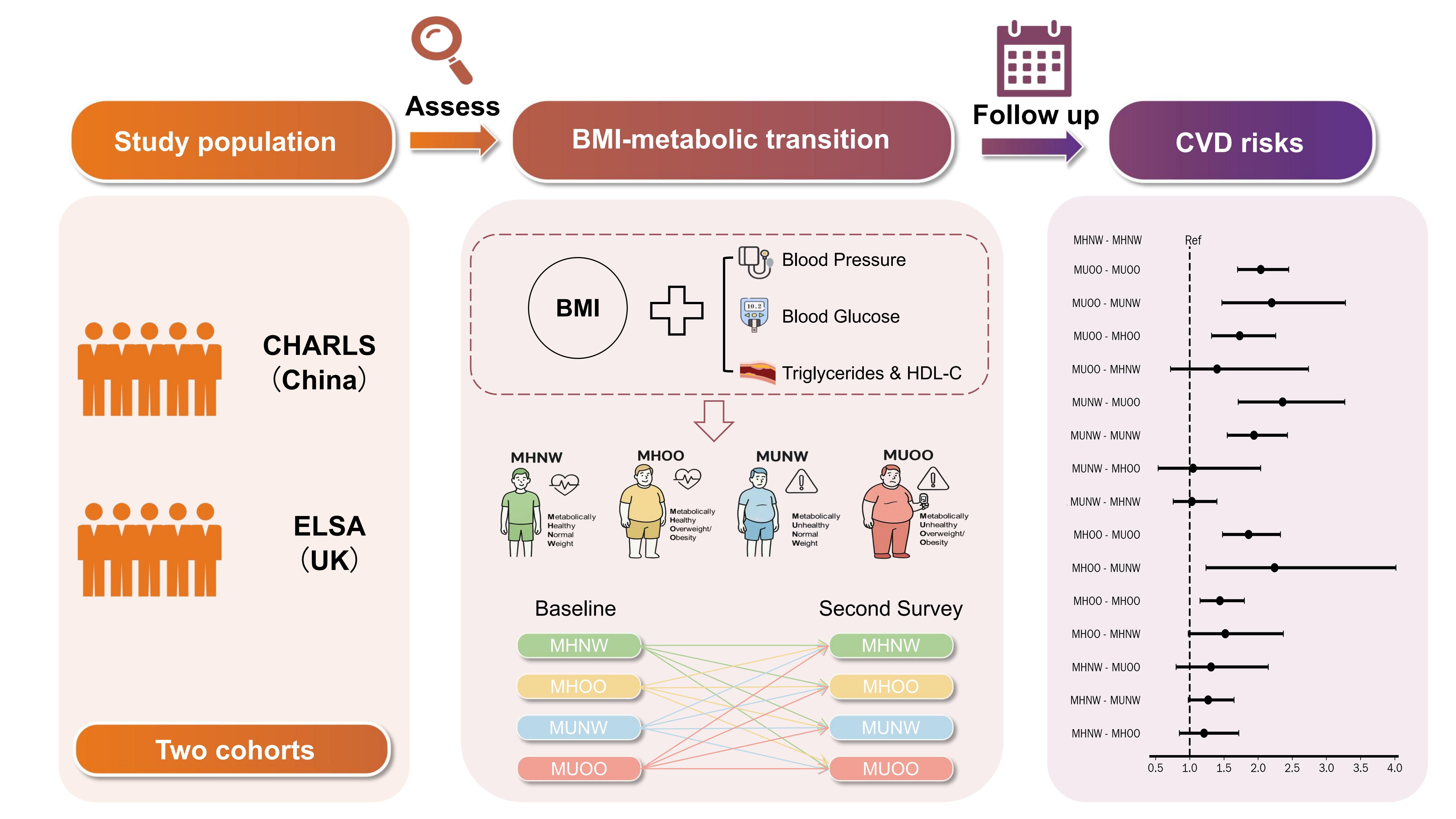
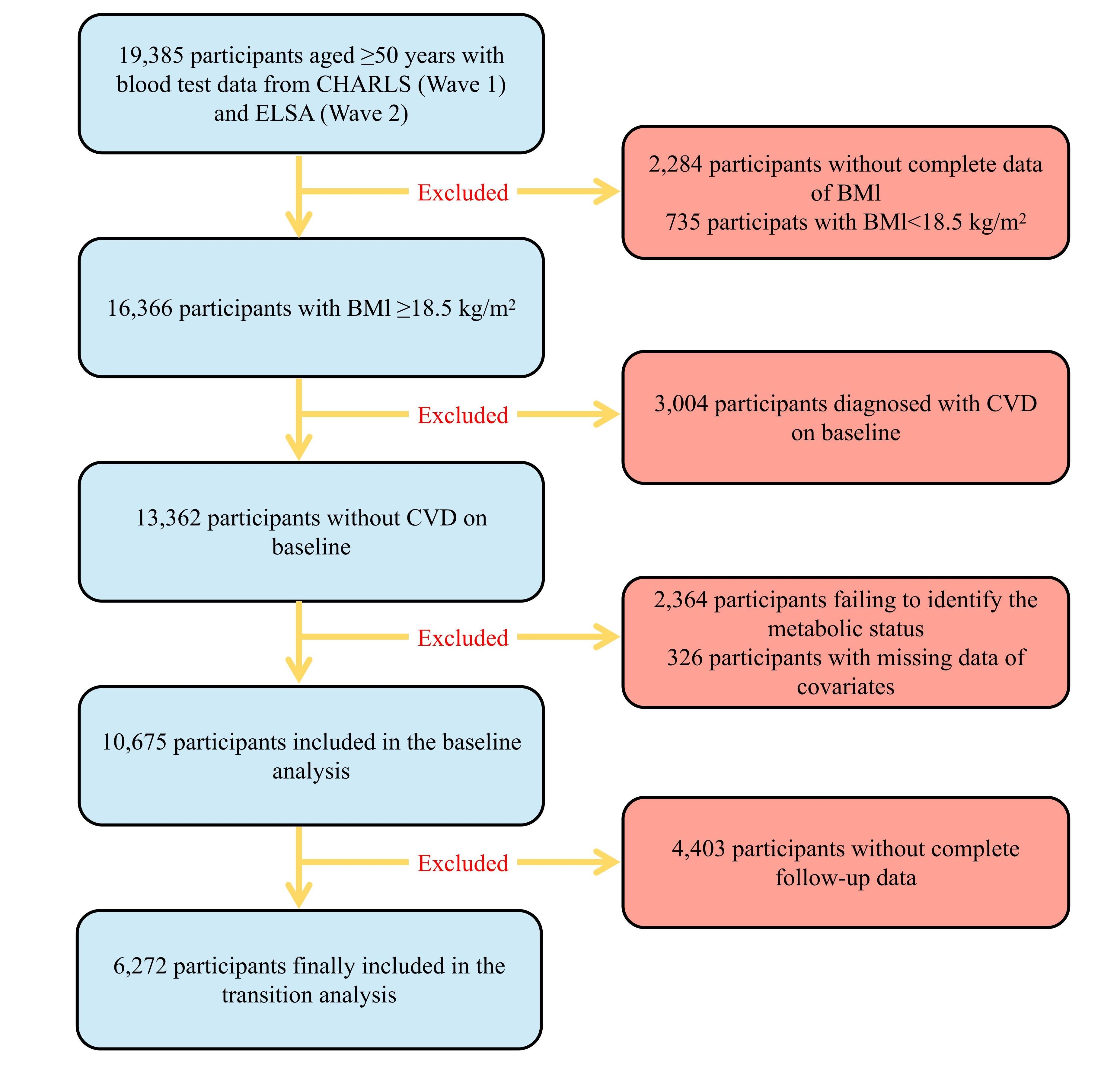
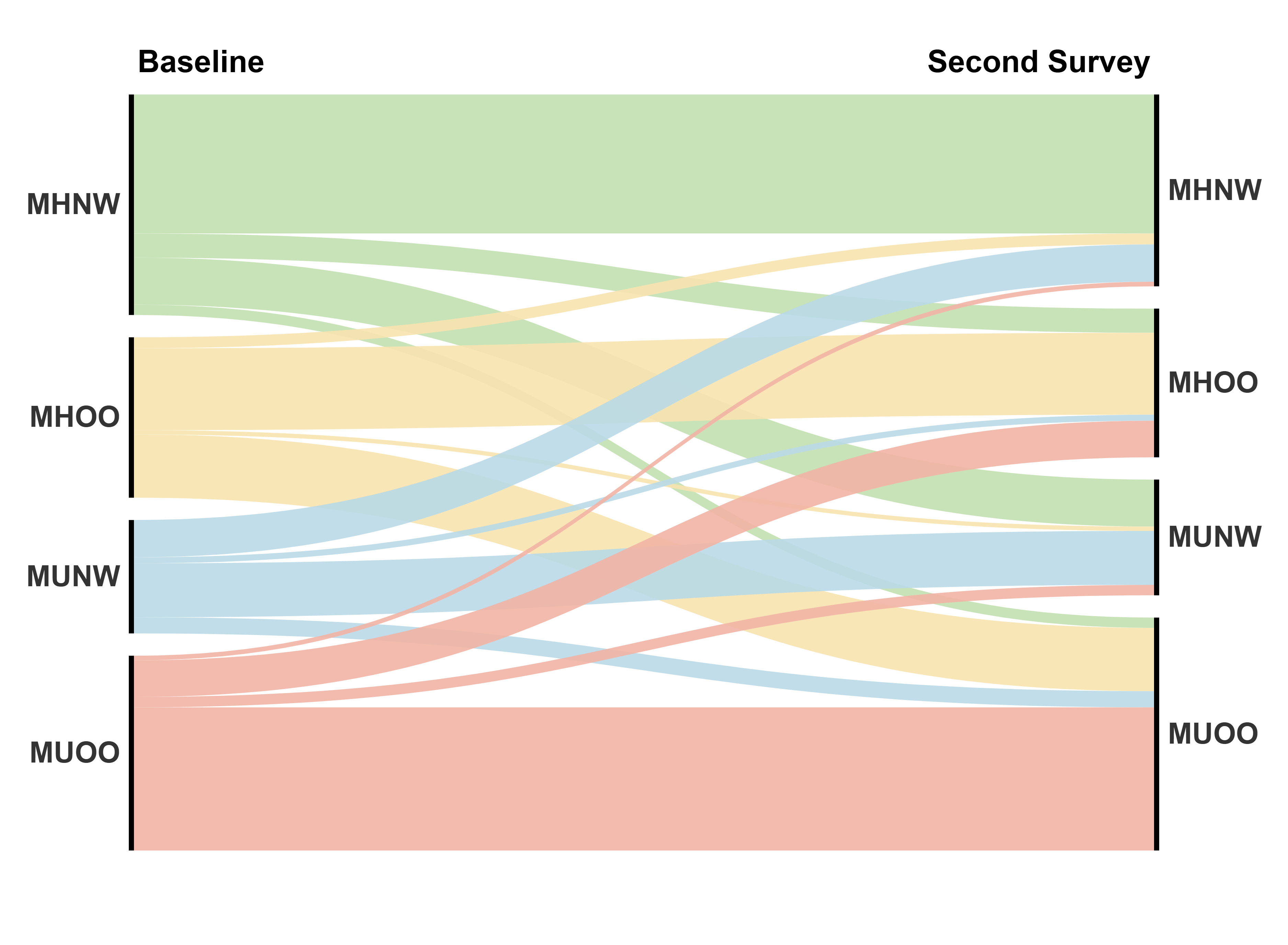
Abstract Body (Do not enter title and authors here): Background: Obesity is a major risk factor for cardiovascular disease (CVD), but individuals can differ in their metabolic health status, leading to varying CVD risks. Metabolic health is not static and can change over time; however, the impact of these changes on CVD remains poorly understood, particularly in aging populations. This study examines how transitions in metabolic obesity phenotypes are associated with CVD risk using data from two large national cohort studies. Methods: We conducted parallel analyses using data from the China Health and Retirement Longitudinal Study (CHARLS) and the English Longitudinal Study of Ageing (ELSA). At baseline, participants were classified into four metabolic obesity phenotypes: metabolically healthy normal weight (MHNW), metabolically unhealthy normal weight (MUNW), metabolically healthy overweight/obesity (MHOO), and metabolically unhealthy overweight/obesity (MUOO). These phenotypes were reassessed approximately four years later. Transitions between phenotypes were tracked, focusing on changes in metabolic health and BMI status. Associations with incident CVD were analyzed using multivariable-adjusted Cox proportional hazards models. Results: Among 10,675 participants, 2,436 (23.19%) developed CVD during follow-up. In multivariable-adjusted models, baseline MUOO, MHOO, and MUNW were each linked to higher CVD risk versus MHNW (HRs: 1.75, 1.46, and 1.38; all p < 0.001). Among 6,272 participants, 1,361 CVD events occurred. Compared with stable MHNW, individuals transitioning from MHOO to MUOO had the highest risk increase (HR: 1.858; p < 0.001), followed by those remaining MHOO (HR: 1.436; p = 0.002). Transition from MHOO to MUNW nearly doubled CVD risk (HR: 2.236; p = 0.007). Among individuals initially classified as MUNW or MUOO, transitions toward metabolically unhealthy phenotypes further elevated risk (HRs: 1.940–2.360; p < 0.01). Stable MUOO individuals had the most events and over two-fold higher risk (HR: 2.039; p < 0.001). Conclusions: Metabolic transitions from healthy to unhealthy states are linked to elevated CVD risk, even in normal-weight individuals. Preserving metabolic health despite obesity is associated with lower risk, highlighting its importance beyond BMI. These findings support dynamic monitoring and early intervention to reduce CVD risk in aging populations, especially among those with obesity.
Zhao, Yuhan
(
Capital Medical University
, Bei Jing , China )
Miao, Yiqun
(
Capital Medical University
, Bei Jing , China )
Li, Jiawei
(
Capital Medical University
, Bei Jing , China )
Luo, Yuan
(
Capital Medical University
, Bei Jing , China )
Wu, Ying
(
Capital Medical University
, Bei Jing , China )