
Logo

American Heart Association

  20
  0


Final ID: MP1893

Intravenous Administration of Muse Cells Promotes Long-Lasting Functional Recovery in a Rat Model of Spinal Cord Ischemic Injury

Abstract Body (Do not enter title and authors here): Introduction Spinal cord ischemic injury (SCII) is a devastating complication of aortic surgery that often leads to irreversible motor dysfunction. Despite its clinical severity, no effective treatment has been established. Multilineage-differentiating stress-enduring (Muse) cells are a non-tumorigenic, endogenous pluripotent-like stem cell population marked by SSEA-3 expression, with emerging evidence supporting their regenerative potential. However, their long-term therapeutic efficacy in SCII remains largely unexplored.
Hypothesis We hypothesized that intravenous administration of Muse cells would promote sustained motor function recovery in a rat model of severe SCII.
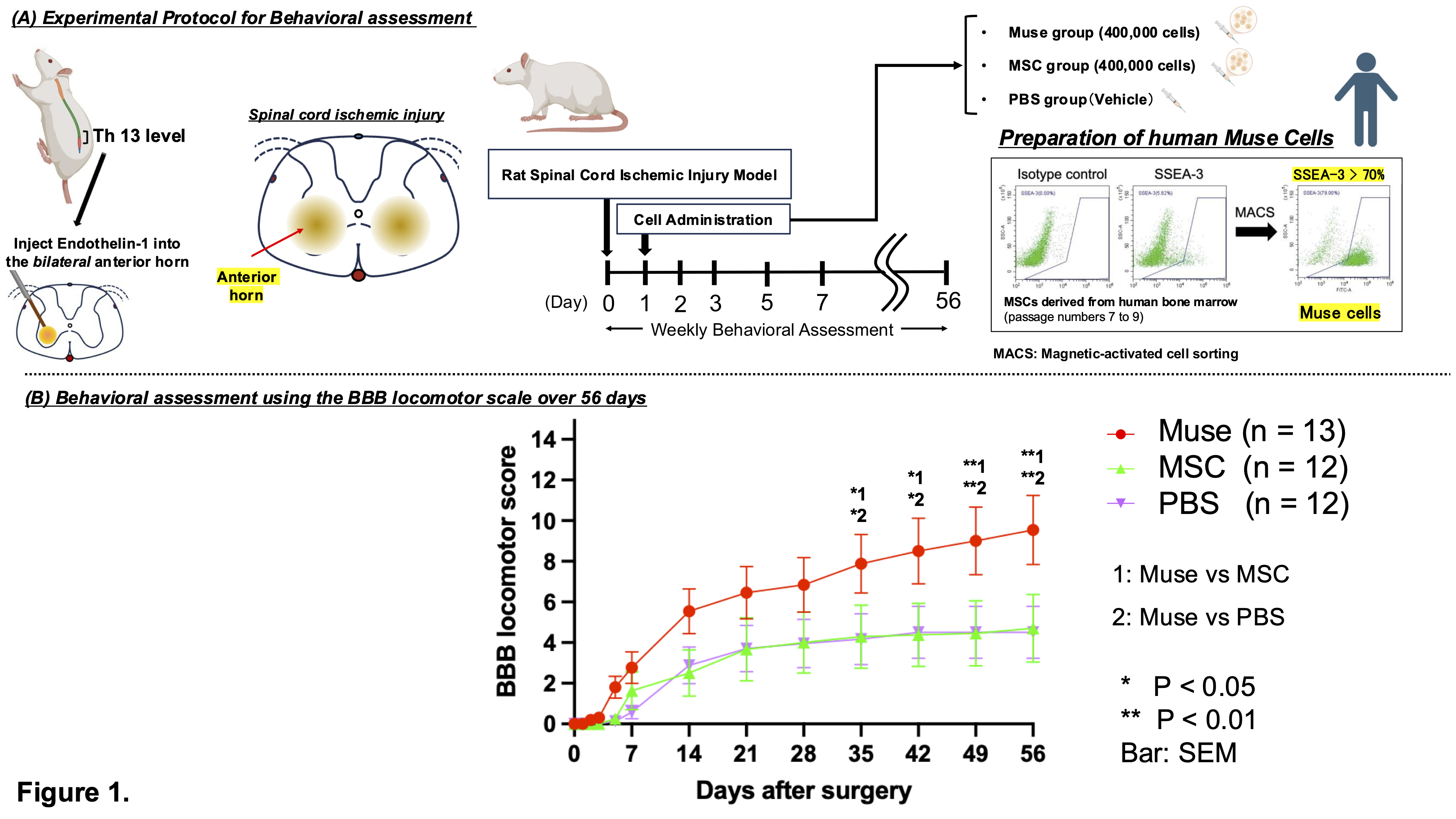
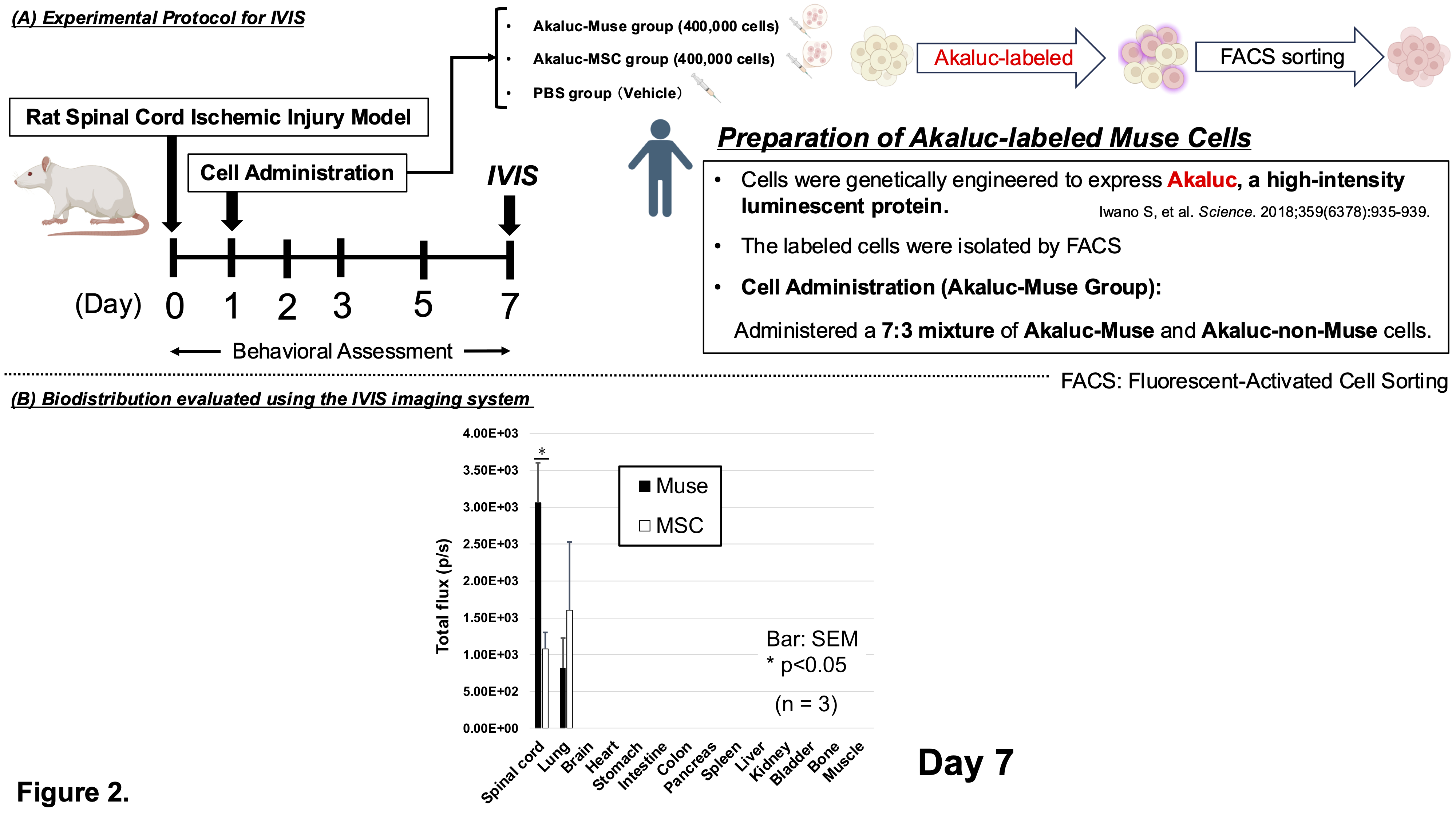
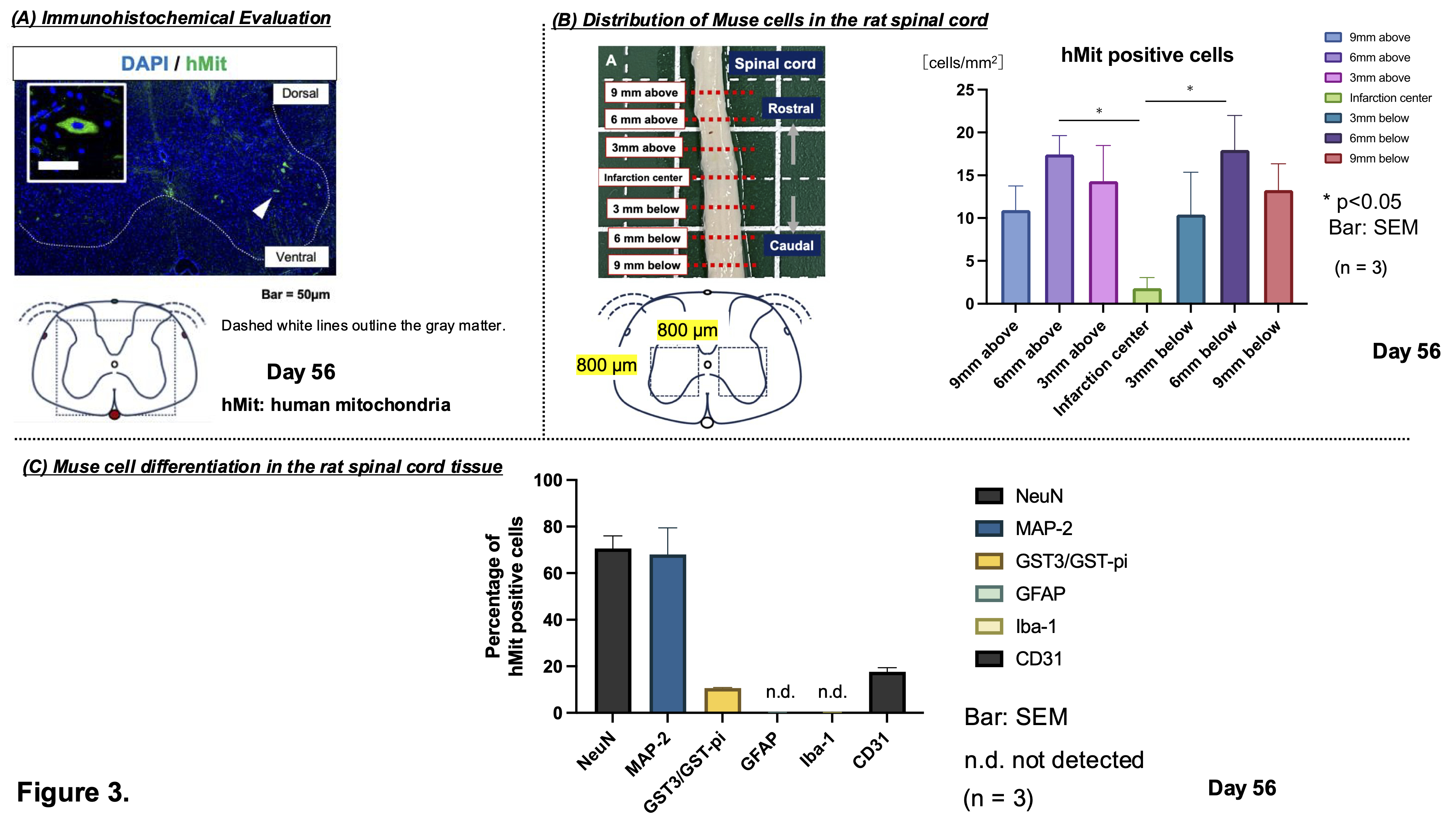
Methods Severe SCII was induced in eight-week-old male Wistar rats by bilaterally injecting endothelin-1 into the anterior horns of the 13th thoracic spinal cord segment. Muse cells were isolated from human bone marrow-derived mesenchymal stem cells (MSCs). At 24 hours post-injury, rats with a BBB locomotor score of 0 were randomly assigned to receive Muse cells, MSCs, or PBS via penile vein injection. Motor function was evaluated for 8 weeks. No immunosuppressants were administered. IVIS imaging and immunofluorescence were performed to assess in vivo biodistribution and engraftment. Cell differentiation was evaluated by double immunostaining with human-specific and lineage-specific markers.
Results At 8 weeks post-treatment, the Muse group showed significantly improved motor recovery compared to MSC and PBS groups (BBB score: Muse 9.5±1.7; MSC 4.7±1.7; PBS 4.5±1.3; p<0.01). IVIS imaging at 1 week revealed stronger luminescence signals in the spinal cords of Muse-treated rats (p<0.05), suggesting selective migration to the injury site. Human mitochondria-positive cells were mainly located 6 mm rostral and caudal to the lesion center (T13), indicating peri-lesional accumulation (p<0.05). Double immunostaining confirmed differentiation into neurons (NeuN: 70.6±5.4%), neuronal dendrites (MAP-2: 68.0±11.4%), oligodendrocytes (GST-pi: 10.6±0.3%), and vascular endothelial cells (CD31: 17.6±1.8%).
Conclusions Intravenous administration of human Muse cells significantly enhanced and maintained hindlimb motor recovery in a rat model of SCII without immunosuppression. Muse cells homed to the damaged spinal cord and differentiated into neural and vascular lineages, contributing to structural and functional repair. These findings highlight Muse cells as a promising therapeutic approach for acute SCII.
  • Otani, Masayuki  ( Tohoku University Graduate School of Medicine , Sendai , Japan )
  • Saiki, Yoshikatsu  ( Tohoku University Graduate School of Medicine , Sendai , Japan )
  • Kushida, Yoshihiro  ( Tohoku University Graduate School of Medicine , Sendai , Japan )
  • Kuroda, Yasumasa  ( Tohoku University Graduate School of Medicine , Sendai , Japan )
  • Wakao, Shohei  ( Tohoku University Graduate School of Medicine , Sendai , Japan )
  • Abe, Kana  ( Tohoku University Graduate School of Medicine , Sendai , Japan )
  • Oguma, Yo  ( Tohoku University Graduate School of Medicine , Sendai , Japan )
  • Katahira, Shintaro  ( Tohoku University Graduate School of Medicine , Sendai , Japan )
  • Hosoyama, Katsuhiro  ( Tohoku University Graduate School of Medicine , Sendai , Japan )
  • Dezawa, Mari  ( Tohoku University Graduate School of Medicine , Sendai , Japan )
  • Author Disclosures:
    Masayuki Otani: DO NOT have relevant financial relationships | Yoshikatsu Saiki: DO NOT have relevant financial relationships | Yoshihiro Kushida: DO NOT have relevant financial relationships | Yasumasa Kuroda: No Answer | Shohei Wakao: No Answer | Kana Abe: DO NOT have relevant financial relationships | Yo Oguma: DO have relevant financial relationships ; Employee:CyberomiX Inc.:Active (exists now) | Shintaro Katahira: No Answer | Katsuhiro Hosoyama: DO NOT have relevant financial relationships | Mari Dezawa: No Answer
Meeting Info:

Scientific Sessions 2025

2025

New Orleans, Louisiana

Session Info:

Cardiac Regeneration, Epigenetics & Environmental Stress

Sunday, 11/09/2025 , 03:15PM - 04:30PM

Moderated Digital Poster Session

More abstracts on this topic:
Concerning Differences in Major Amputation Trends by Hospital Medicaid Proportion, Patient Income and Race/Ethnicity

Sharath Sherene, Natarajan Sundar, Sihaloho Dewi, Ferguson Claire, Medvedovsky Steven, Kougias Panos

1-Year Outcomes After Cardioversion With and Without Anticoagulation in Patients With Left Atrial Appendage Occlusion: A Propensity-Matched Analysis

Thangjui Sittinun, Trongtorsak Angkawipa, Kewcharoen Jakrin, Thyagaturu Harshith, Watson Hangyu, Mensah Samuel, Balla Sudarshan, Navaravong Leenhapong

More abstracts from these authors:
European Advances: Exploring the New Frontiers in Aortic Arch Aneurysm Guidelines

Quintana Eduard, Tsagakis Konstantinos, Kreibich Maximilian, Saiki Yoshikatsu

You have to be authorized to contact abstract author. Please, Login
Not Available