DASH Diet Adherence Decreased Among US Adults with Hypertension from 2013 to 2023
Abstract Body (Do not enter title and authors here): Introduction Hypertension is a major risk factor for cardiovascular disease, and the Dietary Approaches to Stop Hypertension (DASH) diet is the most effective diet for lowering blood pressure in adults with hypertension. However, little is known about how adherence to the DASH diet has changed in recent years.
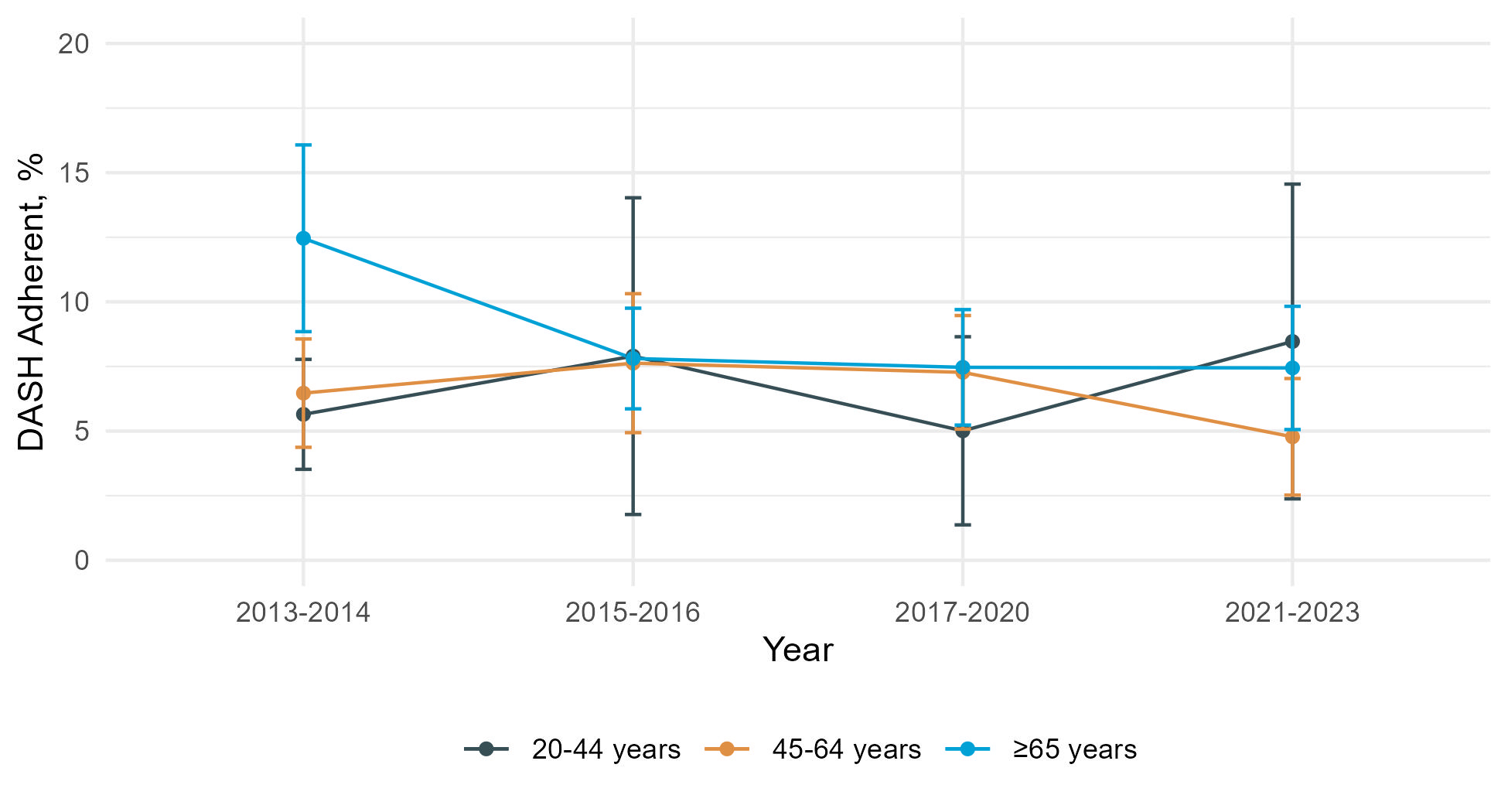
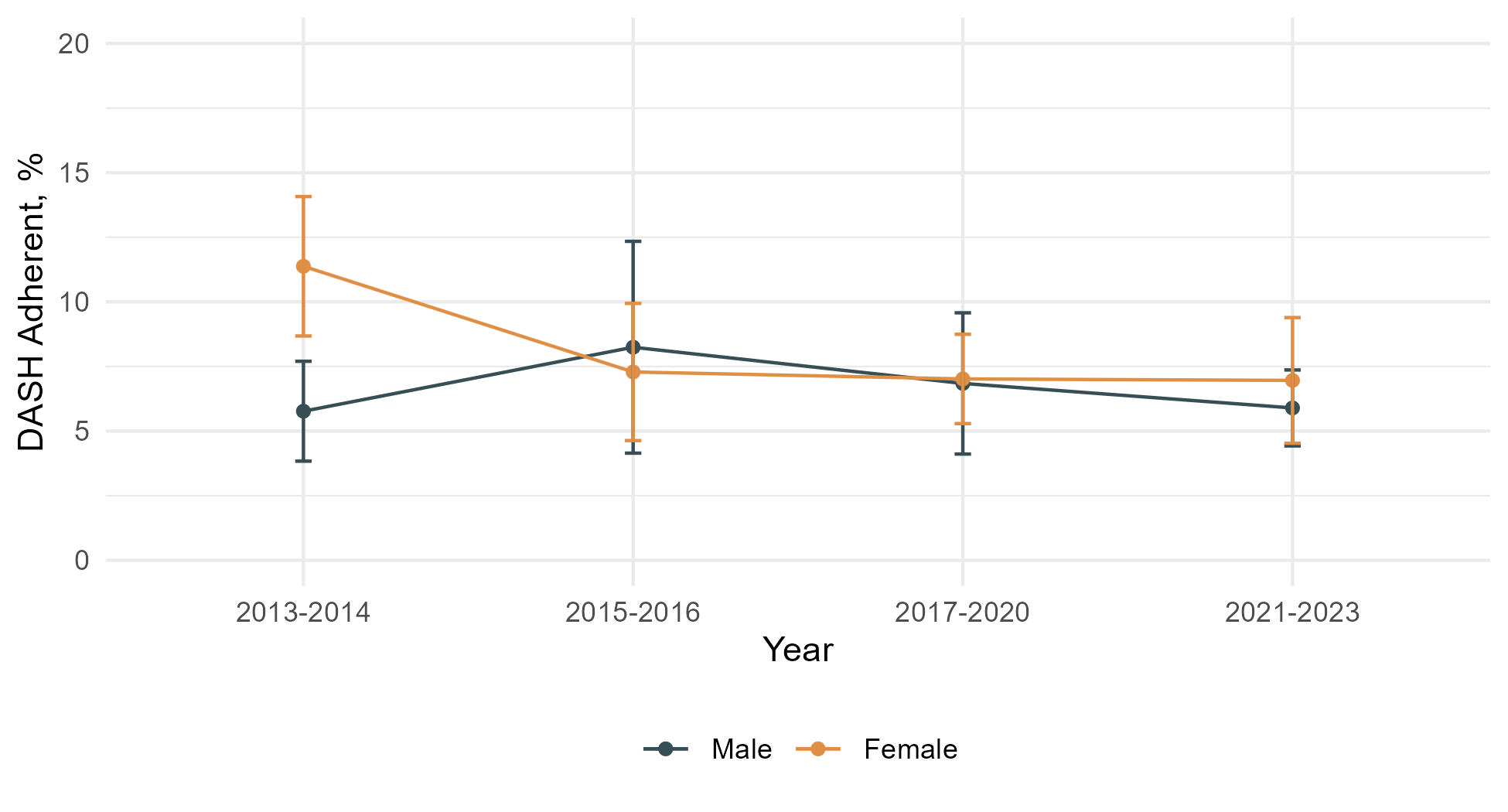
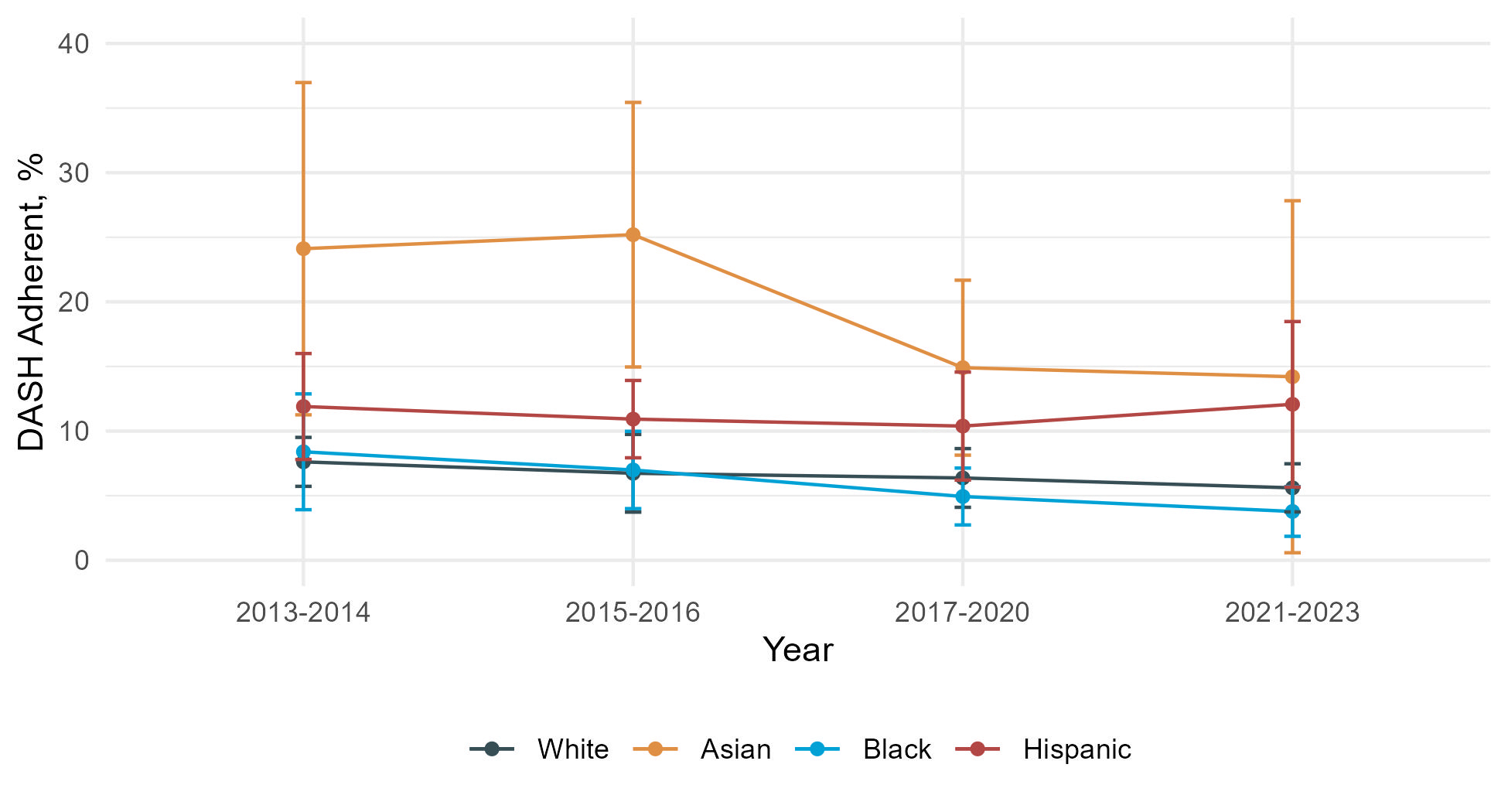
Research Questions We evaluated changes in adherence to the DASH diet among US adults with hypertension overall and by age (20-44 years, 45-64 years, ≥65 years), sex (male, female), and race and ethnicity (Asian, Black, Hispanic, White) between 2013 and 2023.
Methods We identified adults aged ≥20 years with hypertension who completed a 24-hour dietary recall in the National Health and Nutrition Examination Survey (NHANES) between 2013 and 2023. NHANES survey weights were used to generate nationally-representative estimates.
We calculated a validated DASH adherence score ranging from 0 to 9 by assessing adherence to 9 nutrient intake targets in the DASH diet. DASH adherence was defined as a DASH adherence score ≥4.5.
We assessed trends in DASH adherence using survey-weighted linear regression models. Age- and sex-adjusted outcomes were determined with direct standardization to the 2020 US Census. To provide a contemporary assessment of DASH adherence, we pooled the most recent NHANES cycles (2017-2020 and 2021-2023) and fit multivariable logistic regression models to compare DASH adherence scores by sex (after adjustment for age and race and ethnicity) and by race and ethnicity (after adjustment for age and sex).
Results The unweighted study population included 8,556 adults with hypertension. The proportion of adults with hypertension who were adherent to the DASH diet decreased from 8.7% (95% CI, 7.2%-10.1%) in 2013-2014 to 6.5% (95% CI, 4.7%-8.1%) in 2021-2023 (P=0.04), including significant decreases among adults ≥65 years, women, and Black adults.
In recent years, mean DASH adherence scores were lower among men compared with women (1.8 vs. 1.9, P=0.004). Compared with White adults, mean DASH adherence scores were lower among Black adults (1.6 vs. 1.8, P<0.001) and higher among Asian (2.5 vs. 1.8, P<0.001) and Hispanic adults (2.2 vs. 1.8, P=0.005).
Conclusion From 2013 to 2023, adherence to the DASH diet decreased among US adults with hypertension, and by the end of the study period, fewer than 7 in 100 were adherent to the DASH diet. Adherence was lower among men and Black adults than among women and other racial and ethnic groups, respectively.
Johnson, Daniel
(
University of Chicago
, Chicago , Illinois , United States )
Wadhera, Rishi
(
Beth Israel Deaconess Medical Centr
, Cambridge , Massachusetts , United States )
Author Disclosures:
Daniel Johnson:DO NOT have relevant financial relationships
| Rishi Wadhera:DO have relevant financial relationships
;
Consultant:Abbott Vascular:Past (completed)