
Logo

American Heart Association

  21
  0


Final ID: Su4103

Impact of lipoprotein(a) levels on subsequent cardiovascular events after endovascular therapy for femoropopliteal lesion

Abstract Body (Do not enter title and authors here): Background: Patients with peripheral arterial disease (PAD) have a poor prognosis due to the presence of multiple comorbidities. PAD is associated with a greater systemic atherosclerotic burden and serves as a marker of a malignant vascular phenotype, particularly in cases of polyvascular disease. Previous studies have shown that PAD is linked to an increased risk of cardiovascular events. Although lipoprotein(a) [Lp(a)] has been identified as a useful prognostic marker in patients with coronary artery disease, its relationship with subsequent cardiovascular events in PAD patients remains unclear.
Hypothesis: We investigated whether elevated Lp(a) levels are associated with an increased risk of subsequent cardiovascular events in patients undergoing endovascular therapy (EVT) for PAD.
Methods: We conducted a retrospective analysis using a single-centre database. A total of 138 patients who underwent EVT for de novo femoropopliteal lesions between June 2016 and December 2022 were included. Lp(a) levels were measured in all patients prior to EVT. Based on previous literature, a cut-off value of 30 mg/dL was used to classify patients into two groups: low Lp(a) (<30 mg/dL) and high Lp(a) (≥30 mg/dL). The primary endpoint was major adverse cardiovascular events (MACE), defined as a composite of acute coronary syndrome (ACS), heart failure, stroke, and cardiovascular death.
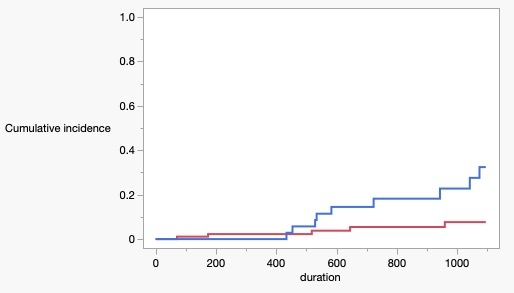
Results: Of the 138 patients, 45 (32.6%) were classified into the high Lp(a) group and 93 (67.4%) into the low Lp(a) group. Lp(a) levels were not normally distributed. Kaplan–Meier analysis revealed that the incidence of MACE was significantly higher in the high Lp(a) group than in the low Lp(a) group (Figure 1). Although the incidences of ACS, stroke, and cardiovascular death were not significantly different between the groups, the incidence of heart failure was significantly higher in the high Lp(a) group (Figure 2).
Conclusion: Elevated Lp(a) levels were associated with an increased risk of MACE, particularly heart failure, in patients with PAD undergoing EVT.
  • Hoshina, Rin  ( Hyogo Medical University , Nishinomiya , Japan )
  • Akahori, Hirokuni  ( Hyogo College of Medicine , Nishinomiya , Japan )
  • Yoshihara, Nagataka  ( Hyogo Medical University , Nishinomiya , Japan )
  • Miki, Kojiro  ( Hyogo Medical University , Nishinomiya , Japan )
  • Kawai, Kenji  ( Hyogo Medical University , Nishinomiya , Japan )
  • Ishihara, Masaharu  ( Hyogo Medical University , Nishinomiya , Japan )
  • Author Disclosures:
    Rin Hoshina: DO NOT have relevant financial relationships | Hirokuni Akahori: No Answer | Nagataka Yoshihara: DO NOT have relevant financial relationships | Kojiro Miki: DO NOT have relevant financial relationships | Kenji Kawai: DO NOT have relevant financial relationships | Masaharu Ishihara: No Answer
Meeting Info:

Scientific Sessions 2025

2025

New Orleans, Louisiana

Session Info:

New Mechanisms in Thrombosis Peripheral Artery Disease and Lipoprotein Biology

Sunday, 11/09/2025 , 03:15PM - 04:15PM

Abstract Poster Board Session

More abstracts on this topic:
12,13-diHOME Attenuates Pro-Arrhythmic Effect of High-Fat Diet

Buck Benjamin, Baer Lisa, Deschenes Isabelle, Chinthalapudi Krishna, Gallego-perez Daniel, Stanford Kristin, Hund Thomas, Areiza Natalia, Xu Xianyao, Elliott Austin, Wan Xiaoping, Nassal Drew, Lane Cemantha, Nirengi Shinsuke, James Natasha Maria

Association of Automated Anatomical Vascular Measurements and Procedural Outcomes in Patients undergoing Endovascular Treatment of Stroke

Sastre Blanca, Canals Pere, Garcia-tornel Garcia-camba Alvaro, Ribo Marc

More abstracts from these authors:
Intraoperative indicators depending on QRS morphology are required to narrow QRS width during CRT implantation

Mine Takanao, Terao Soichiro, Sugitani Miho, Kogame Takehiro, Ishihara Masaharu

Association Between Renal Artery Calcification and Renal Functional Outcomes After Revascularization According to CKD Stage in Renovascular Hypertension

Kawai Kenji, Mine Takanao, Hoshina Rin, Akahori Hirokuni, Miki Kojiro, Yoshihara Nagataka, Tanaka Hirokazu, Ishihara Masaharu

You have to be authorized to contact abstract author. Please, Login
Not Available