Abstract Body (Do not enter title and authors here): Background: Acute cellular rejection (ACR) remains a major challenge after orthotopic heart transplantation (OHT). Surveillance relies on endomyocardial biopsy (EMB), an invasive test limited by sampling error and reader variability. Existing molecular assays can quantify transcripts or donor DNA but do not reflect real-time metabolic flux. Metabolomics, which comprehensively profiles circulating small molecules, integrating immune, stromal, and microbial signals, remains underexplored in ACR. We evaluated whether serum metabolomics can non-invasively detect moderate-to-severe rejection and map the full rejection spectrum.
Methods: In this prospective cohort, 133 EMB-paired serum samples from adult OHT recipients were analyzed. Samples were classified as 0R, 1R, 2R, or 3R (ISHLT criteria). Ultra-high resolution metabolomics analysis was performed via liquid chromatography-mass spectrometry. Partial-least-squares discriminant analysis (PLS-DA) and pathway enrichment compared 0R with ≥2R. Least absolute shrinkage and selection operator (LASSO) regression was performed to select a biomarker panel. 1R samples were further stratified as “pre-2R” (progressed to ≥2R on the next EMB) or stable 1R.
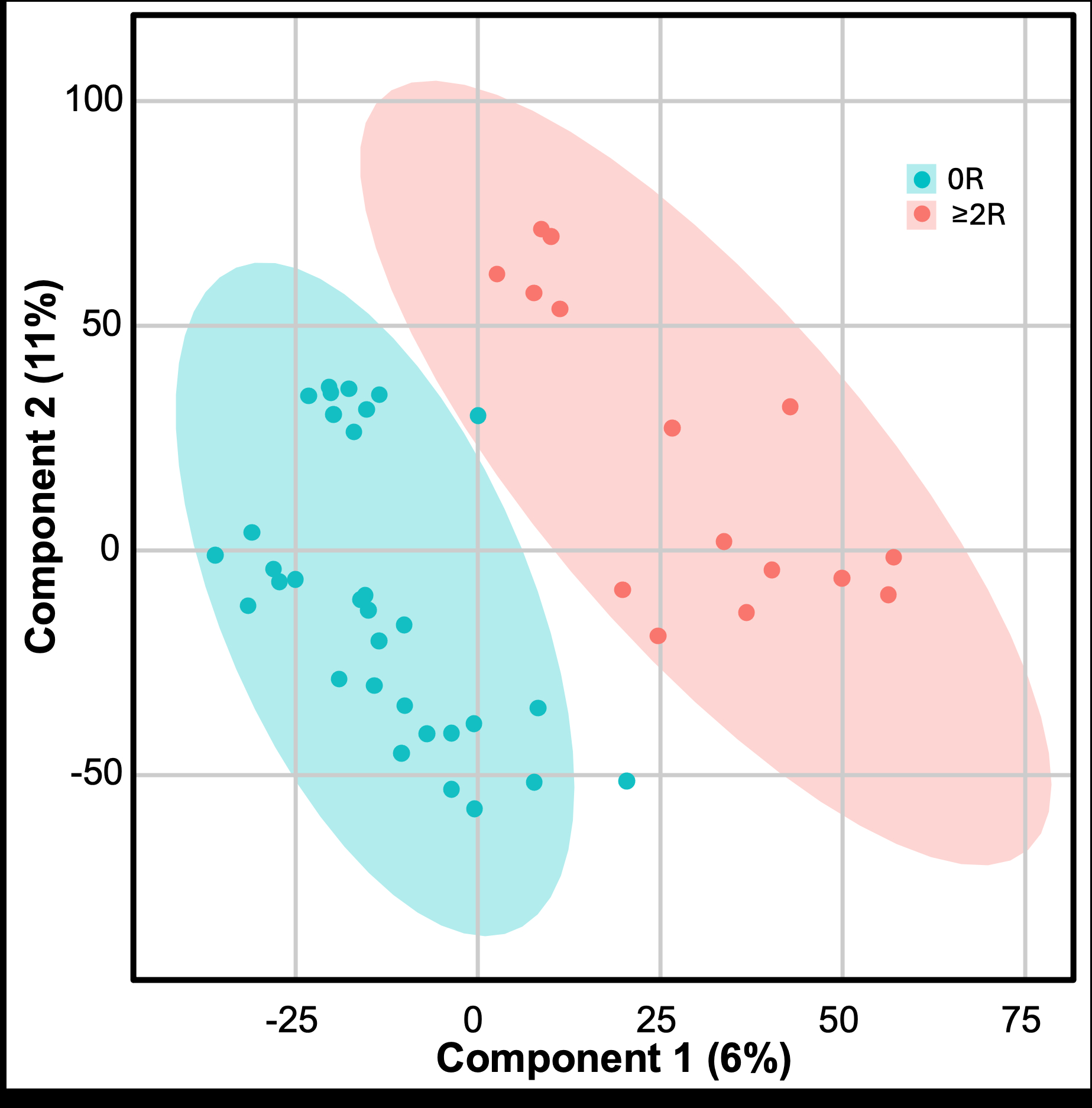
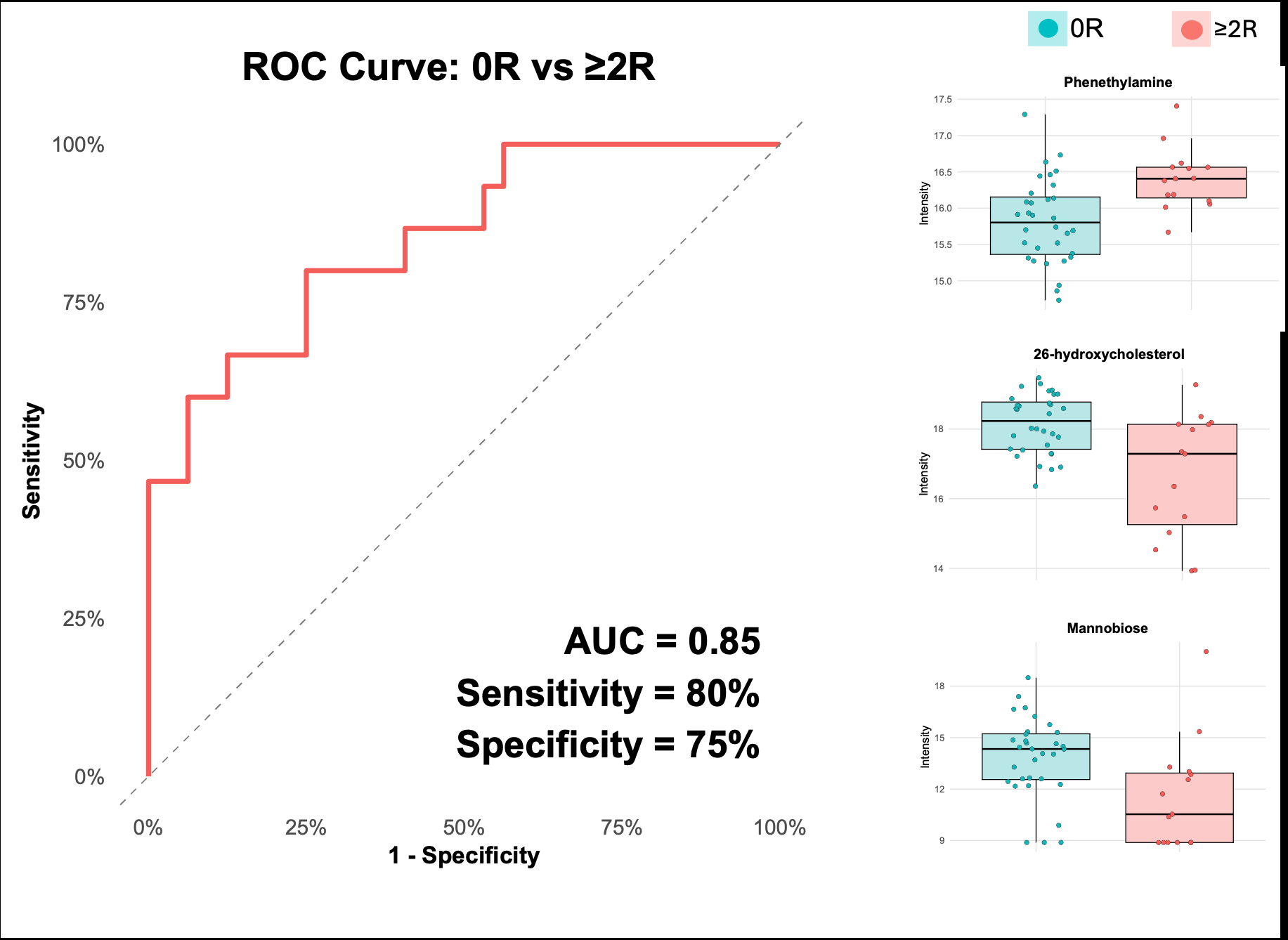
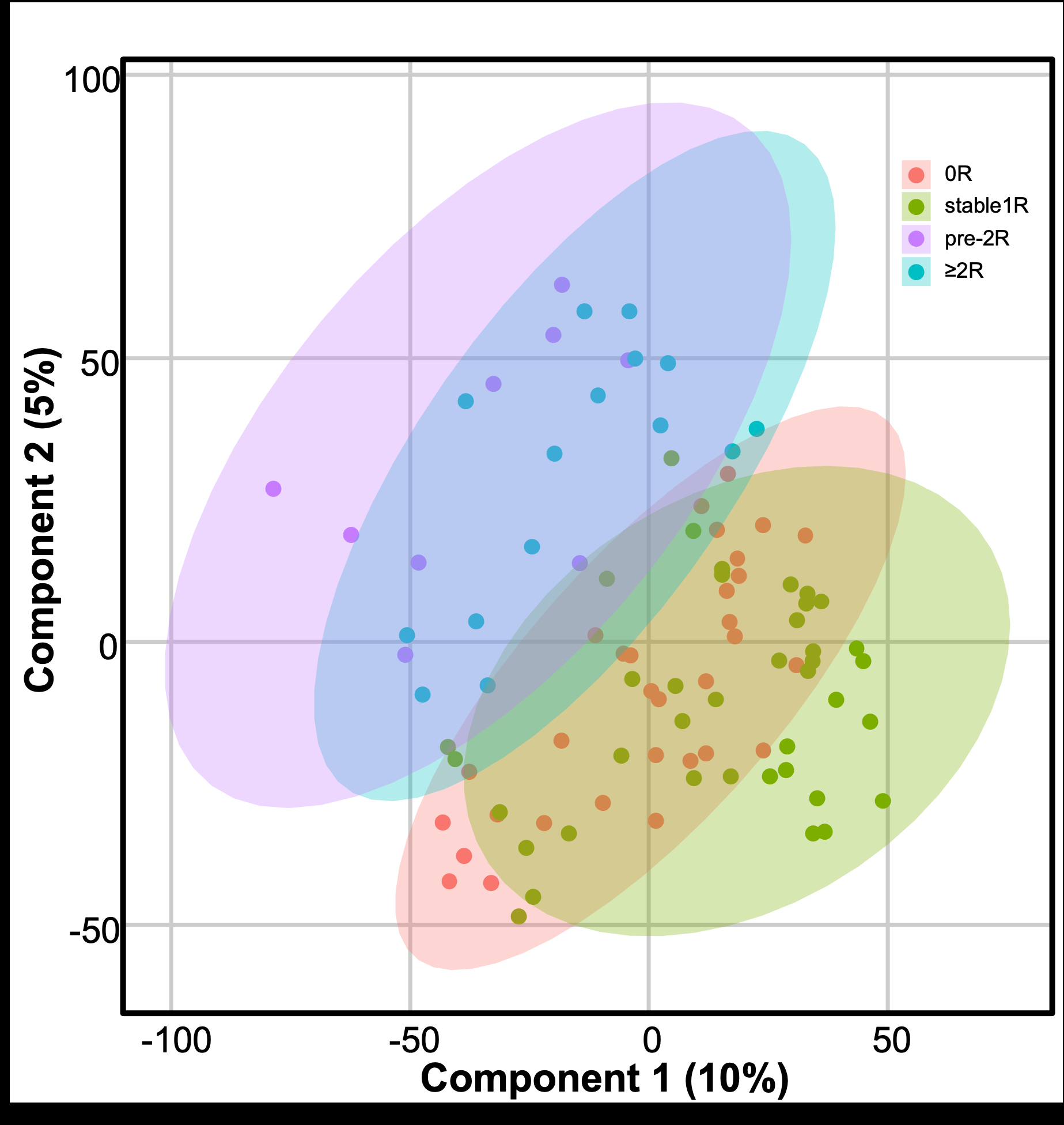
Results: Of the 133 samples, 43 were 0R, 69 were 1R, and 21 were ≥2R. PLS-DA revealed strong separation between 0R and ≥2R (Figure 1). Seventeen enriched pathways in ≥2R ACR implicated cytokine signaling, nucleotide metabolism, and arachidonic-acid metabolism. A three-metabolite panel, which included phenethylamine (gut-immune modulator), 26-hydroxycholesterol (anti-inflammatory signaling lipid), and mannobiose (immune self-recognition), yielded an area-under-the-curve 0.85 in diagnosing ≥2R vs 0R (Figure 2). Secondary analysis showed that 1R samples were highly heterogeneous. When stratified, pre-2R samples clustered similarly with 2R, while the stable 1R samples resembled 0R (Figure 3), underscoring a biological continuum of ACR.
Conclusions: This is one of the first studies to demonstrate that serum metabolomics (i) accurately identifies moderate-to-severe ACR, (ii) unveils graded immune activation missed by binary EMB scoring, and (iii) highlights mechanistic pathways amenable to therapy. The metabolic pathways and biomarkers associated with rejection align with established mechanisms of inflammation and cellular turnover. These data support further research in metabolomics as a rigorous, non-invasive tool for rejection surveillance.
Rust, Clayton
(
Emory University School of Medicine
, Atlanta , Georgia , United States )
Preston, Joshua
(
Emory University School of Medicine
, Atlanta , Georgia , United States )
Randhawa, Supreet
(
Emory University School of Medicine
, Atlanta , Georgia , United States )
Chakragiri, Amshumanth
(
Emory University School of Medicine
, Atlanta , Georgia , United States )
Tang, Ailin
(
Emory University School of Medicine
, Atlanta , Georgia , United States )
Weinberg, Jaclyn
(
Emory University School of Medicine
, Atlanta , Georgia , United States )
Zhan, Jiada
(
Emory University School of Medicine
, Atlanta , Georgia , United States )
Reed, Aubrey
(
Emory University School of Medicine
, Atlanta , Georgia , United States )
Halkos, Michael
(
Emory University School of Medicine
, Atlanta , Georgia , United States )
Bishawi, Muath
(
Emory University School of Medicine
, Atlanta , Georgia , United States )
Daneshmand, Mani
(
Emory University School of Medicine
, Atlanta , Georgia , United States )
Searles, Charles
(
Emory University School of Medicine
, Atlanta , Georgia , United States )
Go, Young-mi
(
Emory University School of Medicine
, Atlanta , Georgia , United States )
Jones, Dean
(
Emory University School of Medicine
, Atlanta , Georgia , United States )
Chan, Joshua
(
Emory University School of Medicine
, Atlanta , Georgia , United States )
Author Disclosures:
Clayton Rust:DO NOT have relevant financial relationships
| Muath Bishawi:No Answer
| Mani Daneshmand:DO have relevant financial relationships
;
Individual Stocks/Stock Options:Procure On Demand:Active (exists now)
| Charles Searles:No Answer
| Young-mi Go:DO NOT have relevant financial relationships
| Dean Jones:No Answer
| Joshua Chan:DO NOT have relevant financial relationships
| Joshua Preston:No Answer
| Supreet Randhawa:DO NOT have relevant financial relationships
| Amshumanth Chakragiri:No Answer
| Ailin Tang:DO NOT have relevant financial relationships
| Jaclyn Weinberg:No Answer
| Jiada Zhan:No Answer
| Aubrey Reed:DO NOT have relevant financial relationships
| Michael Halkos:DO have relevant financial relationships
;
Consultant:medtronic:Active (exists now)