Influenza Vs COVID-19 and Arrhythmic Events. A Propensity Matched Analysis
Abstract Body (Do not enter title and authors here): Background The cardiovascular and mortality outcomes of COVID-19 versus influenza remain under study. This study aimed to compare these outcomes using a large real-world dataset and robust statistical matching.
Methods This retrospective cohort study used the TriNetX global health research network. Patients aged ≥40 years with lab-confirmed COVID-19 or influenza (from Jan 1, 2020, to Dec 31, 2021) were included. Those with co-infection were excluded. Propensity score matching (1:1), based on demographics, diagnoses, medications, and lab values, was used to balance baseline characteristics. Outcomes assessed over 3 years post-index included: all-cause mortality, cardiac arrhythmias, ventricular tachycardia, ventricular fibrillation, atrial fibrillation, atrial flutter, and heart failure. Analyses included risk comparisons, survival analyses (Kaplan–Meier), and hazard ratios.
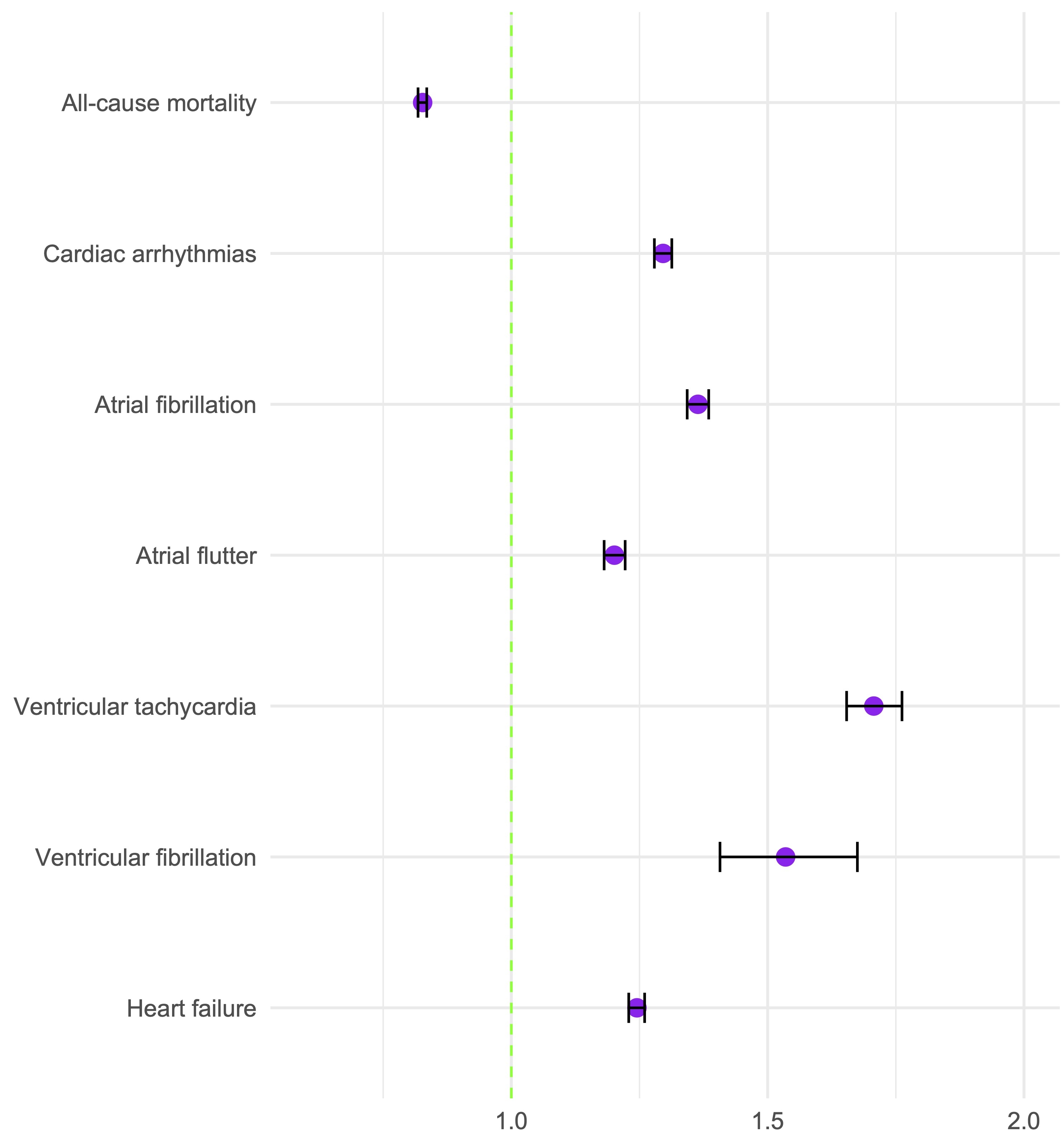
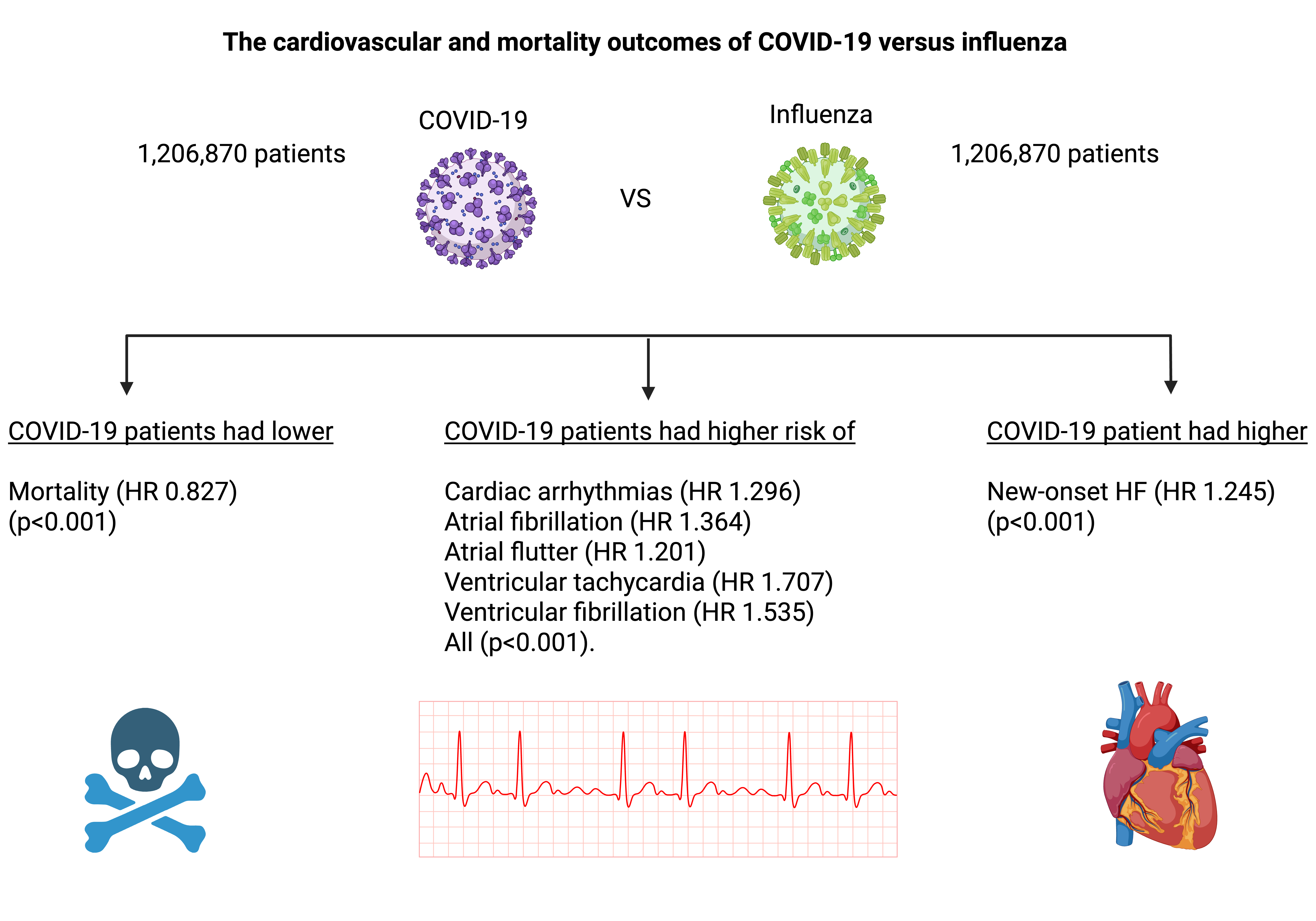
Results Among patients aged ≥40 years, COVID-19 (n=4,037,160) and influenza (n=1,270,965) cohorts were identified. Pre-matching, influenza patients had more comorbidities, including hypertension (24.8% vs. 16.2%), diabetes (10.8% vs. 6.5%), ischemic heart disease (6.1% vs. 4.2%), and heart failure (3.6% vs. 1.7%). COVID-19 patients had more chronic respiratory disease (17.3% vs. 10.6%). After 1:1 propensity score matching (n=1,206,870 per cohort), COVID-19 patients had lower mortality (HR 0.827, 95% CI: 0.818–0.835; p<0.001) but higher risk of cardiac arrhythmias (HR 1.296, 95% CI: 1.279–1.313; p<0.001), atrial fibrillation (HR 1.364, 95% CI: 1.343–1.385; p<0.001), atrial flutter (HR 1.201, 95% CI: 1.181–1.222; p<0.001), ventricular tachycardia (HR 1.707, 95% CI: 1.654–1.762; p<0.001), and ventricular fibrillation (HR 1.535, 95% CI: 1.407–1.675; p<0.001). New-onset heart failure was also higher in COVID-19 (HR 1.245, 95% CI: 1.229–1.260; p<0.001).
Conclusion Despite a lower mortality rate, the COVID-19 group exhibited a consistently higher burden of arrhythmic events compared to the influenza group. These findings suggest distinct cardiovascular sequelae following COVID-19 infection, underlining the importance of post-acute surveillance in this population. Further studies are needed to understand the clinical implications.
Jalilzadehbinazar, Mehran
(
St. Luke's Hospital
, Chesterfield , Missouri , United States )
Hlupeni, Admire
(
St. Luke's Hospital
, Chesterfield , Missouri , United States )
Liceralde, Rayvlin John
(
St. Luke's Hospital
, Chesterfield , Missouri , United States )
Evbayekha, Endurance
(
St. Luke's Hospital
, Chesterfield , Missouri , United States )
Cooper, Jonas
(
St. Luke's Hospital
, Chesterfield , Missouri , United States )
Author Disclosures:
Mehran Jalilzadehbinazar:DO NOT have relevant financial relationships
| Admire Hlupeni:DO NOT have relevant financial relationships
| Rayvlin John Liceralde:DO NOT have relevant financial relationships
| Endurance Evbayekha:DO NOT have relevant financial relationships
| Jonas Cooper:DO NOT have relevant financial relationships