
Logo

American Heart Association

  20
  0


Final ID: MP2668

Repetitive Ventricular Response During Radiofrequency Ablation of Left Posterior Fascicular Ventricular Tachycardia: A Reliable Indicator of Success or Mere Observation?

Abstract Body (Do not enter title and authors here): Background:
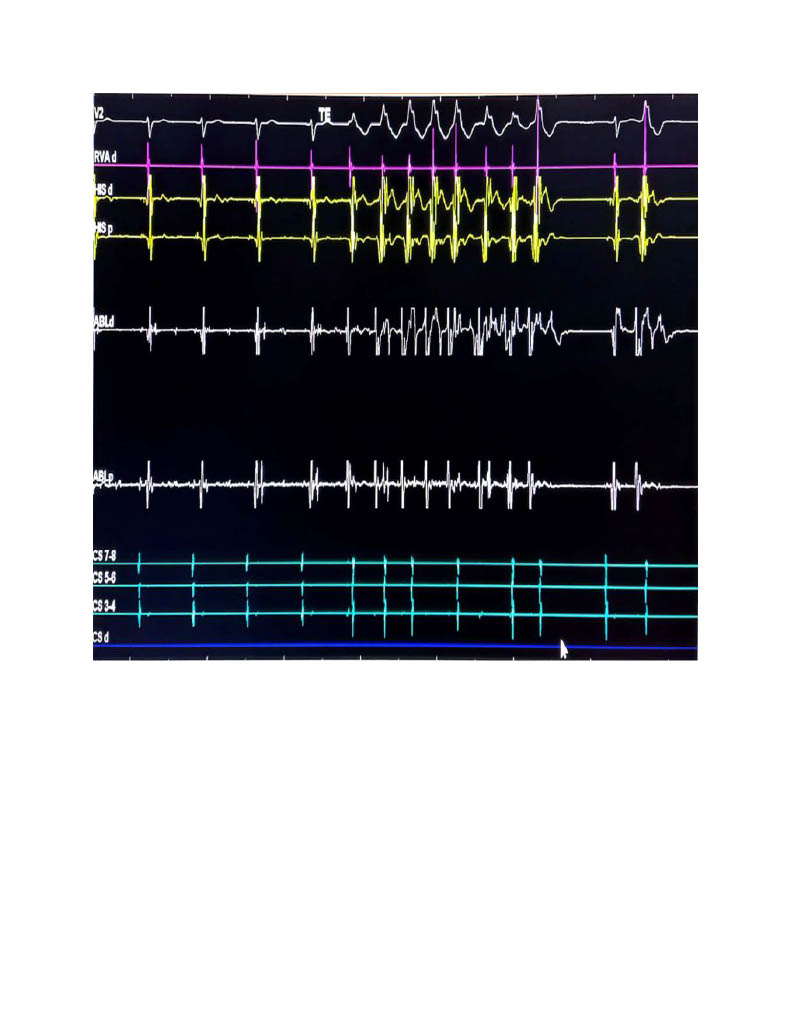
Idiopathic left posterior fascicular ventricular tachycardia (LPF-VT) is commonly treated with radiofrequency ablation (RFA), where non-inducibility of VT post-ablation is the conventional procedural endpoint. However, the occurrence of repetitive ventricular responses (RVR)—defined as ablation-induced, non-sustained ventricular tachycardia (NSVT) with morphology matching the clinical VT—may indicate real-time lesion effectiveness, even during sinus rhythm. This study aimed to assess whether RVR serves as a reliable predictor of successful ablation and long-term outcomes.

Methods:
This retrospective study included 38 consecutive patients (mean age 30 ± 9 years; 84% male) with inducible LPF-VT who underwent RFA during sinus rhythm. Ablation targeted low-amplitude Purkinje-like potentials in the left posterior septum. RVR was defined as ≥3 beats of NSVT provoked by RF energy and matching the clinical VT QRS morphology. Patients were stratified based on the presence or absence of RVR. Procedural success (non-inducibility post-RFA) and VT recurrence during a mean 24-month follow-up were compared.

Results:
RVR was observed in 27 of 38 patients (71%). Acute procedural success was achieved in all patients. VT recurrence was significantly lower in the RVR-positive group (2 of 27; 7.4%) compared to the RVR-negative group (4 of 11; 36.4%). All RVR episodes showed QRS morphology identical to the clinical VT. Two transient complications (one ventricular fibrillation, one polymorphic VT) occurred without long-term sequelae. These findings align with the “thermal mapping” concept, suggesting RVR may reflect effective lesion formation.

Conclusion:
Repetitive ventricular responses during RFA of LPF-VT are associated with improved long-term outcomes and lower recurrence rates. When the induced NSVT matches the clinical VT morphology, RVR may serve as a valuable adjunctive intra-procedural marker of successful ablation. Incorporating RVR as a procedural indicator may enhance ablation guidance in patients with LPF-VT.
  • Awais, Muhammad  ( Pak International Medical College , Peshawar , Pakistan )
  • Zahid, Ayesha  ( Pak International Medical College , Peshawar , Pakistan )
  • Ikram, Jibran  ( Pak International Medical College , Peshawar , Pakistan )
  • Awan, Zahid Aslam  ( Pak International Medical College , Peshawar , Pakistan )
  • Author Disclosures:
    Muhammad Awais: DO NOT have relevant financial relationships | Ayesha Zahid: DO NOT have relevant financial relationships | jibran Ikram: DO NOT have relevant financial relationships | Zahid Aslam Awan: DO NOT have relevant financial relationships
Meeting Info:

Scientific Sessions 2025

2025

New Orleans, Louisiana

Session Info:

Chasing VT: Evolving Strategies in Mapping and Ablation to Augment Procedural Success

Monday, 11/10/2025 , 01:45PM - 03:00PM

Moderated Digital Poster Session

More abstracts on this topic:
Ablation versus Anti-arrhythmic Drug Therapy for Ventricular Tachycardia in Patients with Ischemic Heart Disease: A Systematic Review and Meta-analysis of Randomized Controlled Trials

Khan Ubaid, Chaudhry Kashif, Amin Ahmed Mazen, A. Ibrahim Ahmed, Imran Muhammad, Rakab Mohamed, Iltaf Arej, M. Albarakat Majd, Ranabhat Chet, Brilliant Justin

Advanced Mapping Techniques for Atrioventricular Nodal Reentrant Tachycardia in Pediatric Patients: Do They Make a Difference?

Uniat Jonathan, Hill Allison, Shwayder Mark, Silka Michael, Bar-cohen Yaniv

More abstracts from these authors:
You have to be authorized to contact abstract author. Please, Login
Not Available