
Logo

American Heart Association

  15
  0


Final ID: MP51

Purulent Pericarditis Leading to Cardiac Tamponade and Constrictive Physiology

Abstract Body (Do not enter title and authors here): Background: Purulent pericarditis is a rare, often life-threatening infection of the pericardial space, characterized by the accumulation of pus. Seeding of the pericardium may occur through hematogenous or contiguous spread from an intrathoracic, myocardial, or subdiaphragmatic focus. Streptococcus pneumoniae is the most common intrathoracic bacterial source, although infection has become exceedingly rare in the modern era of pneumococcal vaccination and antibiotics. Constrictive physiology (CP) is a known complication of purulent pericarditis although the exact incidence is unknown.
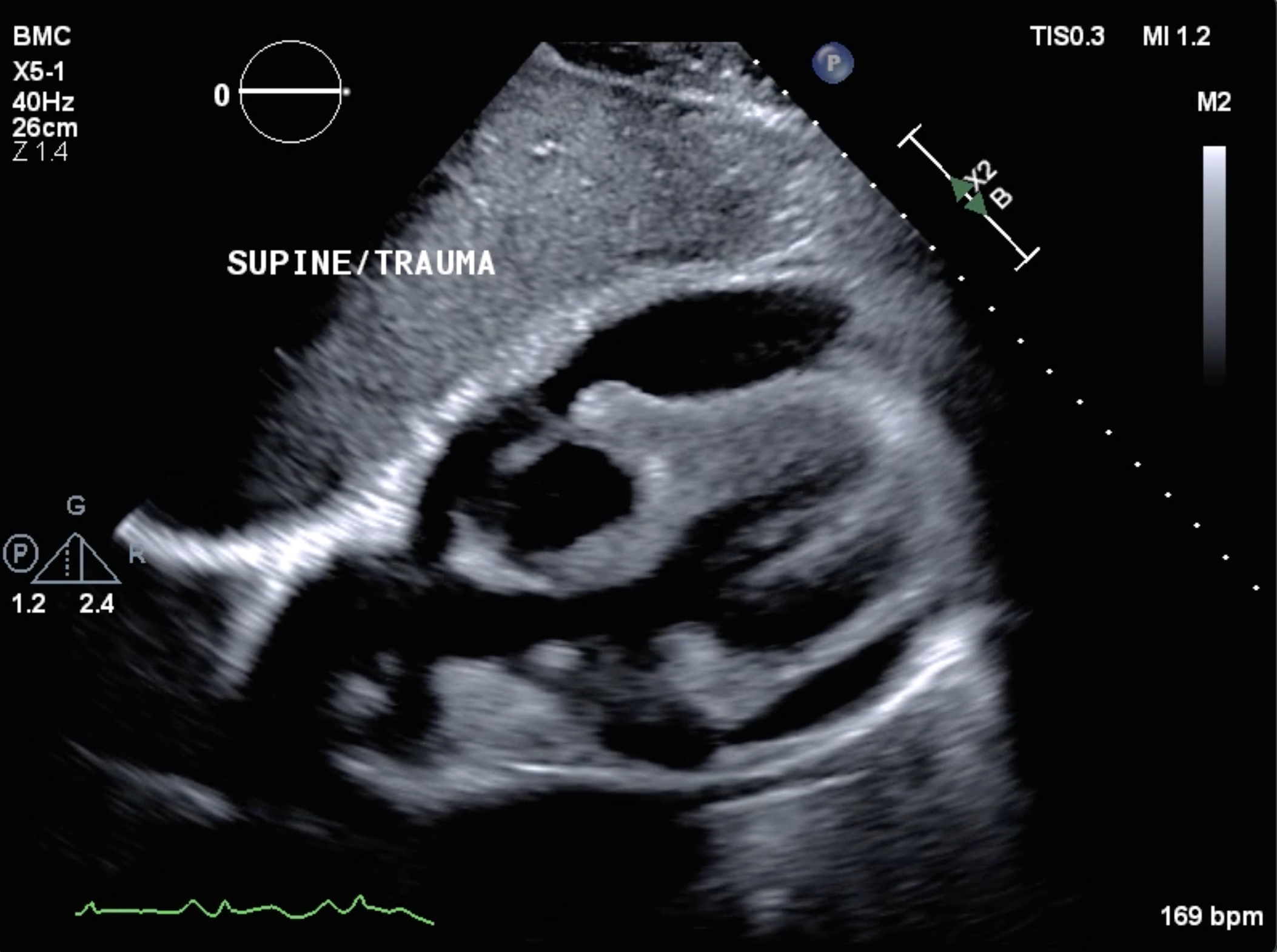
Case Summary: A middle-aged woman presented with chest pain. Initial imaging showed no evidence of pneumonia or pericardial effusion. A repeat echocardiogram after approximately 16 hours demonstrated the development of cardiac tamponade and obstructive shock. Emergent pericardiocentesis yielded purulent fluid, which grew Streptococcus pneumoniae. Despite hemodynamic improvement, she subsequently developed CP, which was diagnosed with cardiac catheterization and cardiac magnetic resonance (CMR).
Discussion: This case illustrates an uncommon and critical presentation of purulent pericarditis in a previously healthy adult without initial evidence of pneumonia or an identifiable infectious source. The patient’s rapid progression to cardiac tamponade and obstructive shock highlights the importance of early recognition, timely pericardial drainage, and targeted antimicrobial therapy. Additionally, the classic signs of CP were seen just days after the development of pericardial disease. Cardiac catheterization is the gold standard diagnostic tool because enhanced ventricular interdependence by analysis of the left ventricular and right ventricular pressure contours during the respiratory cycle is highly sensitive and specific. However, CMR offers a non-invasive diagnostic adjunct by revealing pericardial thickness, pericardial contrast enhancement, and ventricular coupling during real-time cine imaging. This complementary information can help guide treatment decisions on medical therapy versus surgical intervention.
Take Home Messages: Purulent pericarditis is a rare condition that may present without a clear infectious source. It may be complicated by the development of CP and both cardiac catheterization and CMR are important diagnostic tools.
  • Davis, Danielle  ( Boston University Medical Center , Boston , Massachusetts , United States )
  • Caicedo, Johanna  ( Boston University Medical Center , Boston , Massachusetts , United States )
  • Uetz, Maxwell  ( Boston University Medical Center , Boston , Massachusetts , United States )
  • Shapira-daniels, Ayelet  ( Boston University Medical Center , Boston , Massachusetts , United States )
  • Hsieh, Grace  ( Boston University Medical Center , Boston , Massachusetts , United States )
  • Pande, Ashvin  ( Boston University Medical Center , Boston , Massachusetts , United States )
  • Author Disclosures:
    Danielle Davis: DO NOT have relevant financial relationships | Johanna Caicedo: No Answer | Maxwell Uetz: No Answer | Ayelet Shapira-Daniels: No Answer | Grace Hsieh: No Answer | Ashvin Pande: DO NOT have relevant financial relationships
Meeting Info:

Scientific Sessions 2025

2025

New Orleans, Louisiana

Session Info:

Complex Cases and Bold Solutions: Innovations in Advanced Cardiovascular Care

Saturday, 11/08/2025 , 10:45AM - 12:00PM

Moderated Digital Poster Session

More abstracts on this topic:
A Rare Case of Purulent Methicillin-Resistant Staphylococcus Aureus Pericarditis Presenting with Septic Shock

Elisarraras Francisco, Roberts Jacob, Hindosh Ziad, Arega Enat, Madnick David, Cruz Daniel, Srivastava Pratyaksh

A Novel Multivariate Scoring System for Diagnosing Post-Myocardial Infarction Pericarditis Following Percutaneous Coronary Intervention

Bolaji Olayiwola, Omoru Okiemute, Upreti Prakash, Echari Blanche, Shoar Saeed, Basit Jawad, Alraies M Chadi

More abstracts from these authors:
You have to be authorized to contact abstract author. Please, Login
Not Available