Testing the Feasibility, Usability, Acceptability, and Effect of a Generative AI-Based Sleep Intervention
Abstract Body (Do not enter title and authors here): Background: Poor sleep is a concerning public health problem in the U.S. To address this issue, we developed a prototype sleep intervention powered by advanced artificial intelligence (AI) using large language models (LLMs). This study aimed to examine the feasibility, usability, acceptability, and preliminary effects of this AI-based intervention on sleep outcomes among U.S. adults.
Methods: We conducted a quasi-experimental, single-group study with U.S. adults aged 18–75 who self-reported poor sleep. Participants were asked to interact with a chatbot through a commercially available messaging app over two weeks. The chatbot provided ongoing, individualized sleep guidance and adapted recommendations based on participants’ prior conversations. Feasibility, usability, and acceptability were evaluated by tracking engagement and administering questionnaires. Sleep outcomes were assessed using questionnaires, and pre- and post-intervention differences were analyzed using paired t-tests.
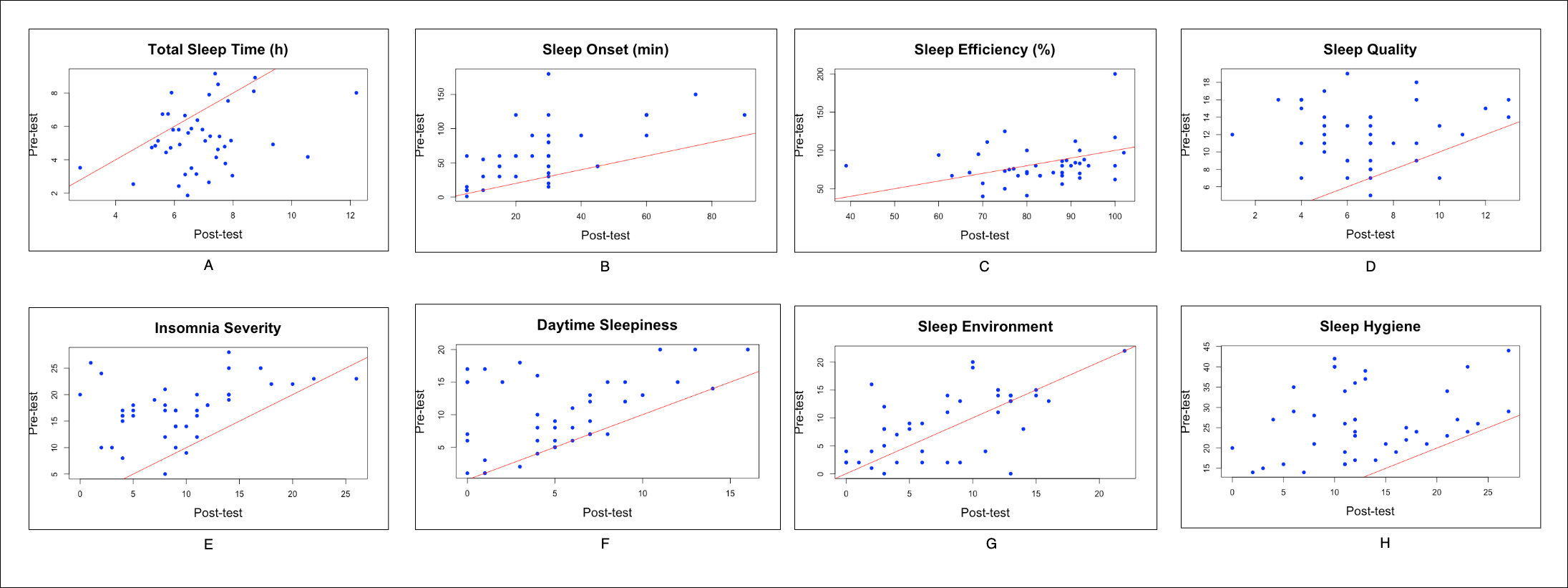
Results: We enrolled 88 adults. Sixty-five participants initiated interactions with the chatbot, and 44 (67%) completed the two-week intervention. The final analysis included 42 adults (mean age 36 ± 11 years; 29% male). All participants rated the intervention as effective, with high usability and satisfaction scores. Statistically significant improvements were observed in multiple sleep measures: total sleep time increased by 1.4 hours (p < 0.001), sleep onset latency decreased by 33.7 minutes (p < 0.001), and scores improved for perceived sleep quality (mean difference [MD] = -5.4, p < 0.001), insomnia severity (MD = -7.9, p < 0.001), daytime sleepiness (MD = -4.7, p < 0.001), and sleep hygiene skills (MD = -13.2, p < 0.001). No significant changes were observed in sleep efficiency or sleep environment.
Conclusions: This AI-powered sleep intervention was feasible and acceptable to promote sleep outcomes. The findings showed that integrating advanced AI technologies into behavioral interventions may be a promising solution for promoting sleep health. Future research should incorporate objective sleep measurements and conduct randomized controlled trials to confirm the study findings.
Liu, Xiaoyue
(
New York University
, New York , New York , United States )
Author Disclosures:
Xiaoyue Liu:DO NOT have relevant financial relationships