
Logo

American Heart Association

  17
  0


Final ID: Sa4051

Metagenomic Profiling of Gut Microbiome Among the Risk Groups of Atherosclerotic Coronary Artery Disease

Abstract Body (Do not enter title and authors here): Introduction
Several studies have shown that alterations of gut microbiome are associated with various diseases, such as atherosclerosis. Published literature often compared the gut microbiome of healthy individuals only and those with atherosclerotic coronary artery disease (CAD). Data on the gut microbiome structure of high-risk individuals, who are neither completely healthy nor diseased, were missed and largely unknown.

Objective and Hypothesis
This study aimed to investigate human gut microbiome association and atherosclerotic coronary artery disease risk status. We hypothesize that risk factors drive alterations in the gut microbiome, which are associated with the overall risk of developing CAD. We further propose that these changes in the gut microbiome composition occur before significant disease development.

Methods
The study recruited 30 patients from a tertiary hospital: at low risk (LR) (n=10), at high risk (HR) (n=10), and with CAD (CD) (n=10). The risk of developing CAD was determined by ASCVD Risk Score. Microbial DNA was isolated from stool samples and sequenced using Illumina MiSeq. The taxonomic and functional profiles of the gut microbiome were determined by MetaPhlAn2 and HUMAnN2. Data were analyzed using the Kruskal-Wallis H test and multiple pairwise comparisons by the Mann-Whitney U test.

Results
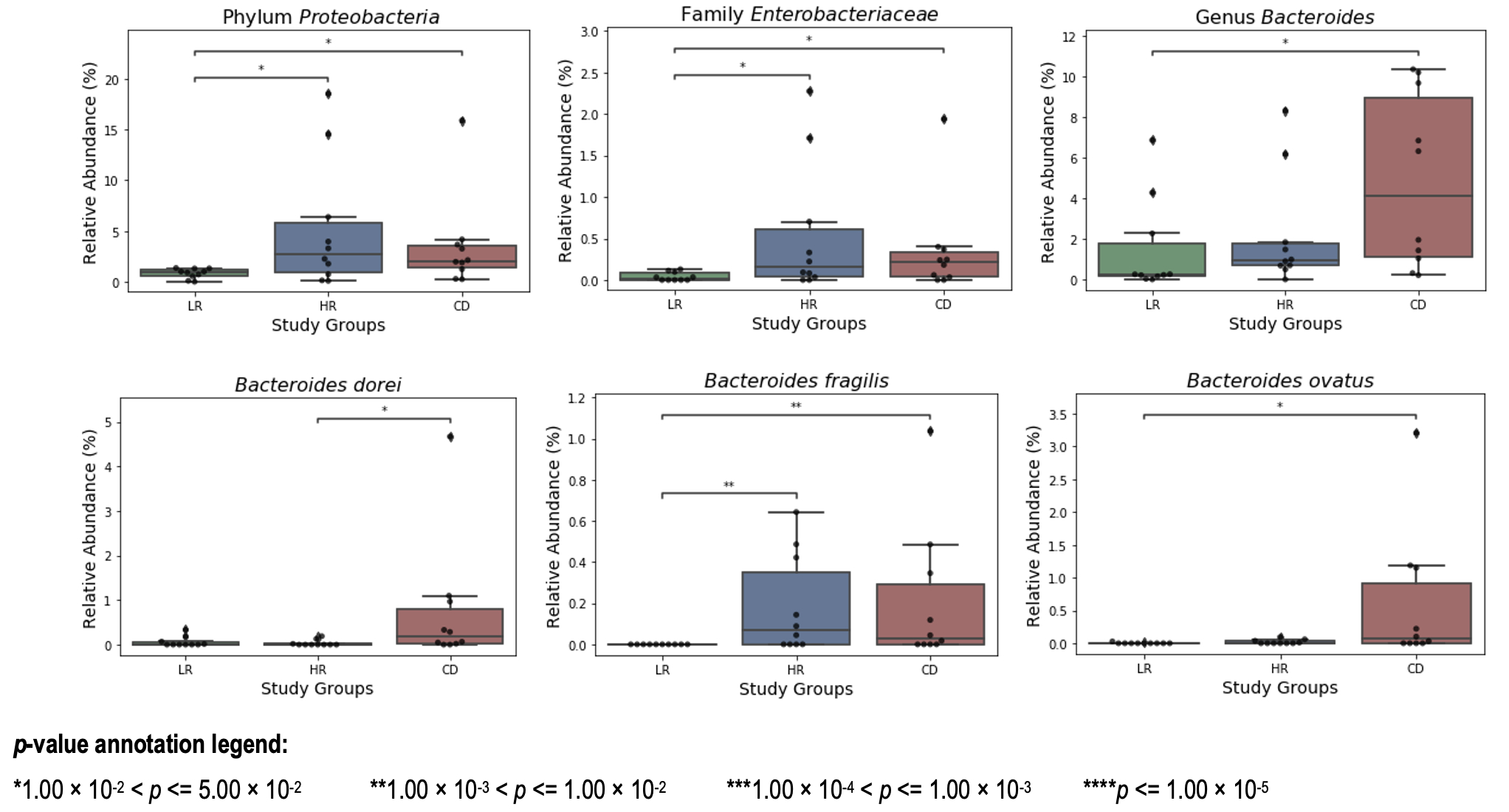
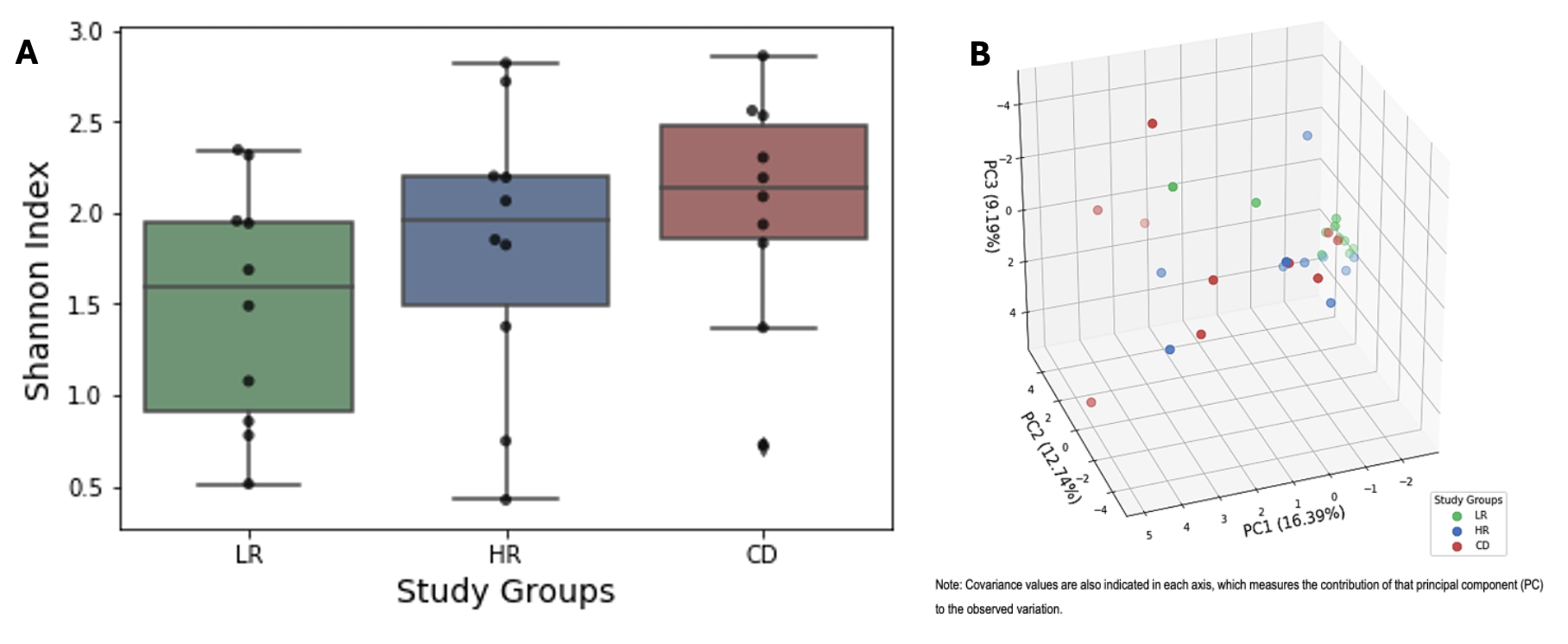
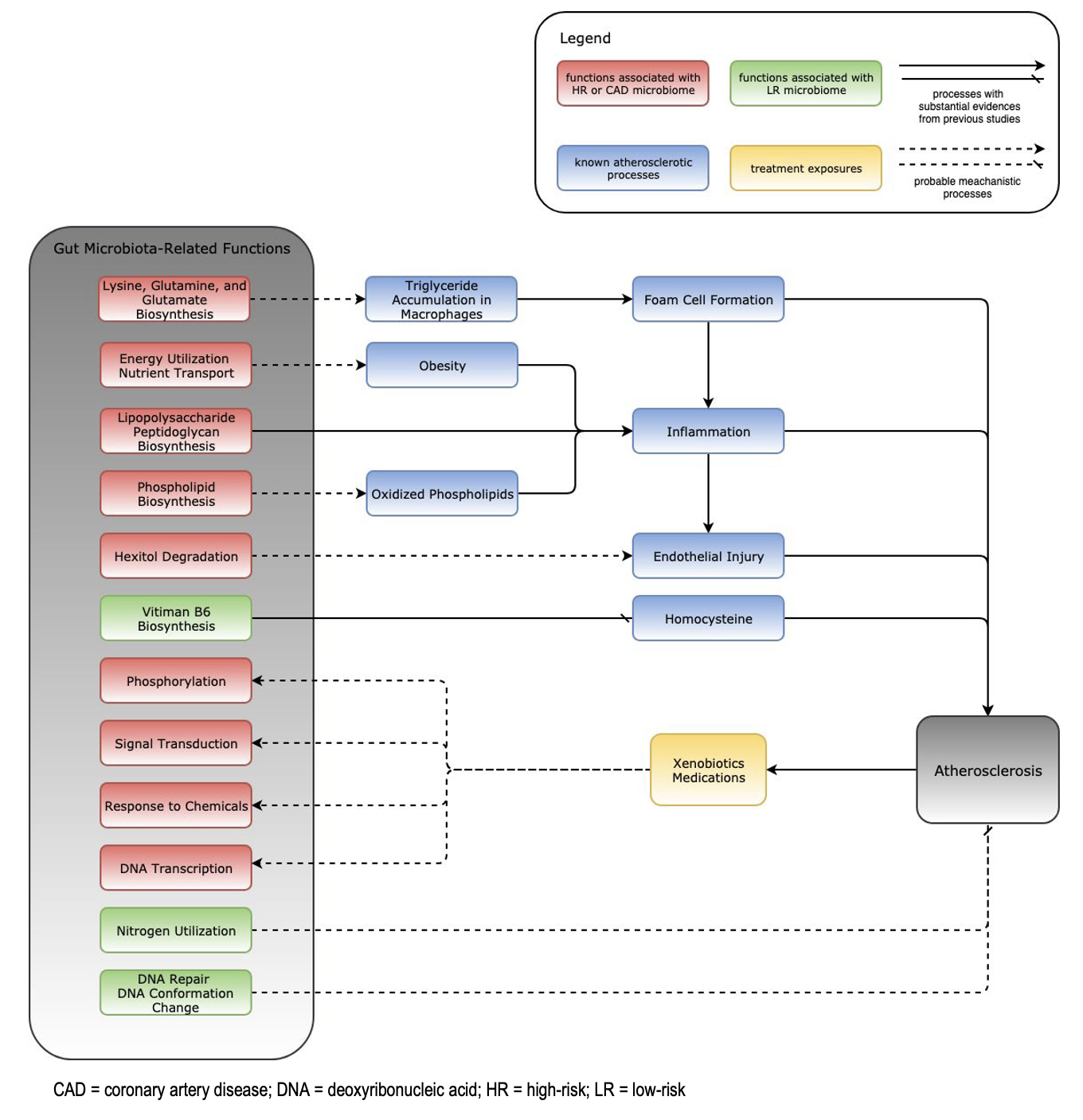
Taxonomic profiling demonstrated that relative abundance of Proteobacteria, Enterobacteriaceae, Bacteroides, and Collinsella were increased in individuals with high-risk status and CAD while, Bifidobacterium and Lactobacillus were higher in the gut of low-risk individuals. The relative abundance of Streptococcaceae and Akkermansia muciniphila were highest in the gut microbiota of high-risk individuals. Gut microbiome diversity was noted to be richer as the risk of CAD becomes higher. Functionally, this study revealed that microbial genes for nitrogen utilization, DNA repair, and DNA conformation change were associated with healthier gut microbiome while, transport of nutrients, harnessing of energy from dietary sources, cell wall component biosynthesis, phosphorylation, signal transduction, and biosynthesis of certain amino acids and phospholipids appeared to be linked with the risk of atherosclerotic CAD.

Conclusion
Metagenomic profiling of the gut microbiome across various risk statuses of atherosclerotic CAD identifies distinct taxonomic and functional signatures. Thus, the altered gut microbiome signatures may serve as early predictor for CAD.
  • Abaca, Mark Joseph  ( Philippine Heart Center , Quezon City , Philippines )
  • Lusis, Aldons  ( UNIV OF CALI LOS ANGELES , Los Angeles , California , United States )
  • Reganit, Paul Ferdinand  ( University of the Philippines Manila , Manila , Metro Manila , Philippines )
  • Dalmacio, Leslie Michelle  ( University of the Philippines Manila , Manila , Metro Manila , Philippines )
  • Author Disclosures:
    Mark Joseph Abaca: DO NOT have relevant financial relationships | Aldons Lusis: DO NOT have relevant financial relationships | Paul Ferdinand Reganit: No Answer | Leslie Michelle Dalmacio: No Answer
Meeting Info:

Scientific Sessions 2025

2025

New Orleans, Louisiana

Session Info:

Genomic Advances in Coronary Artery and Cardiometabolic Disease

Saturday, 11/08/2025 , 02:30PM - 03:30PM

Abstract Poster Board Session

You have to be authorized to contact abstract author. Please, Login
Not Available