Does Vitamin D Supplementation Reduce New-Onset Atrial Fibrillation in Post-Coronary Artery Bypass Graft Patients in Vitamin D Deficient and Insufficient Populations? A Systematic Review and Meta-Analysis
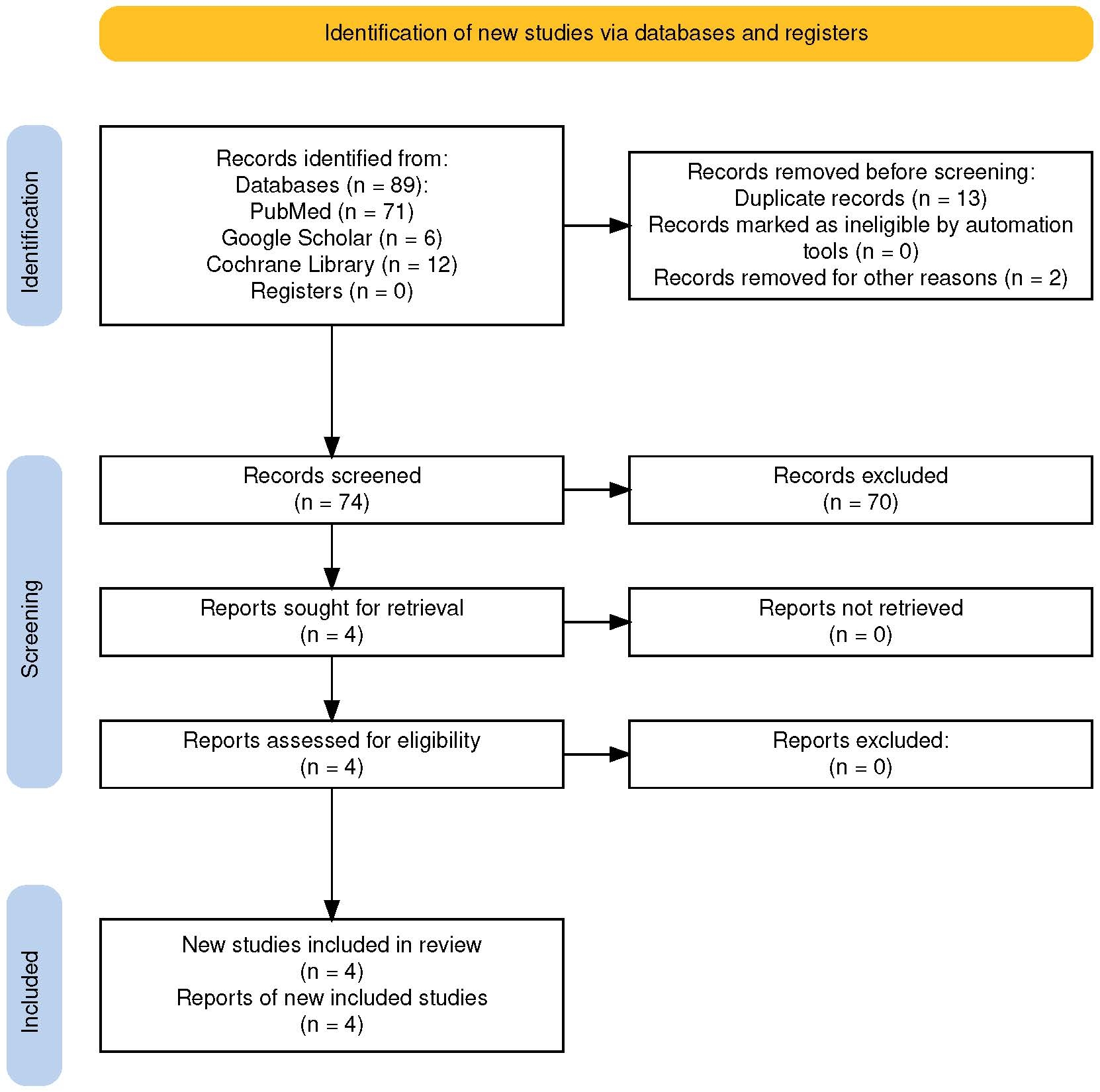
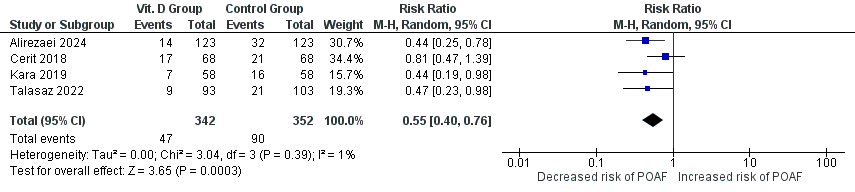
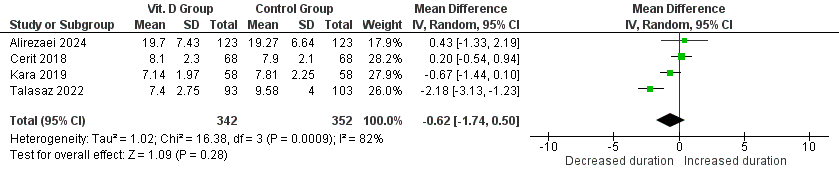
Abstract Body (Do not enter title and authors here): Introduction New-onset postoperative atrial fibrillation (POAF) is a common complication following coronary artery bypass grafting, with incidence ranging from 21% to 34%. Emerging research indicates that vitamin D, with its anti-inflammatory properties, renin-angiotensin-aldosterone system inhibition and electrophysiological effects may help prevent this complication. This study aims to evaluate whether vitamin D supplementation can reduce the incidence of new-onset POAF, thereby contributing to improved postoperative cardiac outcomes. Methods Our study was conducted in accordance with the PRISMA 2020 Guidelines. The electronic databases PubMed, Cochrane Library and Google Scholar were searched from 2014 to 2024. Randomized contolled trials and retrospective observational studies involving adult subjects, evaluating vitamin D deficient and/or insufficient patients who have undergone CABG and received vitamin D supplementation in addition to standard care, compared to patients receiving standard care alone or with placebo, and reporting incidence of new-onset POAF were included. Statistical analysis was performed using RevMan v5.4 software, utilizing a random effects model with heterogeneity assessed using the I2 statistic. Results A total of 4 randomized controlled trials were included in our study, evaluating a sample size of 694 (Vitamin D group- 342, Control group- 352; mean age- 61.8 years, 42.6% females). Our meta-analysis revealed that preoperative vitamin D supplementation significantly reduced the incidence of POAF in vitamin D deficient patients post-CABG (RR= 0.55, 95% CI: 0.40–0.76, p= 0.0003, I2= 1%). However, no significant effect was noted in the vitamin D insufficient population. Sub-group analysis based on vitamin D dosage (50,000 IU, 150,000 IU, 300,000 IU and 600,000 IU) showed no significant dose-dependent effect. Supplementation did not significantly affect length of hospital stay (MD= -0.62, 95% CI: -0.74–0.50, p= 0.28) or duration of intubation (MD= 0.00, 95% CI: -0.26–0.26, p= 0.99) Conclusion Vitamin D supplementation significantly lowers the incidence of POAF in post-CABG vitamin D deficienct patients, according to our meta-analysis, which, to the best of our knowledge, is the most extensive to date on this topic. Further studies are warranted to determine the optimal dosing, timing, and broader applicability in vitamin D deficient as well as insufficient and sufficient populations, to better inform perioperative cardiac care guidelines.
Lanka, Nidhi
(
Lokmanya Tilak Municipal Medical Co
, Mumbai , India )
Onadipe, Oluwasolabomi
(
Lagos State Health Service Commission
, Lagos , Nigeria )
Fahim, Bishoy
(
Sohag University
, Sohag , Egypt )
Fatima, Mahek
(
Osmania Medical College
, Hyderabad , India )
Shah, Hriday
(
New York Medical College, St. Mary's and St. Clare's
, Denville , New Jersey , United States )
Author Disclosures:
Nidhi Lanka:DO NOT have relevant financial relationships
| Oluwasolabomi Onadipe:DO NOT have relevant financial relationships
| Servet Yuce:DO NOT have relevant financial relationships
| Bishoy Fahim:DO NOT have relevant financial relationships
| Mahek Fatima:No Answer
| Hriday Shah:DO NOT have relevant financial relationships