
Logo

American Heart Association

  102
  0


Final ID: 4143173

B Cell CXC Chemokine Receptor Type 5 Expression Predicts Left Ventricular Functional Improvement and Neurohormonal Improvement After Cardiac Resynchronization Therapy

Abstract Body (Do not enter title and authors here): Introduction: B cells infiltrate the heart in a CXC chemokine receptor type 5 (CXCR5)-dependent manner and influence inflammation and remodeling. Yet whether CXCR5 expression on circulating B cells can be used as a marker to identify patients more likely to respond to pacing therapies for heart failure (HF) like cardiac resynchronization therapy (CRT) is unknown
Research Question: Is the amount of CXCR5 expression on circulating B cells in humans prior to CRT associated with measures of left ventricular (LV) functional and neurohormonal response to CRT?
Hypothesis: We hypothesized that lower B cell expression of CXCR5 pre-CRT is associated with greater improvements in LV function and neurohormonal activation (B-type natriuretic peptide [BNP]) after CRT.
Methods: Protein expression in cryopreserved peripheral blood mononuclear cells (PBMCs) was measured with cytometry by time of flight (CyTOF). CXCR5 expression in B cell subsets was evaluated before and six months after CRT in 24 patients. Cardiac magnetic resonance (CMR) was performed prior to CRT, and the LV end-systolic volume index (LVESVI) before and after CRT was assessed by echocardiography. Response was defined as a 15% reduction in the LVESVI six months after CRT.
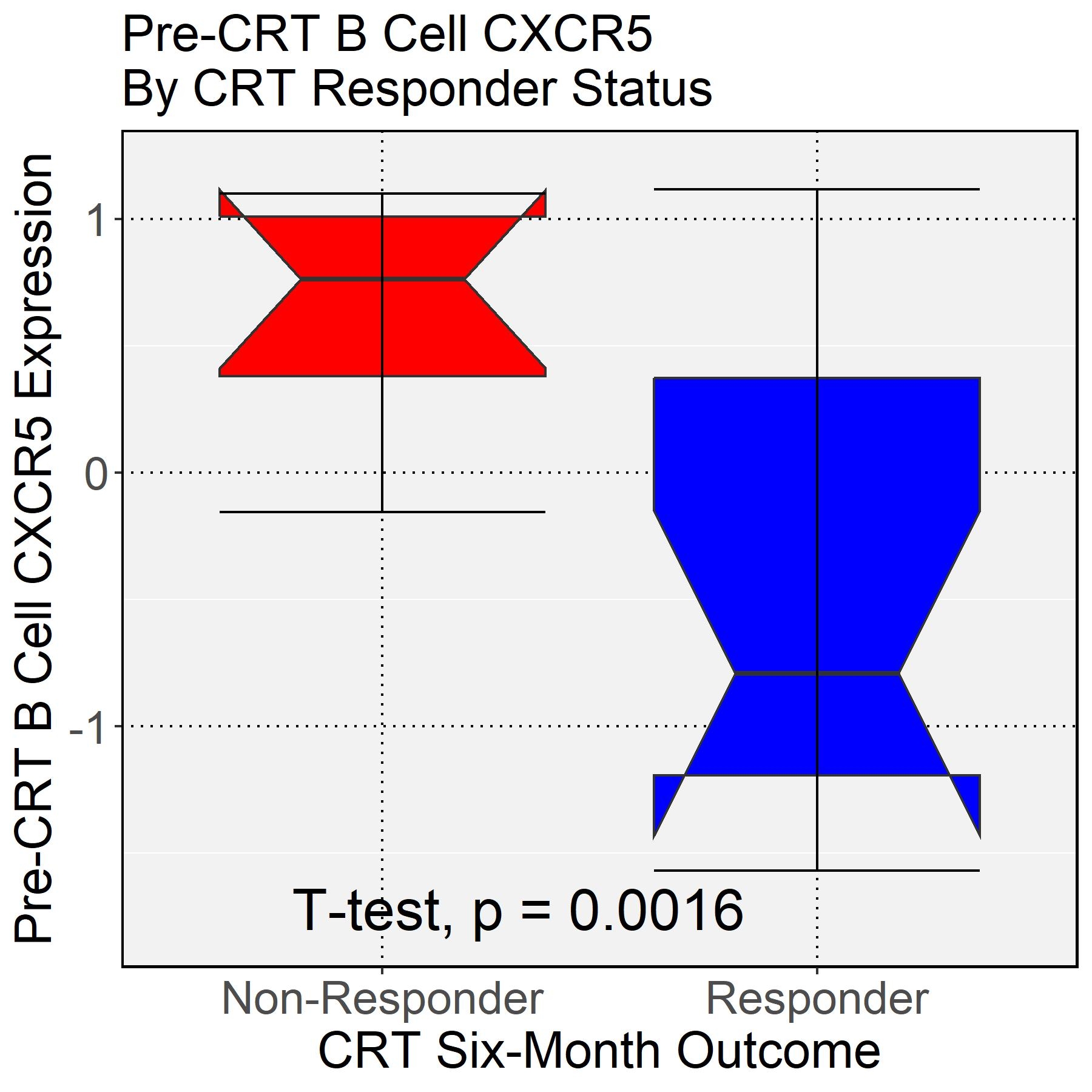
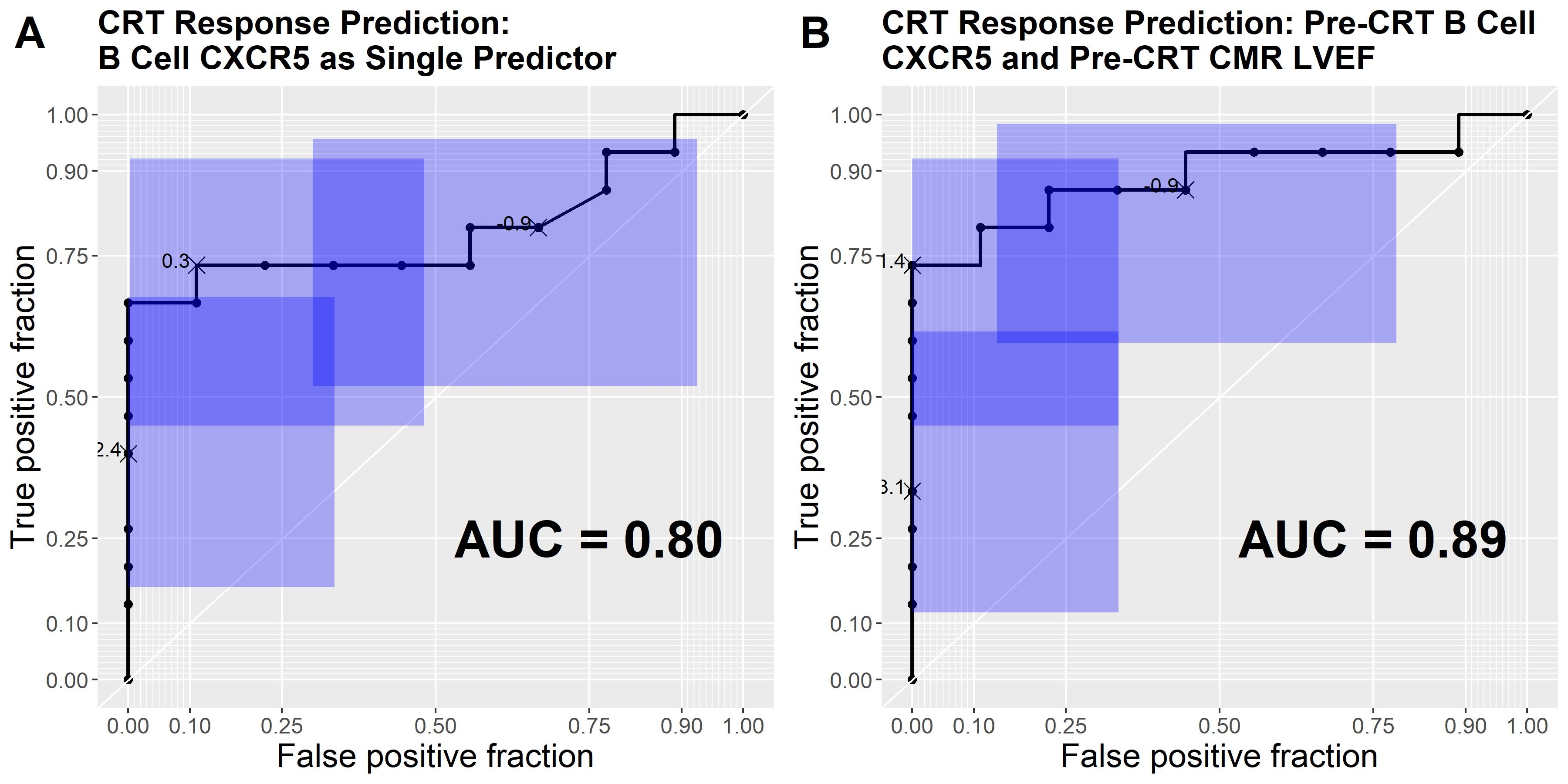
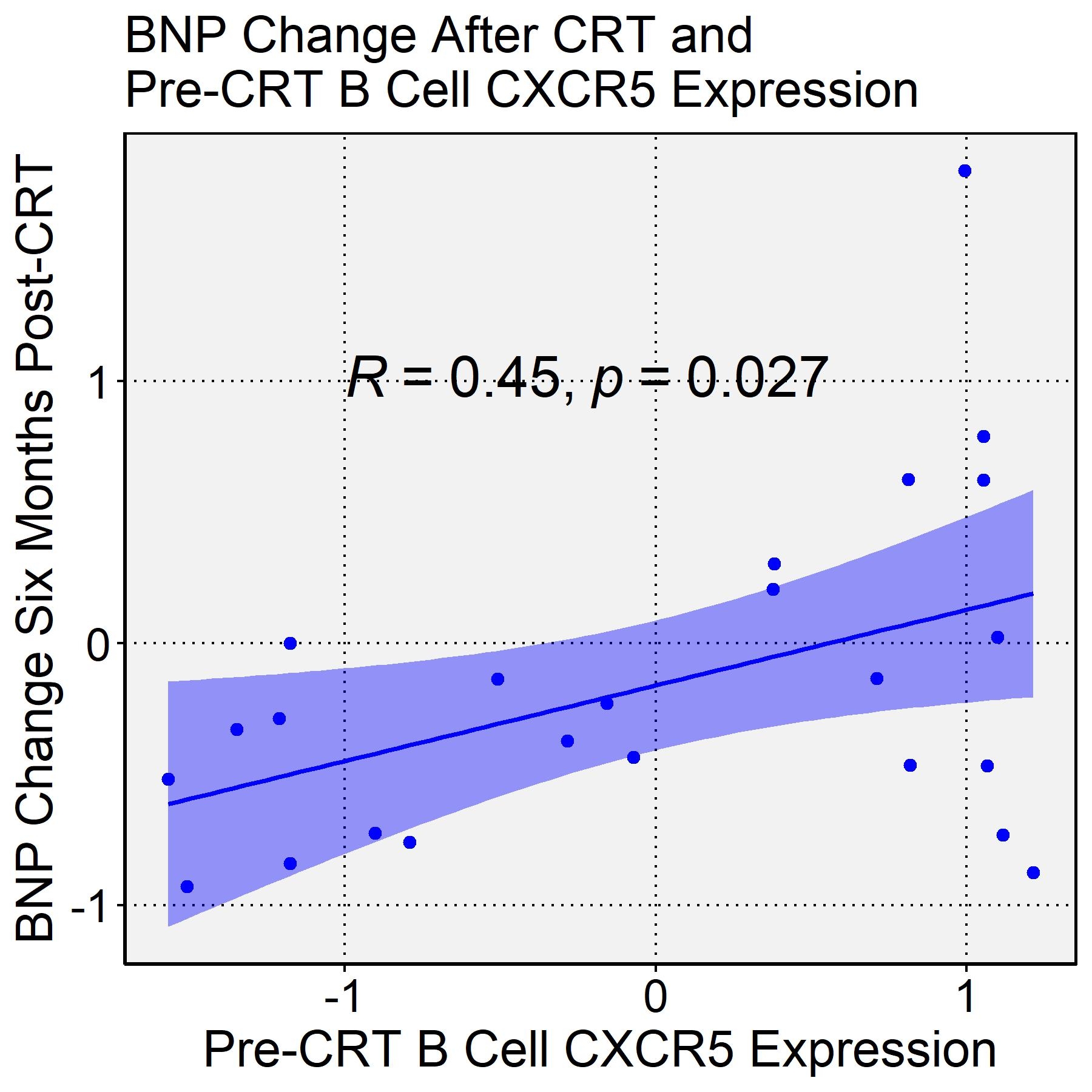
Results: In 24 patients with HF undergoing CRT, the median age was 68 years (IQR 61 to 75 years), 38% were female, and 15 were responders (R). The median pre-CRT serum BNP concentration was 178 pg/mL (IQR 94-251 pg/mL) in R and 430 (IQR 272-757 pg/mL) in non-responders (NR) (p=0.07). The median pre-CRT LVESVI was 74 mL/m2 (IQR 60 to 103 mL/m2) in R and 90 mL/m2 (IQR 83 to 110 mL/m2) in NR (p=0.19). Pre-CRT CXCR5 expression in naive B cells (CD27- IgDhiCD196lo IgMlo) was lower in R v. NR (p=0.0016) (Figure 1). The area under the receiver operating characteristic curve (AUROC) for response was 0.80 (p=0.0026) with B cell CXCR5 as the only predictor and 0.89 (p=0.0015) with both B cell CXCR5 and the pre-CRT CMR LV ejection fraction (LVEF) as predictors (Figure 2). The odds ratio for response per unit increase of B cell CXCR5 was 0.18 (p=0.027) in the latter model. Pre-CRT B cell CXCR5 expression was also correlated with the change in BNP six months after CRT (r=0.45, p=0.027) (Figure 3).
Conclusions: B cell CXCR5 may be an important predictor of CRT response based on LV function and neurohormones even after adjustment for known predictors. Further investigation of B-cell CXCR5 for prognosis in HF patients undergoing CRT is of great interest.
  • Bilchick, Kenneth  ( University of Virginia , Charlottesville , Virginia , United States )
  • Cochran, Jesse  ( University of Virginia , Charlottesville , Virginia , United States )
  • Kothari, Hema  ( University of Virginia , Charlottesville , Virginia , United States )
  • Mcskimming, Chantel  ( University of Virginia , Charlottesville , Virginia , United States )
  • Bivona, Derek  ( University of Virginia , Charlottesville , Virginia , United States )
  • Zunder, Eli  ( University of Virginia , Charlottesville , Virginia , United States )
  • Bekiranov, Stefan  ( University of Virginia , Charlottesville , Virginia , United States )
  • Mcnamara, Coleen  ( University of Virginia , Charlottesville , Virginia , United States )
  • Author Disclosures:
    Kenneth Bilchick: DO NOT have relevant financial relationships | Jesse Cochran: No Answer | Hema Kothari: No Answer | Chantel McSkimming: DO NOT have relevant financial relationships | Derek Bivona: DO NOT have relevant financial relationships | Eli Zunder: No Answer | Stefan Bekiranov: No Answer | Coleen McNamara: DO NOT have relevant financial relationships
Meeting Info:

Scientific Sessions 2024

2024

Chicago, Illinois

Session Info:

From Bench to Bedside in Heart Failure

Monday, 11/18/2024 , 08:00AM - 09:15AM

Abstract Oral Session

You have to be authorized to contact abstract author. Please, Login
Not Available