
Impact of Supraventricular Tachycardia on Pregnancy Outcomes
Abstract Body (Do not enter title and authors here): Background: Paroxysmal supraventricular tachycardia (PSVT) is one of the most common arrhythmias among pregnant women, in part due to the maternal physiological changes that occur during pregnancy. However, studies investigating the risk of new-onset and pre-existing PSVT in pregnancy, and the associated adverse maternal and fetal/neonatal outcomes are lacking.
Research Questions: This study aimed to determine: 1) the proportion of women presenting with new-onset PSVT in pregnancy; 2) the impact of prior PSVT history on episode severity and management during pregnancy; and 3) the rate of adverse maternal and fetal/neonatal events among women with PSVT in pregnancy.
Methods: Prospective case-control study: 77 consecutive pregnancies in 75 women referred to the St. Paul’s Hospital Cardiac Obstetric Clinic between January 2010 and January 2022 secondary to findings consistent with or a history of atrioventricular nodal re-entrant tachycardia (AVNRT) and atrioventricular re-entrant tachycardia (AVRT) PSVT without documented structural heart disease. Maternal cardiac, obstetric, and fetal/neonatal adverse events were compared to a control group consisting of 57 women with low risk, normal pregnancies and no cardiac diagnosis.
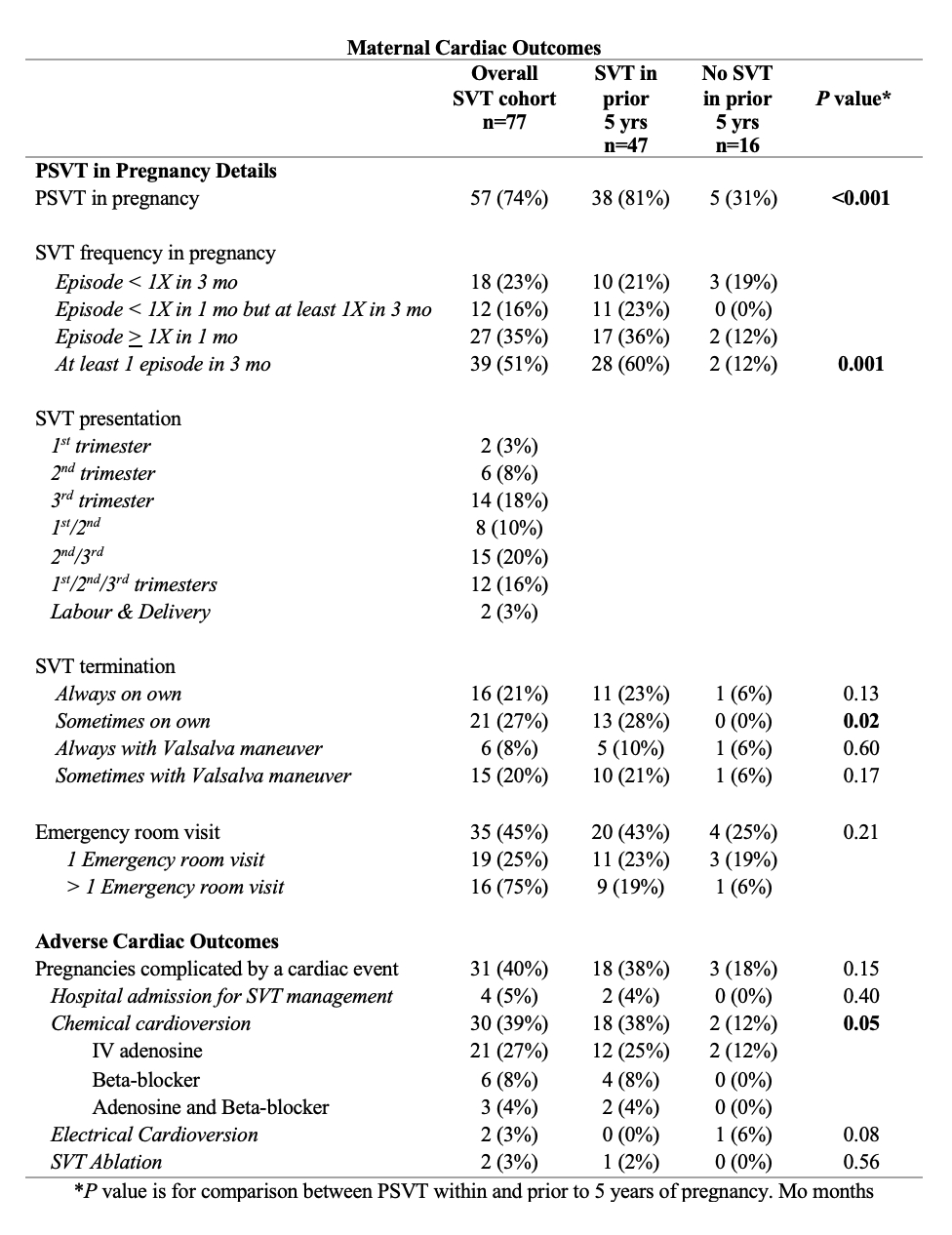
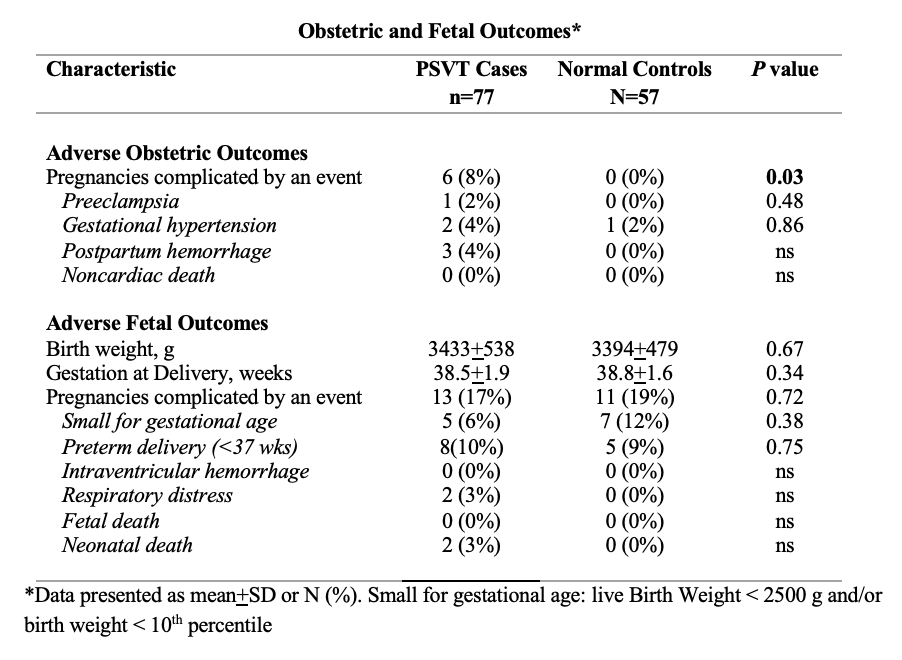
Results: Among the PSVT cohort (n=77), 63 (82%) pregnancies had a prior diagnosis of PSVT and 18% were new-onset in pregnancy. Sixty-eight percent of those with a prior PSVT diagnosis had recurrence in pregnancy. Those with a more recent history (within 5 years of pregnancy) were more likely to experience PSVT during pregnancy compared to those with a more remote history (81% vs. 31%, p<0.001). Similarly, they experienced a higher frequency of PSVT during pregnancy and increased rates of chemical cardioversion (38% vs. 12%, p=0.05). There was a higher rate of adverse obstetrical events in the PSVT group vs. controls (8% vs. 0%, p=0.03), however this is likely due to higher prevalence of obstetric risk factors among the PSVT cohort. Adverse fetal/neonatal events were similar between the PSVT group vs. controls (17% vs. 19%, p=0.72).
Conclusions: PSVT events were safely managed in pregnancy with no major adverse cardiac events and similar fetal/neonatal outcomes as healthy controls. However, recurrence and burden of PSVT during pregnancy is frequent and leads to management complexities among those with a history of PSVT, reinforcing the need for pre-pregnancy counselling and catheter ablation for definitive management of PSVT prior to pregnancy.
Ardehali, Arya
( University of British Columbia
, Vancouver
, British Columbia
, Canada
)
Kiess, Marla
( University of British Columbia
, Vancouver
, British Columbia
, Canada
)
Rychel, Valerie
( University of British Columbia
, Vancouver
, British Columbia
, Canada
)
Barlow, Amanda
( University of British Columbia
, Vancouver
, British Columbia
, Canada
)
Oakes, Jennifer
( University of British Columbia
, Vancouver
, British Columbia
, Canada
)
Deyell, Marc
( University of British Columbia
, Vancouver
, British Columbia
, Canada
)
Grewal, Jasmine
( University of British Columbia
, Vancouver
, British Columbia
, Canada
)
Author Disclosures:
Arya Ardehali:DO NOT have relevant financial relationships
| Marla Kiess:DO NOT have relevant financial relationships
| Valerie Rychel:DO NOT have relevant financial relationships
| Amanda Barlow:No Answer
| Jennifer Oakes:No Answer
| Marc Deyell:No Answer
| Jasmine Grewal:No Answer