Trends and Disparities in Arrhythmia-Related Deaths among Older Adults in the United States, 1999-2020
Abstract Body (Do not enter title and authors here): Background: Cardiac arrhythmias significantly contribute to mortality in the United States (US), especially among older adults. This study examines two decades of mortality data to identify patterns and disparities in arrhythmia-related deaths across various demographics and regions.
Hypothesis: The study hypothesizes that there are discernible patterns and disparities in cardiac arrhythmia-related mortality rates based on factors such as sex, race/ethnicity, and geographic region. It also seeks to determine whether these mortality rates have changed significantly over the past two decades.
Aims: The objective is to identify patterns and disparities in cardiac arrhythmia-related mortality rates in the US older population over the past two decades
Methods: Data were obtained from the CDC WONDER (1999-2020) focusing on arrhythmia-related deaths identified by ICD-10 codes I47, I48 and I49. The study examined demographic and regional patterns of mortality, employing statistical techniques for analysis. Joinpoint regression analysis was utilized alongside calculations of age-standardized mortality rates (ASMR) per 10,000 population and annual percentage change (APC). These metrics were stratified by year, sex, race/ethnicity, and geographic region to assess and compare variations in mortality trends over time
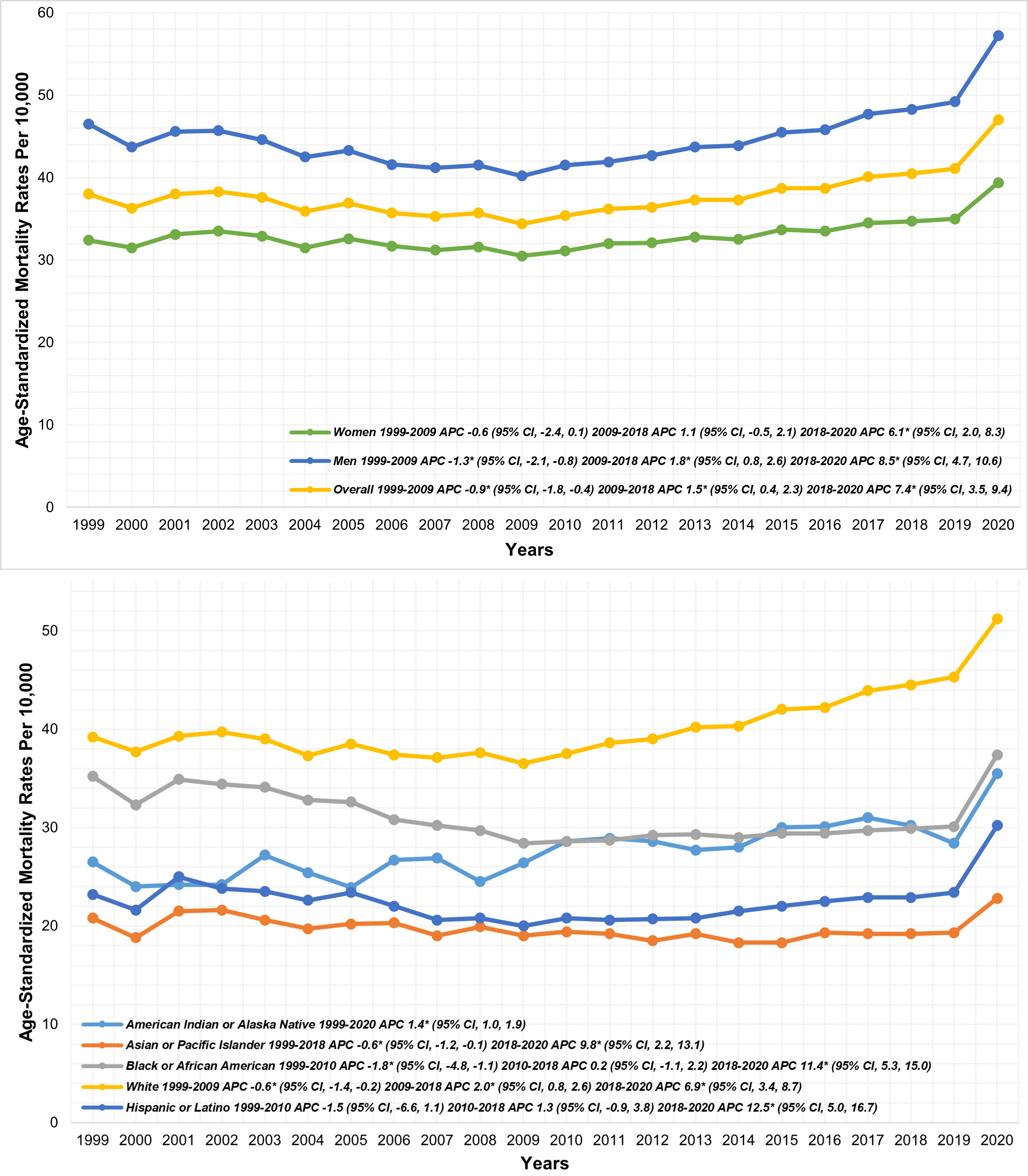
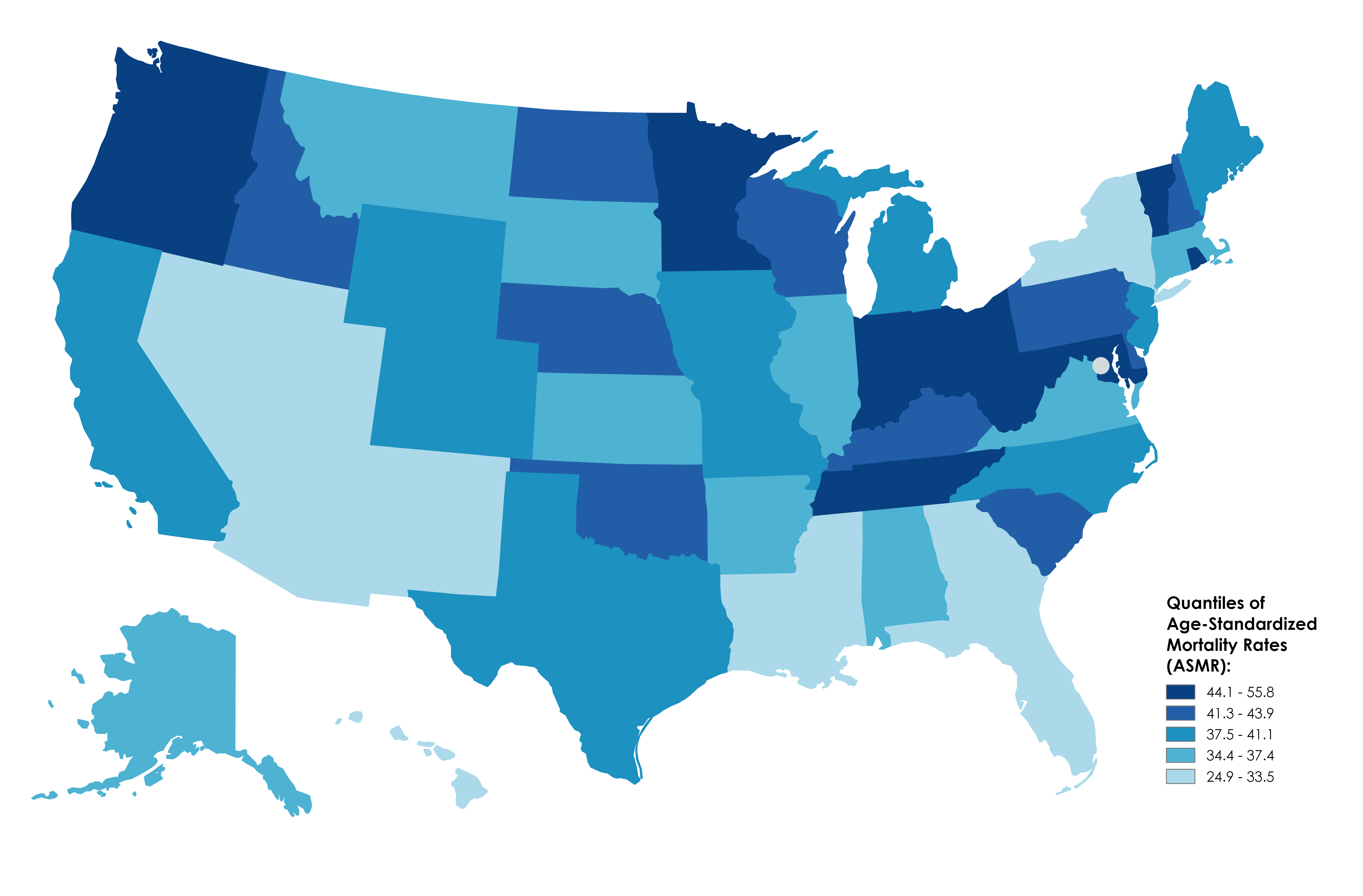
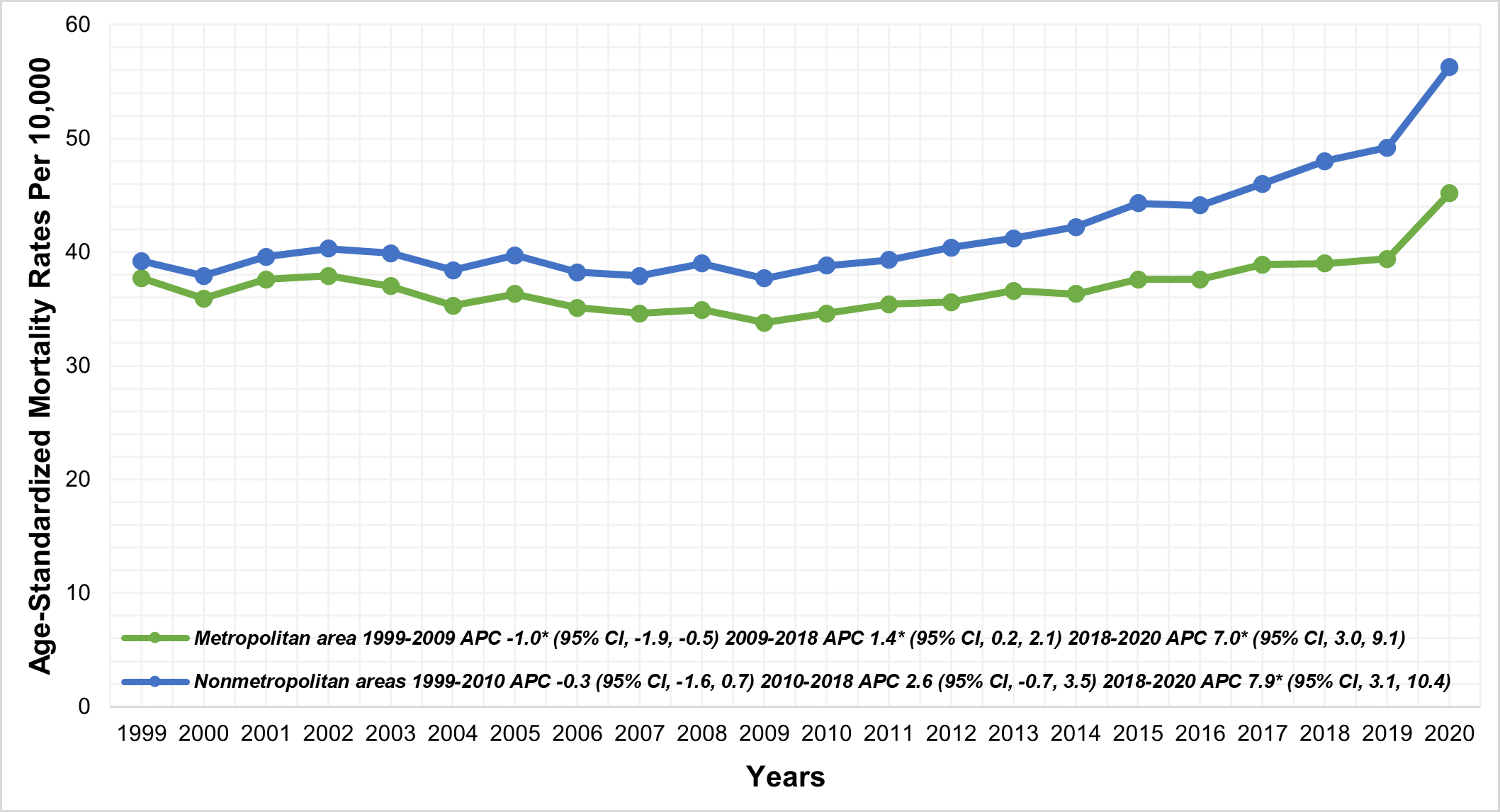
Results: From 1999 to 2020, 3,516,612 arrhythmia-related deaths occurred in the US. ASMR per 10,000 increased from 38.0 in 1999 to 47.0 in 2020. Mortality rates decreased from 1999 to 2009 (APC: -0.9; 95% CI: -1.8, -0.4, p = 0.007), increased from 2009 to 2018 (APC: 1.5; 95% CI: 0.4, 2.3, p = 0.021), and significantly rose from 2018 to 2020 (APC: 7.4; 95% CI: 3.5, 9.4, p < 0.001). Men accounted for 45.8% of deaths, with an ASMR of 45.2 compared to 33.0 for women. Non-Hispanic (NH) Whites had the highest ASMRs (40.5), followed by NH Blacks (31.1), NH American Indians (28.3), Hispanics (22.7), and NH Asians (19.7). The Midwest had the highest ASMRs (41.2), followed by the West (38.8), South (36.4), and Northeast (36.3). Nonmetropolitan areas had higher ASMRs (42.1) compared to metropolitan areas (37.2)
Conclusions: After initially declining from 1999 to 2009, arrhythmia-related mortality have increased thereafter with evident disparities. Highest ASMRs were found in NH White and male populations, and in the Midwest and nonmetropolitan regions. These findings underscore the need for targeted interventions to reduce such mortality, particularly among vulnerable groups
Cheema, Muhammad Rafay Shahzad
(
Allama Iqbal Medical College
, Lahore , Pakistan )
Nashwan, Abdulqadir J.
(
Hamad Medical Corporation
, Doha , Qatar )
Author Disclosures:
Muhammad Rafay Shahzad Cheema:DO NOT have relevant financial relationships
| Abdulqadir J. Nashwan:No Answer